 Search


- China is a key participant in the global value chain, whether in Southeast Asia, Europe, the Asia Pacific region, or elsewhere
China has undergone unprecedented economic, technological, and social transformation in modern history, and one of its greatest achievements is the significant reduction of poverty and the consolidation of its position as a global power. China has challenged the traditional economic development model and opened up a new path for geopolitics in the 21st century. In the current context of global geopolitical tensions, environmental crises, and economic model competition, China's perspective is particularly important.
In order to delve deeper into this topic, the Republican newspaper interviewed Ignacio Batsagi, a professor of international relations at the Catholic University of Uruguay and director of the Institute of International Business. He has had many years of experience traveling to China and conducting research work. His analysis reveals a reality that is difficult to understand from a traditional Western perspective.
Batsagi pointed out, "China's growth rate is not as fast as it used to be because it has accumulated a large amount of investment stock and lifted many people out of poverty. Therefore, it is necessary to change the consumption logic, the role of the state in the economy, and enhance the importance of the service industry
He believes that China has not only reshaped its domestic economy, but also expanded its strategy overseas through initiatives such as jointly building the "the Belt and Road" initiative. He stressed that China's "the Belt and Road" initiative is closely related to the "going global" strategy.
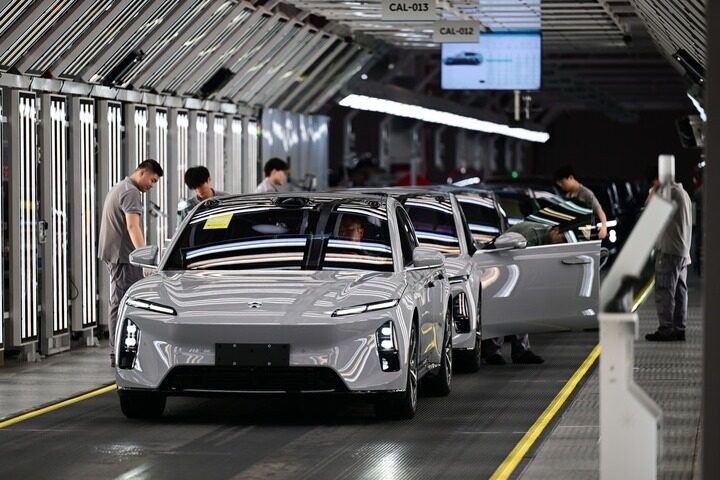
Batsagi pointed out that one of the biggest problems in understanding China is how to view its massive size, which goes beyond any Western understanding. This is a country of unimaginable scale, and it is difficult for us to understand it from Western logic. Everything is beyond scale. Apart from population and economic size, China's real leap lies in technology, and breakthroughs have been made year after year.
These advances can be seen in different fields, from state-owned enterprises to private enterprises, from healthcare systems to education systems. The Automation of Enterprises.Editor/Bian Wenjun
Comment




 Praise
 Collect
 Comment

 Share
Share


Write something~