 Search


- This 10-year syndicated loan of RM4.3 billion is the largest single investment in the 5G sector in Southeast Asia
- Malaysia withstands Western pressure and fully entrusts Huawei and ZTE with the construction rights of the country's second 5G network
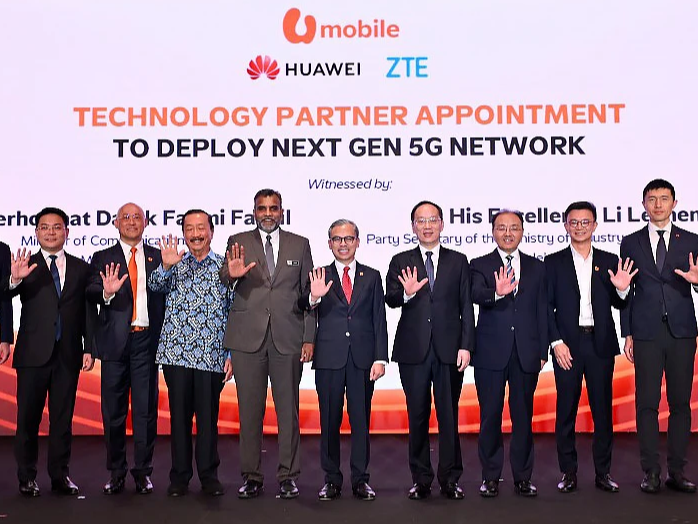
Chinese technology will cover 90% of Malaysia's population. Achieving 80% coverage in 12 months and sprinting towards 90% in 24 months injects strong momentum into Malaysia's digital economy transformation and sets an important milestone for China's 5G technology to go global.
1、 From the 'single network dilemma' to the 'dual network breakthrough'
The road to 5G in Malaysia has not been smooth sailing. In 2021, the country launched its first 5G network construction and selected Ericsson as the equipment supplier, with the government led Digital National Company (DNB) responsible for implementation. However, by the end of 2023, the 5G coverage rate will only be 58%, far from achieving the goal of "80% coverage by the end of 2024". The construction progress is seriously lagging behind and the cost remains high. After the new Prime Minister Anwar Ibrahim took office, he decisively adjusted his strategy. In April 2024, the Malaysian government announced the adjustment of the 5G construction model from "single network exclusive" to a diversified supply model of "main network+auxiliary network", and launched the second phase of bidding. Despite constant reminders from the US and Europe about the so-called 'security risks', Malaysia still made a firm choice - ultimately only Huawei and ZTE provided a complete solution.
2、 Dual advantages of technological strength and cost-effectiveness
Malaysia's choice of Huawei and ZTE is based on three rational considerations: technological hard power, cost efficiency, and strategic balance. In terms of technological discourse power, Huawei holds a 15.52% authorized share in the global 5G standard essential patents, ranking first in the world; ZTE ranks fifth with 7.05%, and the two companies together hold over 22% of the core discourse power. More importantly, only Huawei and ZTE can support cutting-edge technologies such as 5G-A (5.5G) and network slicing from the start of the project, meeting Malaysia's technological needs. In terms of cost-effectiveness, the Chinese plan has shown significant advantages: construction costs are reduced by 18% compared to the first phase in Malaysia, deployment costs per unit area are 20% -30% lower than the Western plan, and later operation and maintenance costs can be reduced by more than 15%. Efficiency is the core highlight that impresses Malaysia - according to the plan, Chinese enterprises will achieve 80% population coverage within 12 months and increase it to 90% within 24 months, far exceeding the average coverage period of 3-4 years in Southeast Asia. In terms of strategic layout, Malaysian Prime Minister Anwar Ibrahim bluntly stated that "the introduction of Huawei is to balance Western and Eastern technologies and avoid the risks brought by a single technology monopoly." By building a diversified ecosystem of "East West technology balance," Malaysia has not only broken the Western technology monopoly, but also gained a more equal voice in international scientific and technological cooperation.

3、 Strategic significance of 7.36 billion investment
This 7.36 billion yuan investment has already surpassed the commercial scope and become an important footnote to the global technological ecosystem reconstruction. For Southeast Asia, Malaysia's demonstration effect may trigger a chain reaction. As an important regional economy, it has chosen to send a clear signal to countries such as Indonesia, Thailand, and Vietnam that technological cooperation should be based on actual needs rather than political biases. Previously, Spain had signed a contract with Huawei under pressure from the European Union, and more emerging markets may follow suit in the future. The "technology barrier" built by the United States and the West is collapsing. For China, this is an important breakthrough in 5G technology going global. Huawei has trained over 3000 communication talents in Malaysia, while ZTE has established regional headquarters to form a local service system. This "technology output+localized operation" model has won more trust for Chinese technology. More importantly, this confirms the reliability of China's 5G technology - when the proportion of American components in Huawei's small base stations drops to 1%, the so-called 'security threat' has long been debunked.
4、 New opportunities for international students
The deep participation of Chinese enterprises in Malaysia not only brings technology and capital, but also invisibly broadens the growth path of talents. The field of communication and information technology directly benefits. With the comprehensive deployment of 5G dual network construction, Malaysia's demand for talents in communication engineering, network architecture design, network security, IoT technology, and other fields has significantly increased. Many local universities have established partnerships with companies such as Huawei and ZTE, offering joint laboratories or certification courses. Students have the opportunity to participate in practical projects and obtain industry recognized qualifications. The digital economy and innovative industries have enormous potential. Malaysia is actively promoting the development of the digital economy and striving to become a regional digital hub. This means that fields such as digital finance, electronic payments, cross-border e-commerce, and artificial intelligence applications will receive more resource investment and policy support. Multiple digital innovation parks and incubators have been established in Kuala Lumpur, Penang, and other places to provide support for startups and technology talents.

The digital transformation of vertical industries brings interdisciplinary opportunities. The true value of 5G lies in empowering various industries. In Malaysia, industries such as agriculture, healthcare, manufacturing, transportation, and education are all facing the demand for digital transformation. This brings many opportunities in cross disciplinary fields: those who understand both agriculture and IoT technology may be able to participate in smart farm projects; Having knowledge of both the healthcare system and remote communication, perhaps one could join the development of digital health solutions. Studying abroad is not only about acquiring knowledge, but also about integrating into the development rhythm of a region - paying more attention to industry trends, participating in local projects or internships appropriately, actively accumulating cross-cultural communication experience, and perhaps finding one's own driving force between academic and professional pursuits.
Malaysia's 7.36 billion bet is essentially a gentle correction of the "logic of technological hegemony". In the era of globalization, technology has never been a tool for geopolitical games, but an engine driving development. When China's 5G signal is about to cover 90% of Malaysia's population, and when 5G-A technology empowers local semiconductor factories and rubber plantations, this cooperation will ultimately prove that only by abandoning prejudice and embracing diversity can a win-win situation be achieved.Editor/Yang Meiling
Comment





 Praise
 Collect
 Comment

 Share
Share


Write something~