 Search


- Kenya's strategic initiative to establish dual funds aims to fundamentally reshape its development model
- Kenya launches dual fund reform aimed at revitalizing state-owned assets to attract private investment and break through the bottleneck of infrastructure funding

Faced with a heavy debt pressure of nearly 13 trillion Kenyan shillings, with annual debt service expenditures accounting for up to 40% of fiscal revenue, the Kenyan government is embarking on a fundamental strategic shift.
In December 2025, the Cabinet approved the establishment of the National Infrastructure Fund and the Sovereign Wealth Fund, marking the country's infrastructure financing model, which is determined to shift from the previous path of highly relying on borrowing to a new mechanism driven by investment and the market. The core of this transformation is to creatively revitalize and monetize existing state-owned assets to raise capital for future investments, while attracting widespread private capital participation to break the $3 billion funding gap in the infrastructure sector without driving up debt. However, this radical reform has been accompanied by huge controversy since its inception, and its process has been abruptly halted due to legal challenges, with uncertain future development.

The breakthrough path of injecting start-up capital into dual funds
The core capital source designed for Kenya's newly established dual fund is not new taxes or international loans, but strategic disposal of mature state-owned assets. A landmark case is the government's plan to sell its 15% stake in telecommunications giant Safari Communications to South African Vodacom Group for approximately $1.6 billion. Finance Minister John Mbadi has explicitly stated that the funds raised from this exchange will become seed capital for the National Infrastructure Fund and the Sovereign Wealth Fund. According to the document approved by the Cabinet, all proceeds from the privatization of state-owned assets in the future will be earmarked and strictly invested in infrastructure projects that can generate long-term public value.
The idea of converting one asset into another aims to provide a sustainable funding pool for large-scale infrastructure investment while avoiding further exacerbating the national debt burden. The government expects that every shilling of public funds invested through the National Infrastructure Fund can drive up to ten shilling of long-term private capital (such as pension funds, private equity, and development financial institutions) to follow up on investment. Sovereign wealth funds will focus on managing mineral and oil resource revenues, as well as some privatization revenues, to enhance national fiscal resilience and intergenerational equity.

The controversial reform process
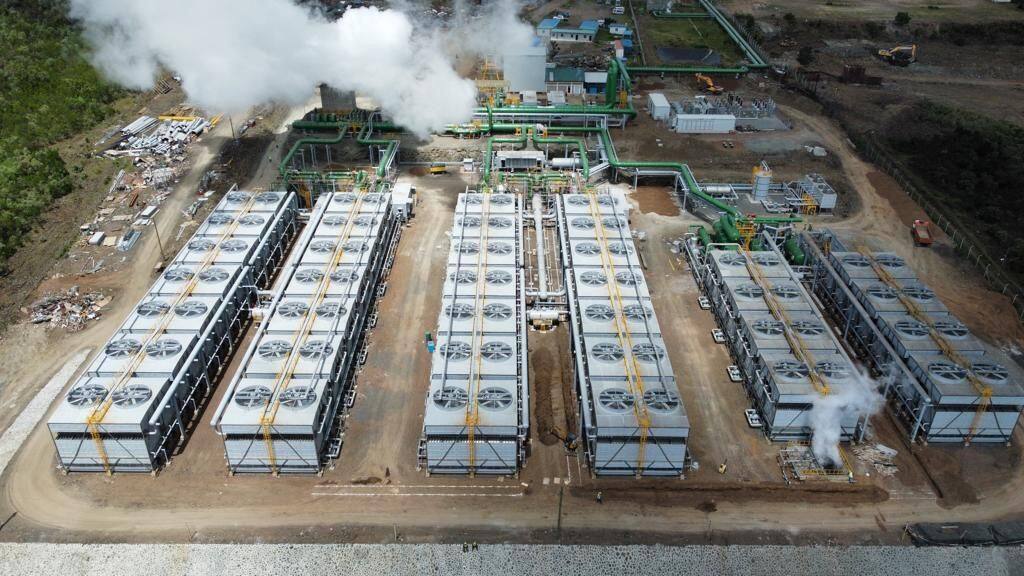
Supported by a new financing mechanism, the Kenyan government has released an ambitious infrastructure blueprint. This list covers 47 key projects, including the Nyali Bridge in Mombasa, the Sika Expressway, the widening of the Mombasa Nairobi Nakuru Expressway, as well as the modernization of multiple geothermal power plants and ports, all of which are planned to be promoted through a public-private partnership model. These projects aim to comprehensively enhance the country's modernization level in key areas such as transportation and energy.

However, this reform, which the government had high hopes for, has faced sharp challenges in terms of procedural legitimacy. Shortly after the cabinet's approval, the Kenyan High Court urgently issued a suspension order upon the application of some citizens, completely prohibiting the government from continuing to promote the establishment, registration, and operation of the National Infrastructure Fund. The applicant alleges that the fund was only established through presidential bulletins and cabinet resolutions, bypassing necessary parliamentary legislative procedures, public participation, and clear legal frameworks, and is suspected of violating the Constitution and the Public Finance Management Act. Critics argue that this is equivalent to putting national assets and taxpayers' interests at risk. The final outcome of this legal lawsuit will be the key to determining whether Kenya's infrastructure financing reform can be implemented.
Finding roles in a changing market
Despite facing uncertainty, the potential transformation of Kenya's infrastructure financing model still brings new opportunities and insights for Chinese companies that have been deeply rooted in Kenya for many years. Chinese enterprises have a solid foundation of cooperation in Kenya, successfully constructing and operating iconic projects such as the Mombasa Nairobi Railway and Nairobi Expressway. The new financing model emphasizes attracting private capital and adopting PPP models, which may drive Chinese enterprises to transform from traditional engineering contractors to diverse roles such as investors and long-term operators. For example, the planned extension of the Mombasa Nairobi Railway to the Malaba section explores a tripartite financing model jointly funded by the Kenyan government, Chinese financial institutions, and enterprises. Keywords: International News and Information, International News Network
At the same time, new rules have also put forward new requirements. The National Infrastructure Fund plans to operate in the form of a limited liability company, emphasizing transparency in governance, commercial discipline, and market-oriented operations. This means that participating companies need to adapt to stricter international compliance and investment and financing standards. In addition, Kenya's realization of state-owned assets may introduce more international competitors, which puts higher demands on Chinese companies' localization cooperation strategies and business negotiation capabilities. The game rules in the Kenyan market are evolving towards a more market-oriented and legal direction. Accurately grasping this trend will be the key to the sustained success of Chinese enterprises in the future.Editor/Cheng Liting
Comment



 Praise
 Collect
 Comment

 Share
Share


Write something~