 Search


- As an upgraded version of lithium iron phosphate, the commercialization process of lithium manganese phosphate is accelerating

In the fiercely competitive new energy vehicle market of 2025, a new material known as the "upgraded version" of lithium iron phosphate is becoming the focus of the industry. On December 26th, when Jiangsu Hengchuang Nanotechnology Co., Ltd. officially signed a cooperation agreement with Yinchuan Economic Development Zone, an industrial competition on the production capacity layout of lithium manganese iron phosphate had quietly entered a new stage. This project, with a total investment of 4.8 billion yuan and an annual output of 130000 tons, not only becomes an important layout for Ningxia's new materials industry, but also reveals new trends in the evolution of power battery technology routes.
Moving from laboratory to scale
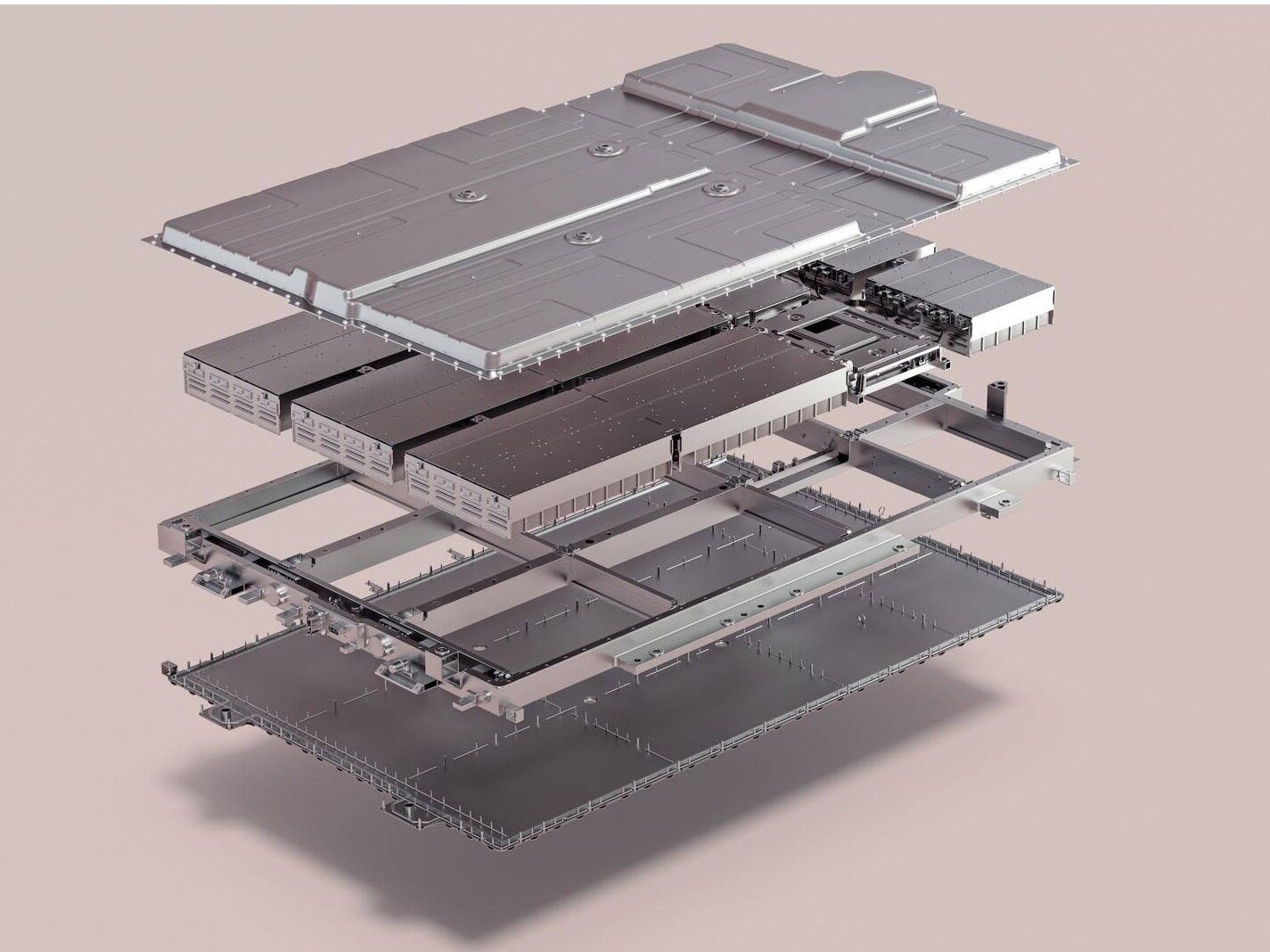
Lithium manganese iron phosphate, as a new generation of positive electrode material, is rewriting the game rules of the power battery industry. Compared with the current mainstream lithium iron phosphate, its voltage platform is higher, which can increase the energy density of the battery by 5-10%. This technological breakthrough is of great significance for the range of new energy vehicles. Especially in the mid to high end car market, manufacturers need to find the best balance between performance and cost, and lithium manganese iron phosphate provides this possibility.
Behind the technological upgrade is continuous market validation. As early as August 2023, the Ministry of Industry and Information Technology announced new car models equipped with the "NCM+LMFP" composite system, including the Chery Star Era ES and Huawei Smart Selection Smart Frontier S. In November of the same year, CATL produced lithium manganese iron phosphate M3P batteries and successfully loaded them into popular car models such as Tesla Model Y and Smart Frontier S7. After more than two years of market testing, the technological maturity of lithium manganese iron phosphate has been fully verified, laying the foundation for its large-scale industrialization.
Market data confirms the acceleration of this trend. In the first half of 2025, the production of lithium manganese iron phosphate will reach 7500 tons, a year-on-year increase of 114%, showing an explosive growth trend. Multiple industry institutions predict that by 2030, the penetration rate of lithium manganese iron phosphate in the field of power batteries will exceed 30%, corresponding to a demand for positive electrode materials of 2.6 million tons, and the market space is extremely broad.
Multiple regions bloom to form production capacity clusters
Ningxia is not the only choice for the lithium manganese iron phosphate industry. A competition on the production capacity layout of this new material has already begun nationwide. In April of this year, the 100000 ton manganese iron lithium phosphate cathode material project in the High tech Industrial Development Zone of Baiyin City, Gansu Province was officially put into operation; In May, the first phase of the 100000 ton annual production project of Shanxi Tevashi was successfully put into operation. In just six months, the three regions have successively settled down, forming an industrial layout that echoes the east and west.
Behind this multi-point blooming industrial trend is the acceleration of the industrialization process of lithium manganese iron phosphate. The project investor Hengchuang Nano was established in February 2022. Although its establishment time is not long, its R&D team has accumulated over ten years of experience in the field of lithium manganese iron phosphate, making it one of the earliest teams in the world to achieve industrialization of this material. As of now, the company has more than 70 core basic patents covering major markets such as China, the United States, Europe, Japan, and South Korea, and has built a complete technological moat.
Hengchuang Nano's production capacity expansion pace is also rapid. Starting from April 2022, the project with an annual output of 5000 tons will be launched, and the first production line will be put into operation in December of the same year; Starting from the construction of a new production line with an annual output of 10000 tons in Yancheng in 2023, and now promoting the construction of a 30000 ton new production line in Yancheng and a 130000 ton project in Ningxia, the company has completed a leap from laboratory to large-scale production in just three years. According to the plan, the 30000 ton new production line in Yancheng will be put into operation by the end of 2026, and the company's total production capacity will be further increased at that time.
Industrial Chain Restructuring and Regional Development
The implementation of the 4.8 billion yuan project in Ningxia will have a profound impact on the local industrial structure and economic development. The project will be constructed in two phases. The first phase is planned to have an annual production line of 25000 tons, with an estimated annual output value of no less than 1 billion yuan after reaching capacity. This not only brings considerable economic benefits to Yinchuan Economic Development Zone, but more importantly, it will drive the agglomeration and development of the entire new materials industry chain, enhancing regional industrial competitiveness.
From a national perspective, the rapid expansion of production capacity of lithium manganese iron phosphate is reshaping the pattern of the power battery industry. With the advancement of technology and the emergence of economies of scale, the cost competitiveness of lithium manganese iron phosphate will continue to increase, and it is expected to replace existing materials in multiple application scenarios. Especially in the fields of energy storage, power tools, and two wheeled electric vehicles, this material that combines performance and safety advantages will demonstrate strong market potential.
Industry experts point out that the current manganese iron lithium phosphate industry is still in a period of rapid development, and technological iteration is still ongoing. Hengchuang Nano and other enterprises plan to further consolidate their dual advantages in technological innovation and large-scale manufacturing by building intelligent production bases and optimizing production line layouts. As more companies join the competition, the production cost of lithium manganese iron phosphate is expected to continue to decline, ultimately benefiting the entire new energy vehicle industry chain. Keywords: wind power new energy, wind power new energy news
Under the guidance of carbon neutrality goals, innovation in power battery technology is endless. The launch of the 130000 ton manganese iron lithium phosphate project in Ningxia is not only the landing of an industrial project, but also a microcosm of China's independent innovation capability in the field of new materials. With the advancement of this project, China's position in the global power battery industry chain will be further consolidated, injecting new impetus into the sustainable development of the new energy vehicle industry. (This article is from the official website www.seetao.com of Jiandao. Reproduction without permission is prohibited, otherwise it will be prosecuted. Please indicate Jiandao website+original link when reprinting.) Jiandao website battery column editor/Gao Xue
Comment


 Praise
 Collect
 Comment

 Share
Share


Write something~