 Search


- The first single hole five lane tunnel in China started construction in Guangzhou

On April 23, 2026, in Luogang, Guangzhou, machinery roared through the sky of Yangcheng. With the slow rotation of the first large-scale tunneling machine cutterhead, the control project of Guanghui Expressway renovation and expansion project - Luofeng Tunnel - officially entered the tunnel for construction. This is not only a crucial battle for the renovation and expansion of the 153.8 kilometer Guanghui Expressway, but also marks the entry of China's highway tunnel construction into the era of five lane super large spans.
As the first single hole five lane highway tunnel in the country, its 350 square meter excavation section is equivalent to half a standard basketball court. Against the backdrop of no mature regulations to follow, builders are using digital methods to carve underground corridors in granite formations.

Reconstruction of construction logic for mechanical clusters
Faced with a giant cross-section with a maximum excavation width of 27 meters and a height of 16 meters, traditional manual drilling and blasting methods are no longer sustainable. Wen Jiandong, the head of the project engineering technology department, introduced that the project department has built a "9+6" full process mechanization cluster. The 9 main operating lines cover core equipment such as three arm rock drilling trolleys and intelligent arch installation vehicles, achieving unmanned operations throughout the entire process of excavation, support, and lining; The six auxiliary production lines rely on digital steel component processing plants to control the precision of steel bar processing at the millimeter level.
This steel army is deeply interconnected with the smart construction site brain through the Internet of Things platform, and real-time feedback of equipment posture, fuel consumption, and work progress data. Compared to traditional methods, mechanized operations reduce personnel by 40% and increase efficiency by 60%. This not only avoids the risks of high-altitude operations, but also turns tunnel construction into an assembly line factory.
Intelligent auscultation and perspective of geological fog
The biggest hidden danger of ultra large span tunnels lies in the instability of the surrounding rock. In order to perform "CT" on geology, the project has developed the "Intelligent Identification Technology for Palm Face Surrounding Rock". Unlike the lag of traditional manual sampling, this system is like an intelligent stethoscope. Through laser scanning and AI algorithms, it automatically generates a three-dimensional model of the rock mass and determines its grade within 30 seconds after blasting, with an accuracy rate of up to 95%. Keywords: infrastructure engineering, highway transportation
The data is transmitted in real-time to the control center, and the system automatically matches the optimal support parameters, with instructions directly sent to the on-site arch installation robot. Wen Jiandong stated that this dynamic closed-loop of "geology design construction" reduces the risk of rock deformation by 70%. In conjunction with the big data warning platform, the tunnel has achieved a leap from passive response to landslides to active risk prevention.
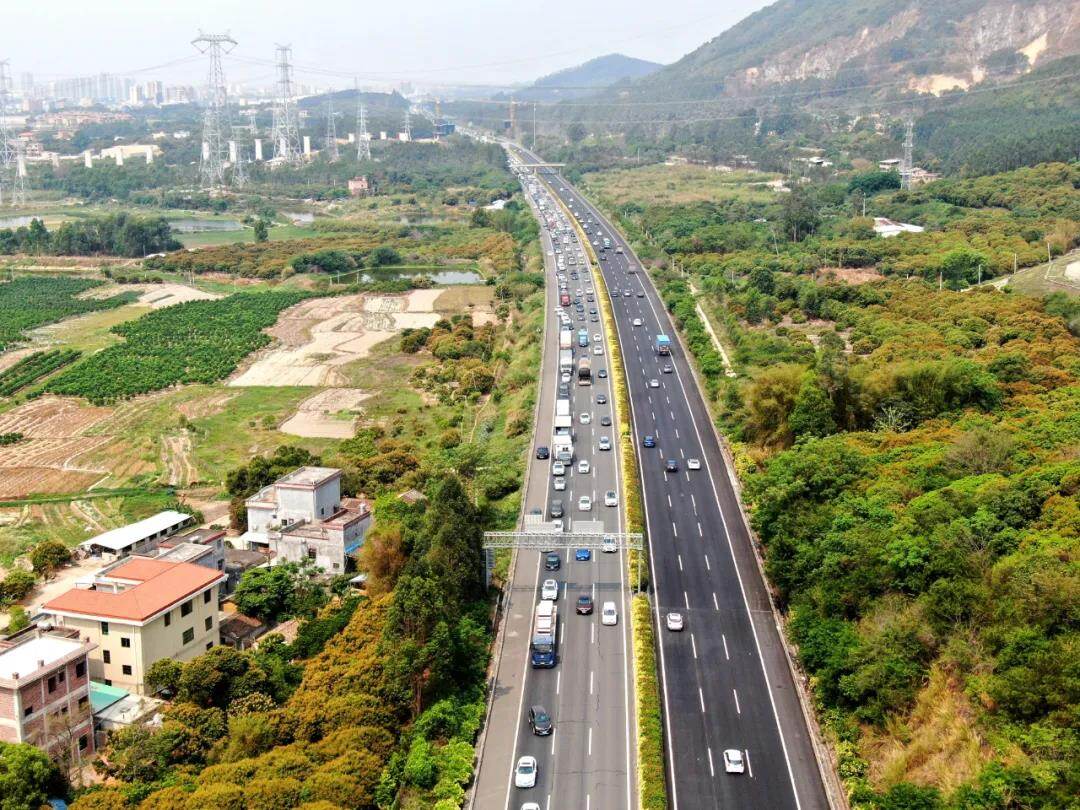
As the core corridor on the east coast of the Guangdong Hong Kong Macao Greater Bay Area, Guanghui Expressway has a daily traffic volume of over 120000 vehicles. After the completion of the renovation and expansion, the section from Luogang to Xiaojinkou will be upgraded to a two-way ten lane road, with a 150% increase in traffic capacity.Editor/Cheng Liting
Comment



 Praise
 Collect
 Comment

 Share
Share


Write something~