 Search


- When the United States and Europe retreated amidst policy swings, China has accounted for nearly 60% of global investment
- The $1.1 trillion global investment flow reveals a reality: the clean energy supply chain is further concentrating towards China
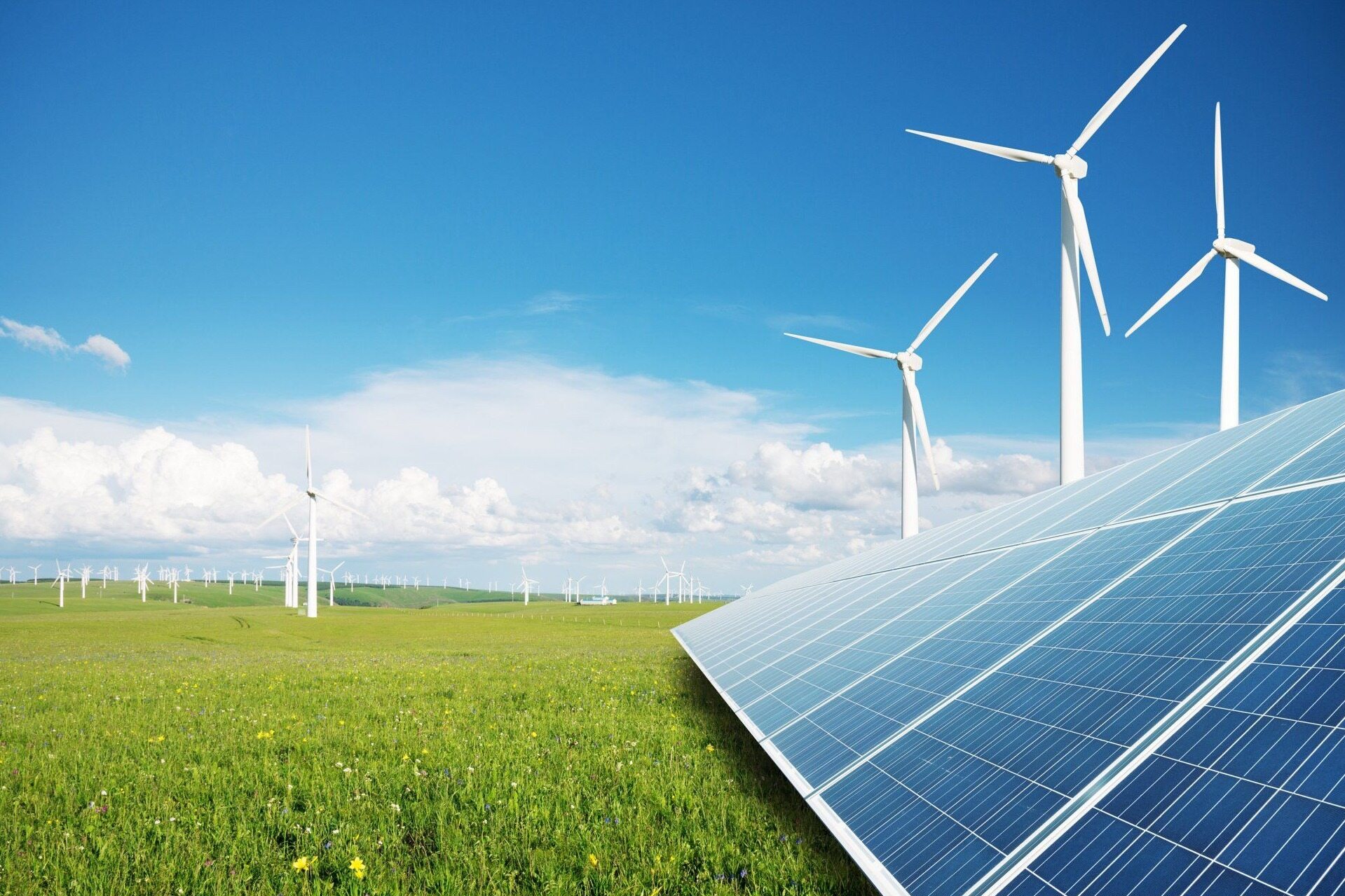
In May 2026, approximately 60 million residents in Spain and Portugal experienced a widespread 24-hour power outage. The root cause of the accident lies in the fragility of the European power grid - a large number of rooftop photovoltaics lack energy storage facilities, and the old distribution network is overwhelmed. The key technical equipment required for repairing the system is mainly in the hands of Chinese enterprises.
This incident reflects the core reality of the global clean energy industry: despite the calls from the US and Europe to 'take risks', clean energy manufacturing capabilities and supply chains are still further concentrated in China.
A report released by Atlas Public Policy, a US think tank, shows that from 2019 to 2025, China accounted for more than half of the total $1.1 trillion in announced investments in clean energy manufacturing worldwide, while US investment experienced its first annual net decrease in 2025.
Concentrate on China in all aspects
According to statistics from corporate headquarters, Chinese companies have led investments totaling 601.4 billion US dollars, accounting for 59% of the global total; American companies are worth $143.4 billion, less than a quarter of China's. Among the top ten investment sources, China's scale exceeds the sum of the other nine.
According to the statistics of investment landing countries, the United States absorbed $236.1 billion domestically, but American companies only invested $143.4 billion, with nearly $100 billion of the difference coming from South Korean, Japanese, and Central European companies. China is exactly the opposite: global investment in China is 509.7 billion US dollars, while Chinese companies have accumulated investment of 601.4 billion US dollars, with a net output of 136 billion US dollars in overseas investment.
25 companies contribute about half of the global clean energy investment, with 14 headquartered in China. CATL ranks first with 51.7 billion US dollars, while BYD ranks second with 35.8 billion US dollars.
United States: From subsidies to withdrawal
From 2021 to 2024, the "Inflation Reduction Act" stimulated the expansion of clean energy investment in the United States. But in July 2025, the Trump administration signed the Big and Beautiful Act, which abolished the electric vehicle tax credit, compressed the clean power subsidy window, and shifted the industry's focus back to fossil fuels.
By 2025, the cancellation amount of clean manufacturing projects in the United States will reach 33.1 billion US dollars, accounting for 14% of the cumulative historical total, exceeding the sum of other countries. This is the first full year net decrease in investment in the United States since 2012 ($22 billion less than the cancelled amount).
The cancelled projects are concentrated in "battery belts" such as Georgia, Tennessee, Michigan, etc. Aspen Aerogels suspends Georgia factory and shifts production capacity to Chinese contract factories; Amprius cancels its Colorado base and switches to a global contract manufacturing model.
The policy has undergone a drastic reversal in less than three years, making it impossible to measure the returns on long-term manufacturing investments. This uncertainty harms American investment more than the cancellation of a single clause.
Chinese investment, global chess game
The problem facing China's domestic market is the unconventional competition caused by excessive concentration of production capacity. The competition among local governments for investment has led to prices of polysilicon, photovoltaic modules, and battery cells falling below the cost line from 2024 to 2025. The Chinese government has increased its regulatory efforts since 2025 to prevent blind expansion of production.
The intensification of domestic competition has prompted Chinese enterprises to shift from product exports to production capacity and technology output. From 2019 to 2025, Chinese companies have announced a cumulative overseas investment of 136 billion US dollars in clean energy manufacturing, nearly four times that of US overseas investment (33 billion US dollars).
Three main routes for going global: firstly, utilizing the rules of free trade zones to invest in Malaysia (about 27 billion US dollars), Vietnam, Hungary (19.2 billion US dollars), and Morocco, in order to avoid tariffs from Europe and the United States; The second is to acquire idle fuel vehicle assets in Europe and America, such as BYD's transformation of Ford Brazil factory and Chery's acquisition of Nissan South Africa factory; The third is technology output. In approximately $120 billion cross-border joint venture projects, CATL collaborates with companies such as Ford and Stellantis, with China leading the technology.
Europe is facing bottlenecks in its power grid infrastructure. Voltage disturbance events surged from 797 in 2023 to 8645 in 2024. After the major power outage in Spain and Portugal in 2025, Germany and Italy require large clean power equipment to have the ability to "build a grid", and the relevant technical equipment is mainly controlled by Chinese companies such as Huawei and Sunac.
Developing countries are more pragmatic choices. By 2025, 76% of new car sales in Nepal will be electric vehicles, almost all of which will be imported from China. Although India has strict restrictions on Chinese investment, the import of lithium batteries from China has increased from approximately 1.2 billion US dollars in 2021 to 3 billion US dollars in 2024, becoming the fourth largest single buyer.
The competition for clean energy leadership tests cost, scale, and policy continuity. China takes the lead with its advantages, but needs to overcome internal competition to achieve sustainable profits; The risk for the United States lies in policy fluctuations, which may miss the window of global new energy competition. Editor/Yang Beihua
Comment




 Praise
 Collect
 Comment

 Share
Share


Write something~