 Search


- This railway significantly enhances the transportation capacity and economic and trade cooperation between China and Mongolia ports
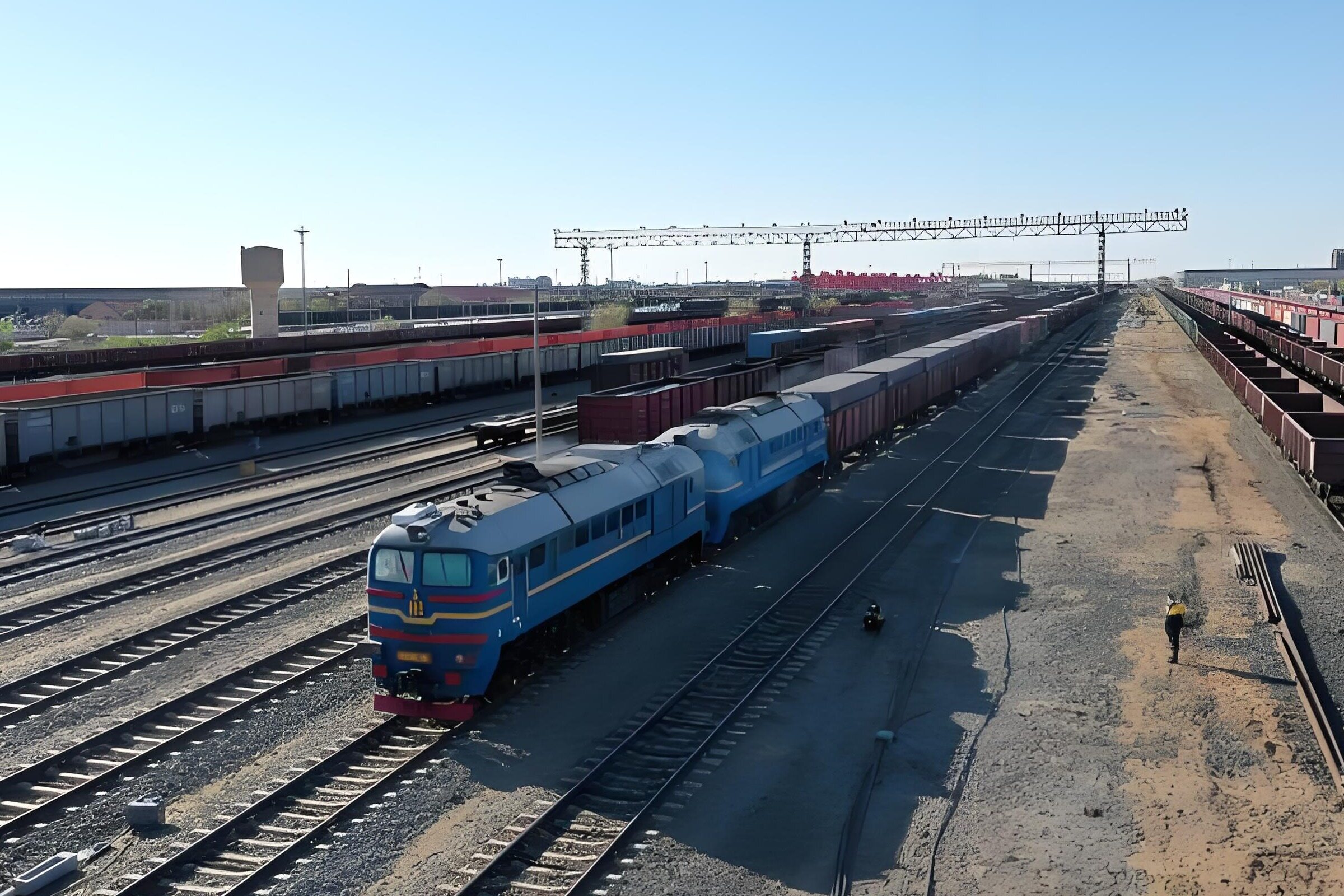
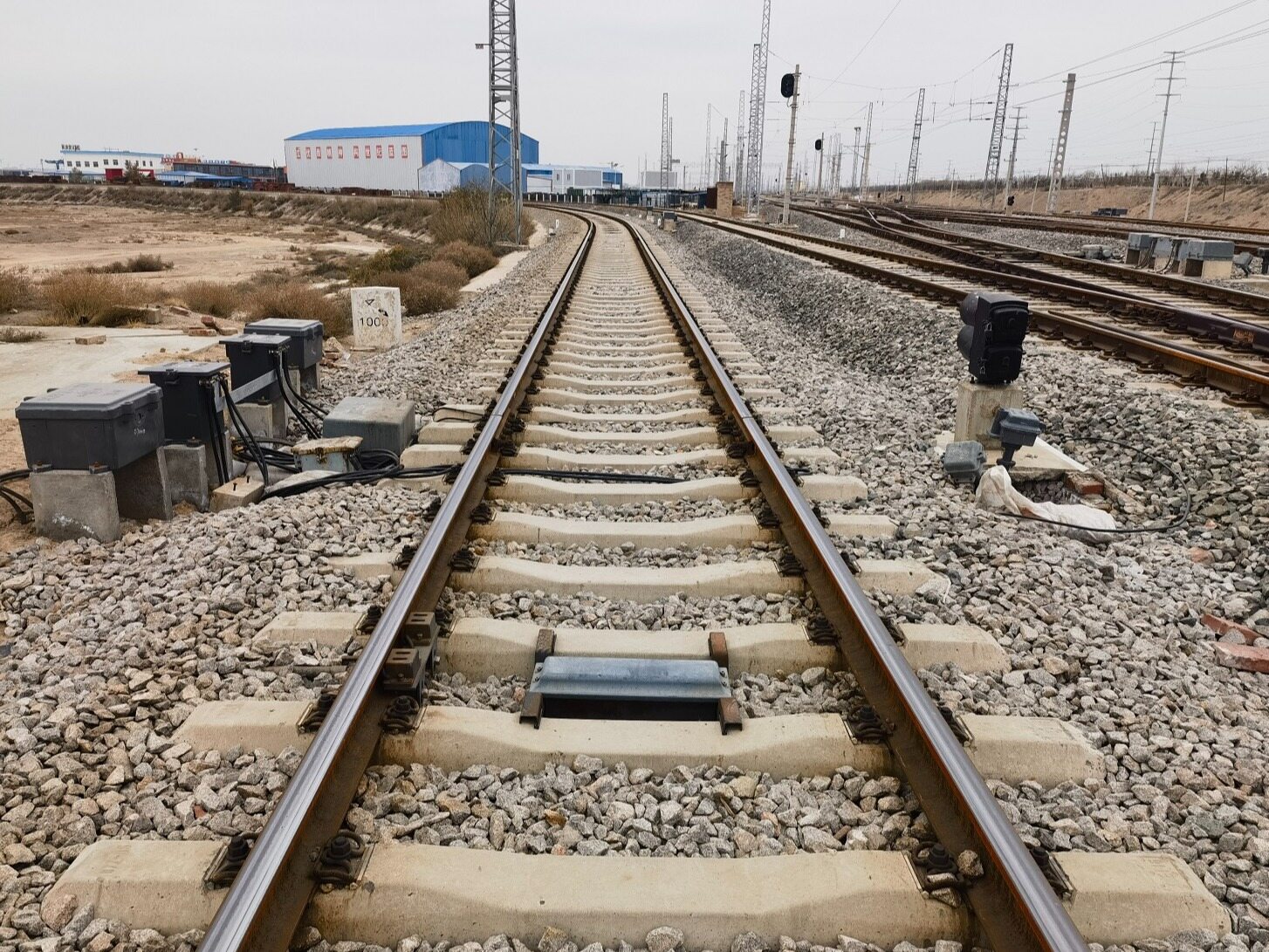
Recently, in the wilderness of South Gobi Province, Mongolia, a heat wave accompanied by sand and dust cannot stop the wave of construction. The Mongolian Prime Minister and his delegation have just concluded their on-site inspection of the Ganqimaodu Gashunsuhaitu railway. Before departure, they specifically instructed to ensure that this "economic lifeline" is opened as scheduled in April 2027. At this moment, 850 Chinese and Mongolian builders are driving 273 large machinery, roaring through operations under 24-hour shift scheduling. As the second cross-border railway between China and Mongolia, this steel artery has quietly advanced by 33.16%. It is not only a coal transportation channel, but also a strategic pivot to leverage the economic and trade pattern between China and Mongolia.
Key Bridge Breaks 25%
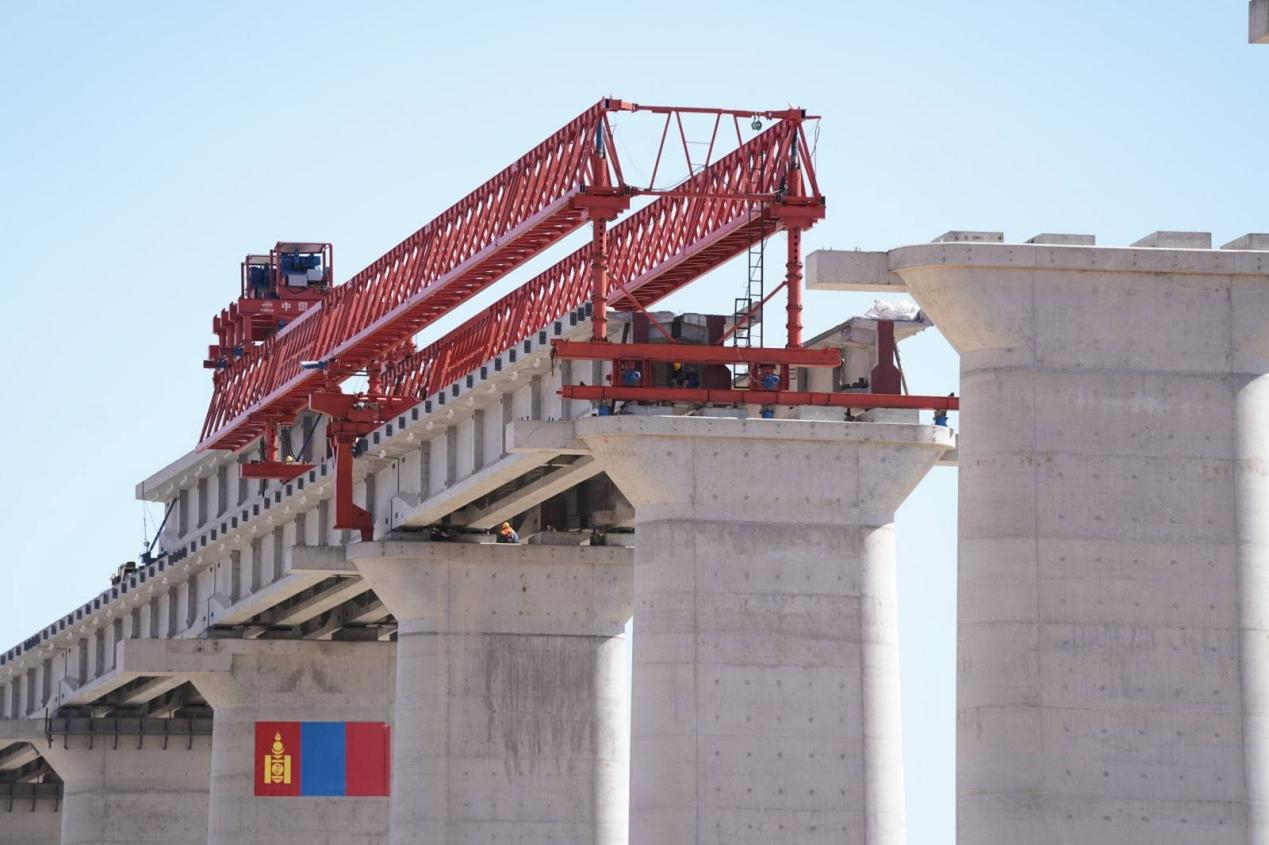
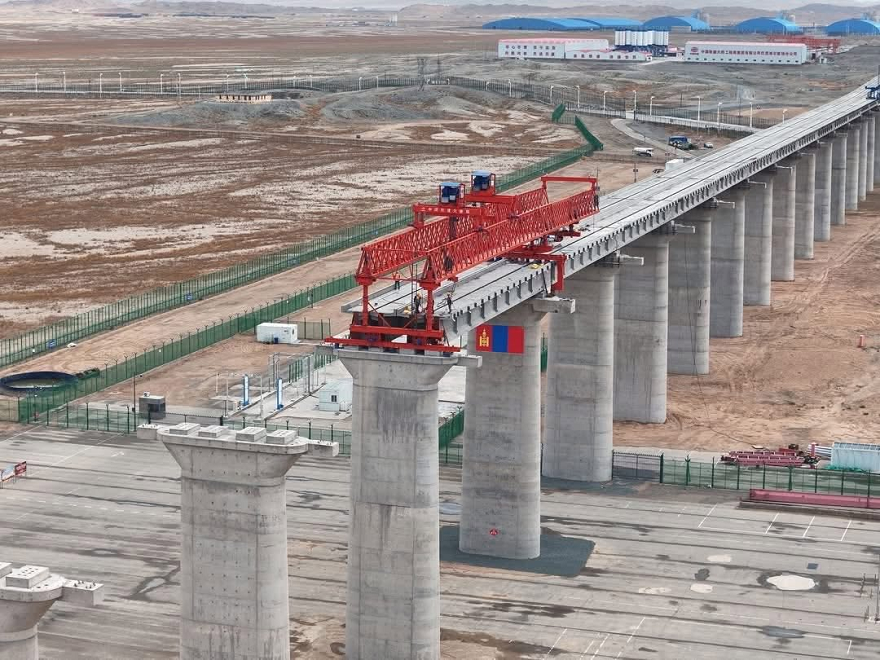
On the 19.18-kilometer route, bridge construction is undoubtedly of utmost importance, with 25.01% of the progress completed so far. On the construction site, pillar after pillar like mushrooms have sprung up, 2376 pile foundations have deeply penetrated into the Gobi rock layers, and 74 bridge piers have stood tall.
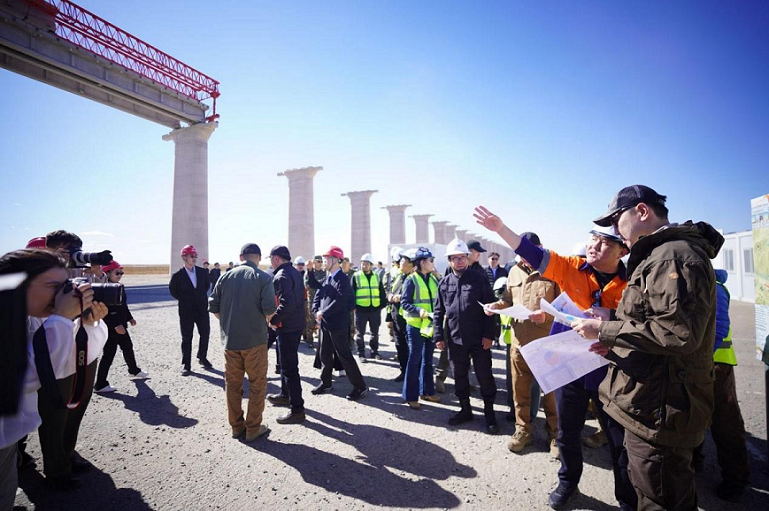
On the prefabrication yard, 282 beams are neatly arranged and waiting for installation. Behind these seemingly cold numbers lies the ultimate pursuit of quality by engineering and technical personnel from both China and Mongolia. In response to the complex geology and extreme temperature differences in the local area, the construction team optimized the concrete mix ratio and curing process to ensure that every inch of reinforced concrete can withstand the test of time, laying a solid foundation for the safe passage of heavy-duty trains.
Simultaneous promotion of supporting housing construction
In addition to the main track and bridges, the construction of logistics support facilities is also in full swing. Among the 19 supporting buildings planned and constructed along the entire line, 11 have completed foundation construction. The concrete pouring and steel structure installation are being carried out simultaneously from the operation management room to the technical maintenance workshop.
These seemingly insignificant ancillary projects are actually the key to ensuring the intelligent operation of railways. Especially in unmanned border ports, the implementation of automated loading and unloading systems and digital dispatch centers will greatly reduce labor costs, improve customs clearance efficiency, and ensure that this energy channel can operate stably 24/7 even in extreme weather conditions.
The coking coal corridor is about to emerge
The strategic value of this railway lies in its ability to completely rewrite the map of coal transportation between China and Mongolia. After the completion of the project, it will seamlessly connect with the Tawntaolegai Gashusuhaitu railway in Mongolia, forming a coking coal transportation corridor with an annual capacity of tens of millions of tons. Keywords: Engineering Construction、Engineering Information
For a long time, Mongolia's coal exports have been constrained by the bumps and inefficiencies of road transportation, resulting in high logistics costs. As the opening date of April 2027 approaches, this channel will enable Mongolian coal to reach China's hinterland at a lower cost and faster speed. It will not only greatly enhance the resilience of China's energy supply, but also inject strong impetus into Mongolia's diversified economic development, making it another example of China Mongolia joint construction of cross-border infrastructure.Editor/Gao Xue
Comment



 Praise
 Collect
 Comment

 Share
Share


Write something~