 Search


- Injecting strong impetus into the improvement of the local coastal transportation network
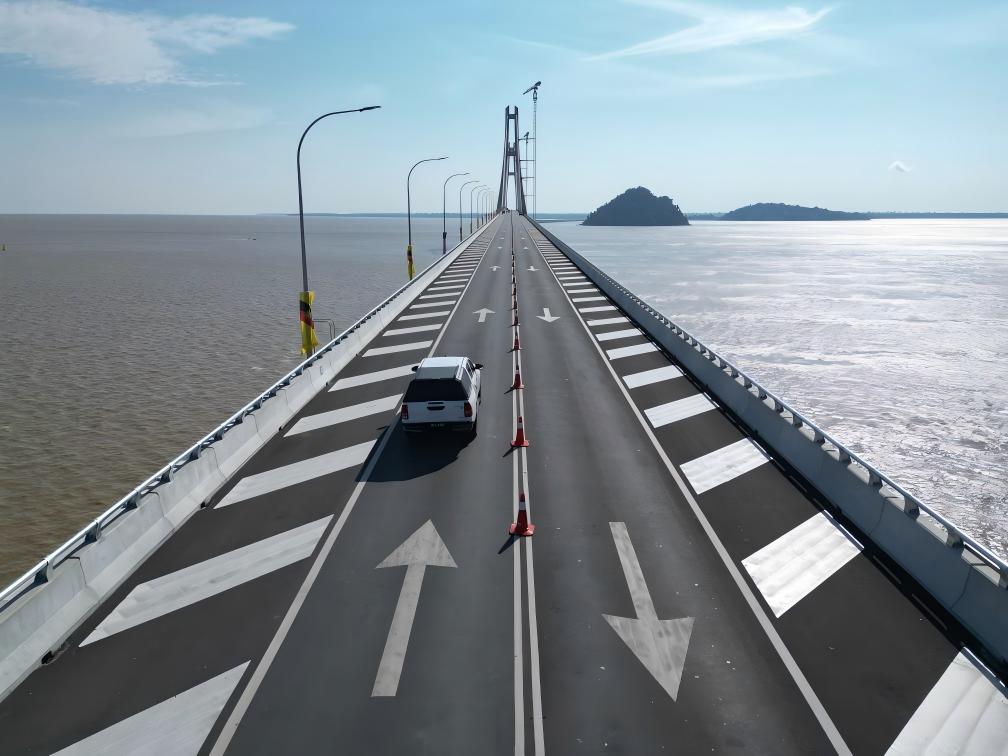
At the mouth of the Luba River in the morning, when the tide receded, the wet mudflat was exposed. Kashin, a 70 year old Iban old man, came to the bank with an old pickup truck. For the past 50 years, he had to queue here every day to wait for the ferry to go to the market on the other side to sell coconuts. He was often trapped for half a day when rainstorm came and the tide rose. Today he no longer had to sigh at the boat. A silver gray long bridge, like a giant dragon lying on waves across the river mouth, was crossed by traffic on the bridge deck. Kashin drove his car onto the bridge deck and arrived at the opposite bank in about ten minutes. This is the Ruba Cross Sea Bridge in Sarawak, Malaysia, which will officially open on July 9, 2026. It was built by a Chinese company and is also a dream project that the local people have been waiting for for half a century.
The breakpoint finally connects
The mouth of the Ruba River into the sea was once the biggest transportation breakpoint on the coastal road of Sarawak, with hundreds of thousands of residents on both sides relying on irregular ferries for travel. During the dry season, the ferries were still available, but during the rainy season, when the wind and waves were strong, the ferries were suspended, and ambulance and vegetable trucks were all blocked on the shore. Sarawak Prime Minister Abonzo Hari said at the opening ceremony that the Ruba Cross Sea Bridge is an important milestone in Sarawak's infrastructure construction, which will further improve the coastal transportation network, facilitate personnel exchanges and transportation of agricultural and fishery products, and drive development along the route.
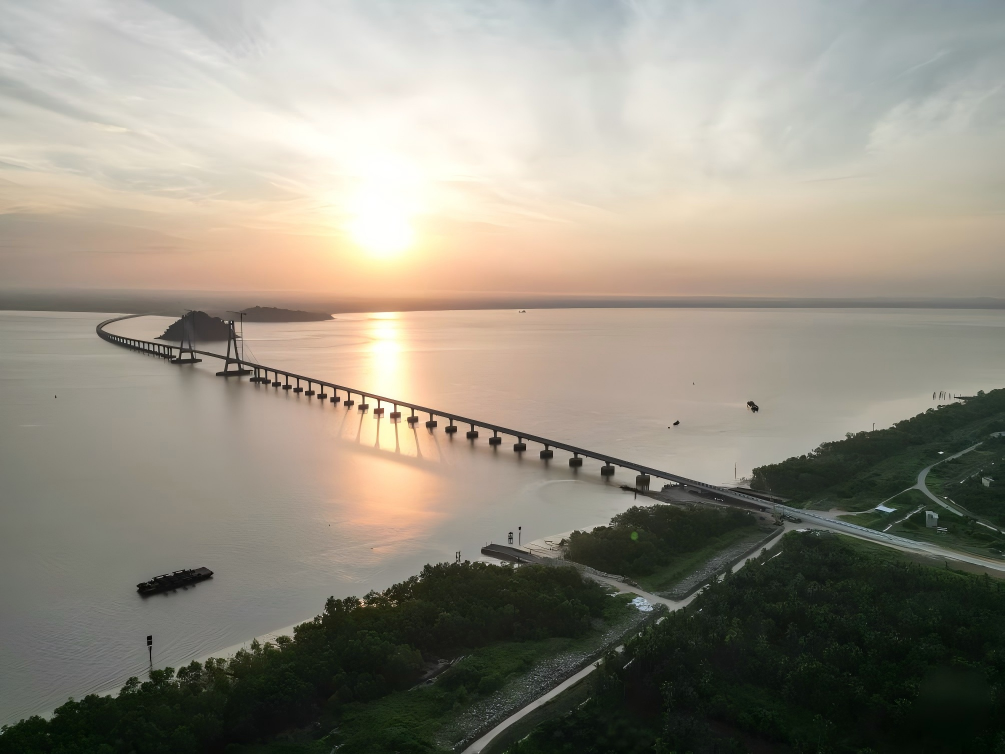
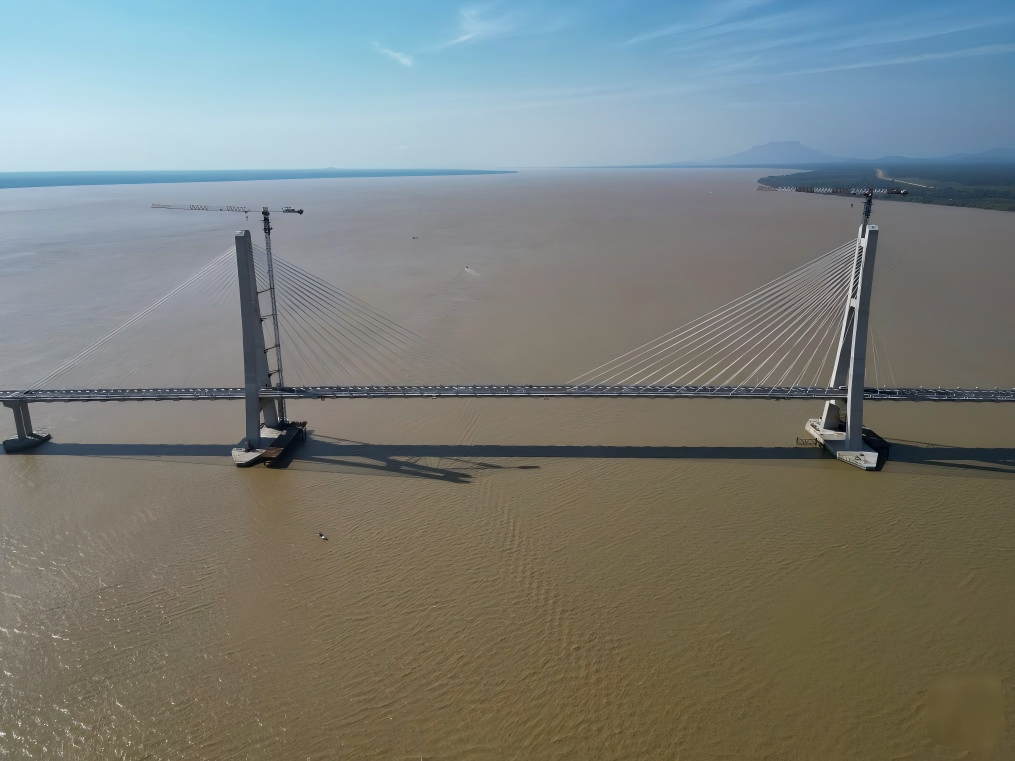
The total length of the bridge is 4.84 kilometers, and the main bridge is a double tower three span double cable surface concrete cable-stayed bridge. The main tower is 111.575 meters high (over 110 meters), with four lanes in both directions. It consists of a south approach bridge, a main channel bridge, and a north approach bridge. After completion, it will be connected to Borneo Avenue, greatly reducing commuting and logistics time from Kuching to Sibu and surrounding areas.
Building a bridge at the funnel-shaped estuary
The bridge site is located at a typical funnel-shaped estuary, with a large tidal range, rapid flow velocity, and strong surge energy. There is no obvious pattern of tidal fluctuations. The riverbed is covered with thick layers of soft soil, and the lower part is hidden with inclined rocks with hardness close to granite. The complexity of geology and sea conditions is comparable to that of the Qiantang River estuary in China. Conventional wharf construction is prone to damage and high cost under the impact of ocean currents. The project team of China Railway Major Bridge Bureau adopts a fully waterborne construction plan without wharf according to local conditions, relying on flat barges, independently developed waterborne concrete mixing ships, and ultra large pile driving ships to transfer the main processes to the water for completion. In severe tidal surges, precise positioning is achieved, and the construction difficulties of pile foundations, pier bodies, and main towers for large-scale bridge construction in complex river mouth environments are overcome one by one.
Project manager Hu Wei introduced that the Chinese team repeatedly verified and optimized the plan based on the strict requirements of Western standards, such as the depth of single pile insertion into the rock, and finally obtained recognition from authoritative experts in Malaysia. During the construction period, the project also created a large number of job opportunities for the local area, and through systematic training, local workers were allowed to participate in large-scale bridge construction, achieving technology transfer.
The maritime bridge jointly built by China and Malaysia
The Luba Sea Crossing Bridge is a landmark project of the the Belt and Road jointly built by China and Malaysia, and is also the largest single bridge project under construction in Malaysia. The offshore construction volume accounts for more than 90% of the overall project. After its opening, it will not only completely end the era of cross-strait ferries, but also drive the coordinated development of oil and gas, agriculture, fisheries, and tourism industries along the route, providing support for the connectivity and economic growth of the East Malaysia region.keywords:Engineering infrastructure
More than a thousand people from the Sarawak state government, Chinese enterprises, and local communities participated in the opening ceremony. The old man Kashin stopped by the bridge for a long time. He said that when he was a child, he heard his grandfather tell stories about taking a boat across the river. Now, his grandson goes to school and drives directly across the bridge - this bridge built by Chinese engineers truly connects the days of facing each other across the sea.Editor/Yang Meiling
Comment






 Praise
 Collect
 Comment

 Share
Share


Write something~