 Search


- On July 21, 2026, CSSC Guangchuan International delivered the Grovis Nova to KOBC Line in South Korea
- Delivery over 200 days in advance, green ocean freight vehicles have a Chinese solution
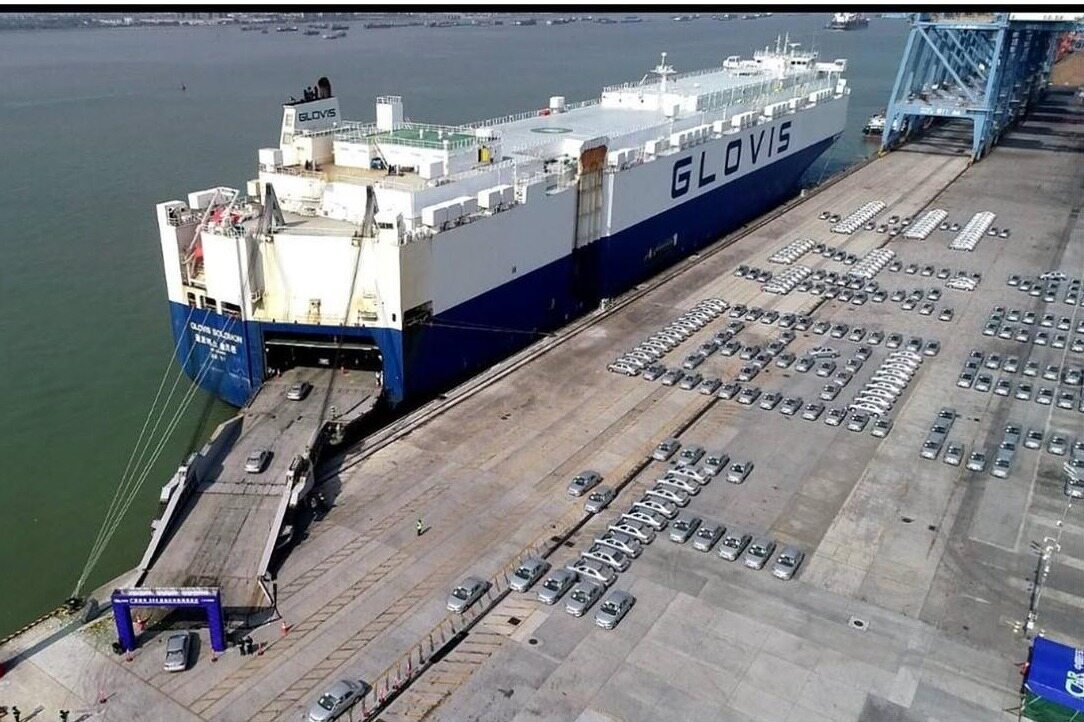
In the river breeze of Nansha, Guangzhou, a giant ship quietly docks at the dock. Without a ribbon cutting ceremony, China and South Korea signed their documents across the screen, and the 230 meter long Grovis Nova officially changed ownership - Korea Ocean Commercial Company (KOBC) took the ship and leased it to Hyundai Logistics GLOVIS, allowing it to operate on transportation routes from Asia to North America and Europe.
This ship is extraordinary. It is the third 10800 car LNG dual fuel vehicle transport ship delivered by Guangzhou Shipbuilding International, and also the world's first 10000 car class roll on/roll off ship with photovoltaic panels on the deck that can generate electricity for the power grid. From the first ship of the same series, the GroveVision Navigation, breaking the capacity record in April 2026, to now the Nova with photovoltaic grid connection, China Shipbuilding has already embarked on a mass and series rhythm in the high-end PCTC (automobile transport ship) track.
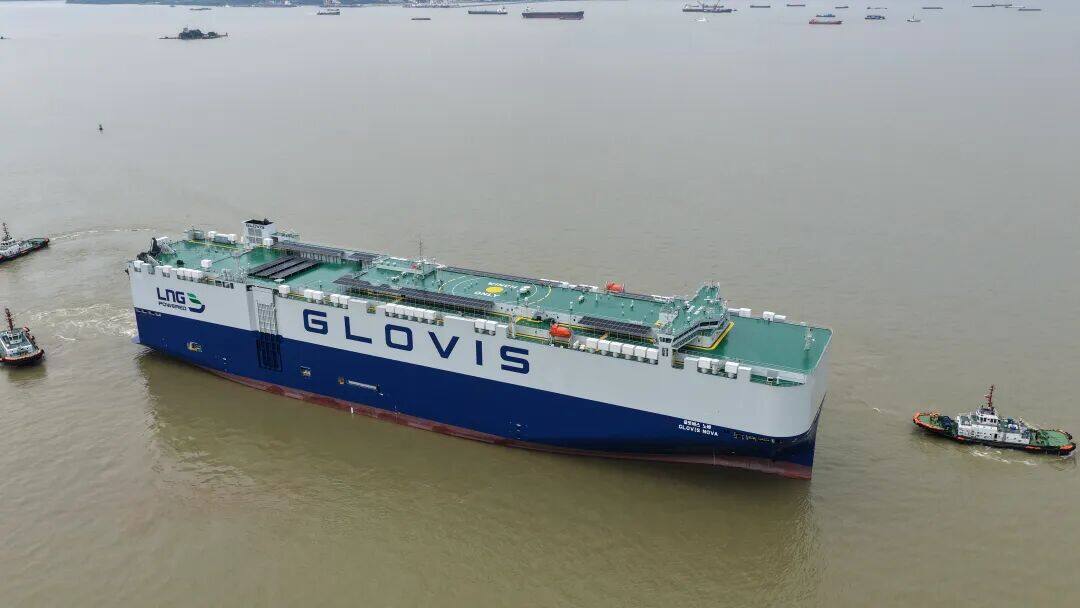
Solar energy on the deck
The Nova has a total length of 230 meters, a width of 40 meters, a depth of 15.6 meters, a designed draft of 9.1 meters, a maximum draft of 10.5 meters, a service speed of 19 knots, and is classified by both the Norwegian DNV and South Korean KR classification societies. It can operate in unlimited navigation areas worldwide. What truly sets it apart is the 200 kW peak power photovoltaic grid connected system on the top deck.
Based on 5.5 to 7 hours of sunshine per day, this system generates approximately 1000 kWh of electricity per day and is directly connected to the ship's power grid for daily loads such as lighting, ventilation, and monitoring. Equipped with dual fuel engines of fuel and natural gas, as well as shaft mounted generators, the three-layer energy-saving logic is stacked together: LNG replaces some heavy oil to reduce emissions, shaft mounted machines recover redundant power from the main shaft, and photovoltaics turn the originally idle deck roof into a small power station. The emissions meet IMO Tier III standards, the LNG reserves on board can support the entire voyage, and there is no longer a fear of local carbon regulations blocking ocean ports.
Marine Stereoscopic Garage
Inside the cabin, there are 14 car decks, 9 fixed decks, 5 adjustable decks, starboard stern and side doors, 16 sets of hydraulic movable ramps, and 2 hydraulic lifting decks. Sedans, box trucks, container trailers, and heavy trucks can all be mixed together, and some IMDG packaged dangerous goods can also be loaded. A single ship can carry 10800 standard passenger cars - if each car is arranged in a 5-meter row, the fleet will be connected for more than 50 kilometers.
In recent years, there has been a surge in domestic new energy vehicles going abroad, and global automobile shipping has been dominated by waiting ships. The 10000 vehicle PCTC has transformed from an unpopular ship type to a hard currency. Guangchuan International currently holds 14 orders for 10800 dual fuel vehicles of the same type, and has delivered multiple of them. The Nova is the first delivery ship to include photovoltaics as standard configuration, and it is also the confidence that the Chinese plan has been repeatedly added by Korean shipowners.
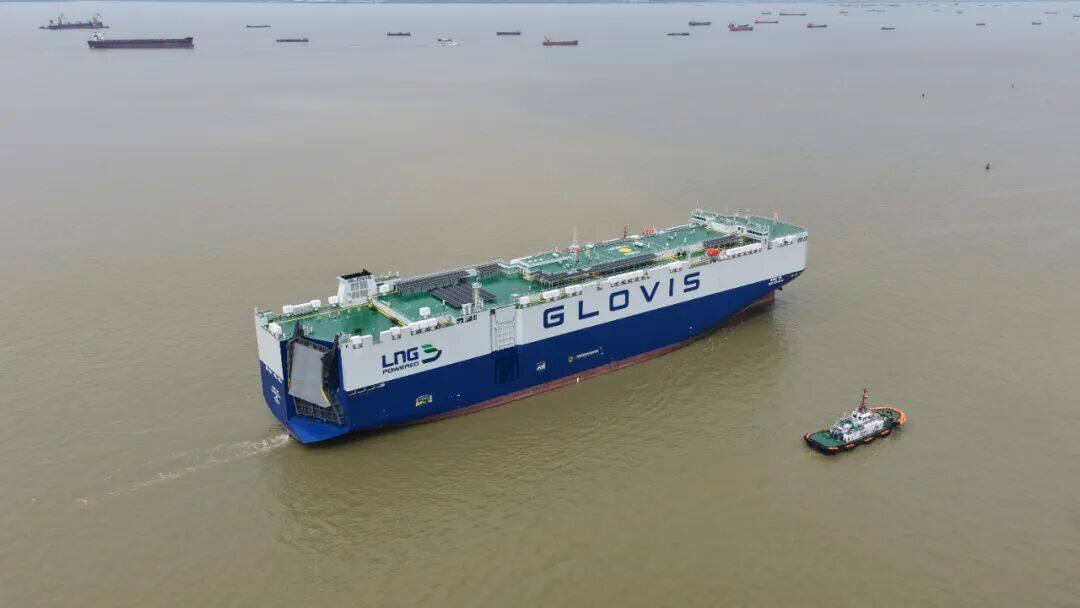
Deliver the ship 200 days in advance
Giant wheels are not synonymous with slow work and meticulous work. The Nova project team has integrated lean management into every node: the roll on/roll off equipment below deck 8 has been inspected before leaving the dock, the anti-skid sand construction of the ramp below deck 5 is complete, and the gas system has been debugged; The main engine mooring and commissioning will be completed within 15 days after leaving the dock, and the tilt test will be completed within 34 days. The photovoltaic system has been installed, debugged, and connected to the grid for power generation before the trial voyage. The final delivery was more than 200 days ahead of the contract period, making it the shortest cycle ship among similar vessels of Guangzhou Shipbuilding.
Online ship delivery is not a hassle, but rather a long-term trust of the shipowner in the construction quality of China Shipbuilding Industry Corporation - the ship has not yet docked at the destination port, and once signed, it can go to collect cargo. From tackling the deformation of thin plates and LNG dual fuel system in the first ship, to turning on photovoltaics on the Nova, the same blueprint has been developed faster and faster. The pace of workstations for ships of the same series has already been modeled.keywords:Engineering infrastructure,New energy information network
A ship carries cars, and behind it lies the discourse power of green shipping rules. When the solar panels on the deck start to power the ocean going giant ship, the story of carbon reduction for the ten thousand car class car transport ship has just turned the first chapter.Editor/Yang Meiling
Comment




 Praise
 Collect
 Comment

 Share
Share


Write something~