 Search


- The ten-year construction of Zonglu Hydropower Station has come to an end, which can meet about 10% of Nigeria's electricity demand
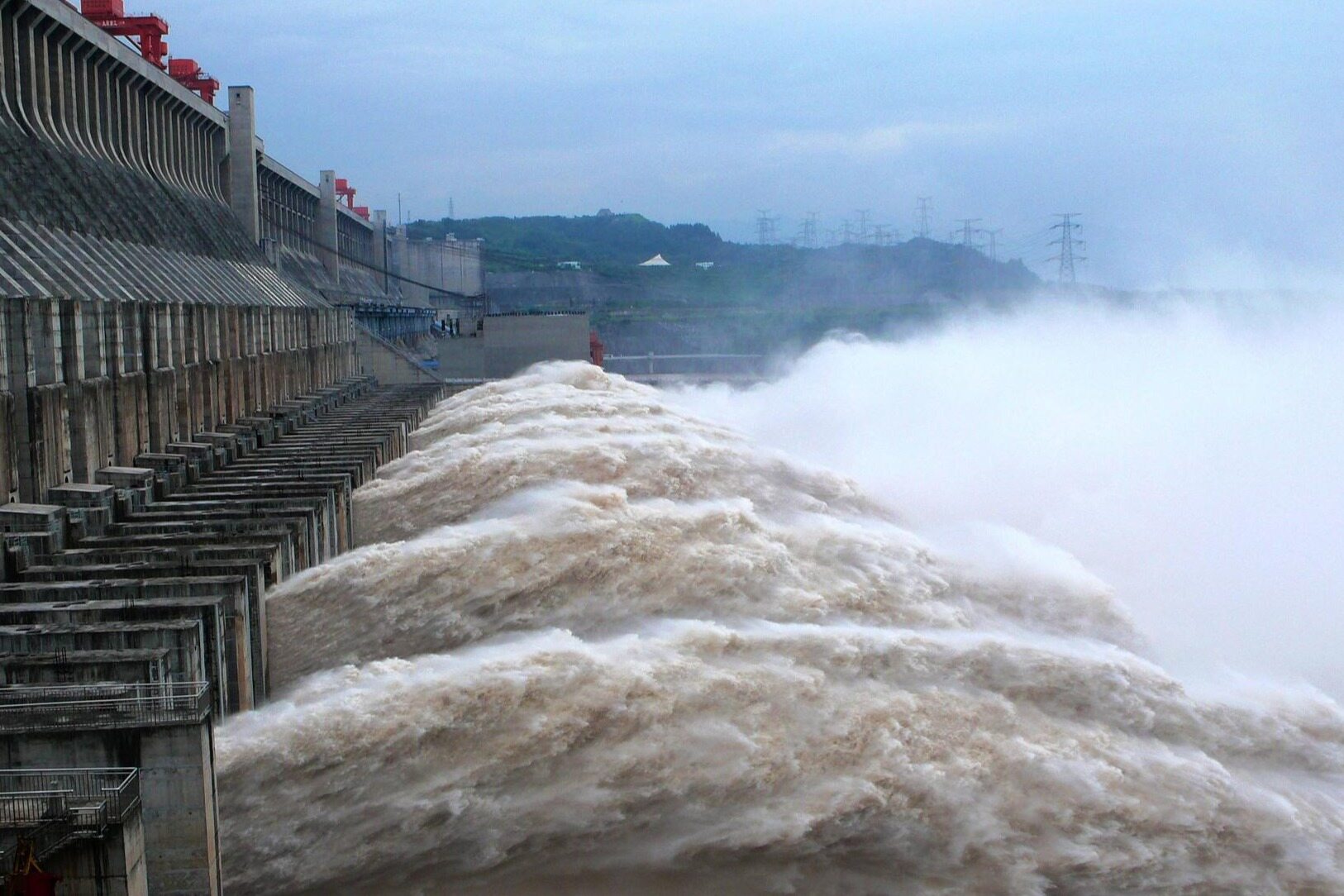
In the canyon of the Kaduna River in northern Nigeria, four water turbine units are rotating at a flow rate of hundreds of cubic meters per second, converting the rushing river water into 700 megawatts of clean electricity, which is continuously fed into the West African national power grid. At this moment, it has been exactly ten years since the project started. On July 24, 2026, the Zonggelu Hydropower Station project officially obtained the performance certificate issued by the owner, marking the successful completion of this mega project undertaken by China National Electric Engineering Corporation and China Hydropower Joint Venture.
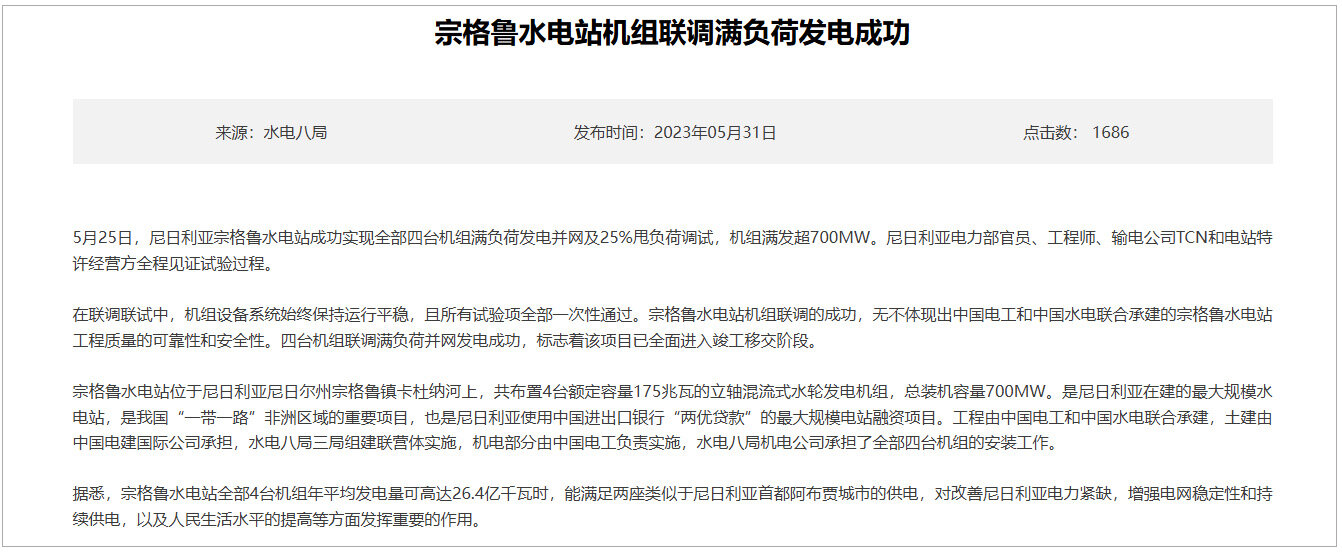
The Engineering Marathon of Ten Years of Sharpening a Sword
The Zonglu Hydropower Station started construction in 2013 with a total installed capacity of 700 megawatts, making it the largest newly built hydropower station in Nigeria in nearly 40 years. Over the past decade, the project team has faced numerous challenges such as the pandemic, complex geographical environments, and extreme weather conditions, and has coordinated and promoted the integrated management and control of the entire life cycle of design, procurement, construction, and commissioning. The concrete construction of the dam was completed in 2021, the first unit was successfully started in one go in 2022, and all four units achieved full load power generation and grid connection in 2023. The performance certificate was finally obtained on July 24, 2026.
Understanding the gold content of power plants through three data points
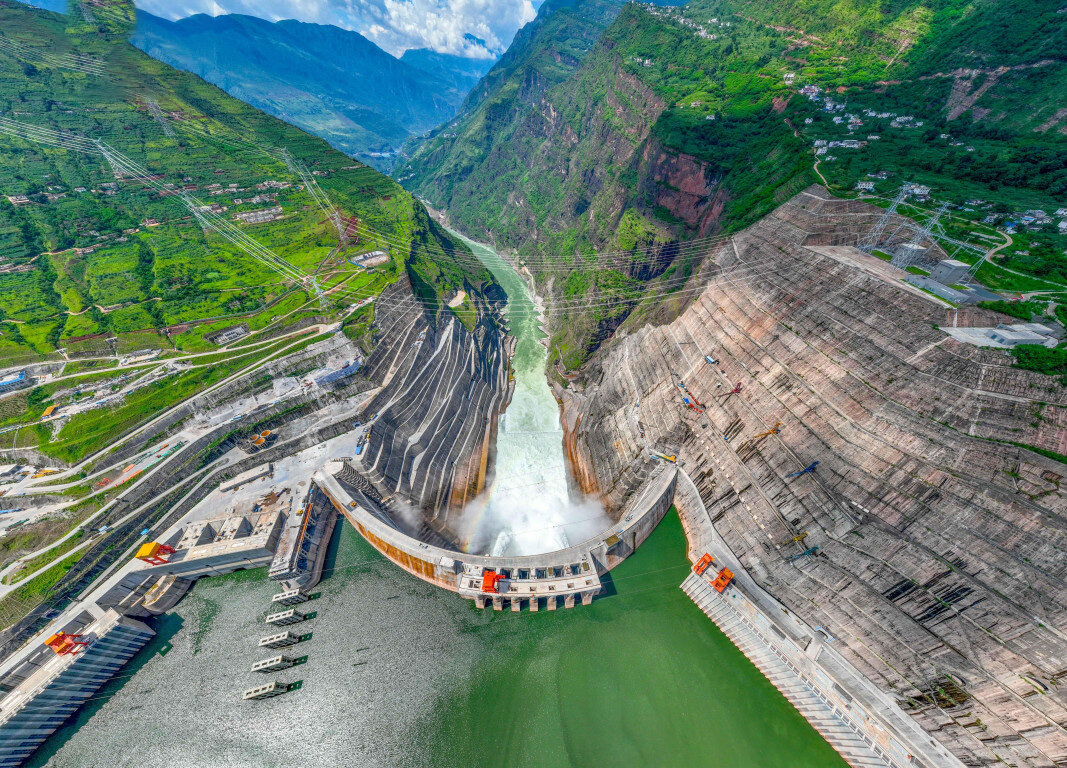
With an installed capacity of 700 megawatts, it is the largest hydroelectric power station newly built in Nigeria since 1968. The project can meet about 10% of the country's electricity demand, which is of great significance in the context of the long-term power shortage of the State Grid, which has a population of over 220 million. Industry statistics show that for every 4 kWh of electricity added in Nigeria in the past decade, about 3 kWh came from Zonglu. The power station can reduce carbon dioxide emissions by about 400000 tons per year, and has comprehensive benefits such as power generation, flood control, irrigation, aquaculture, and shipping. Keywords: the Belt and Road News Network, hydropower station
Hematopoietic cooperation in localized talent cultivation
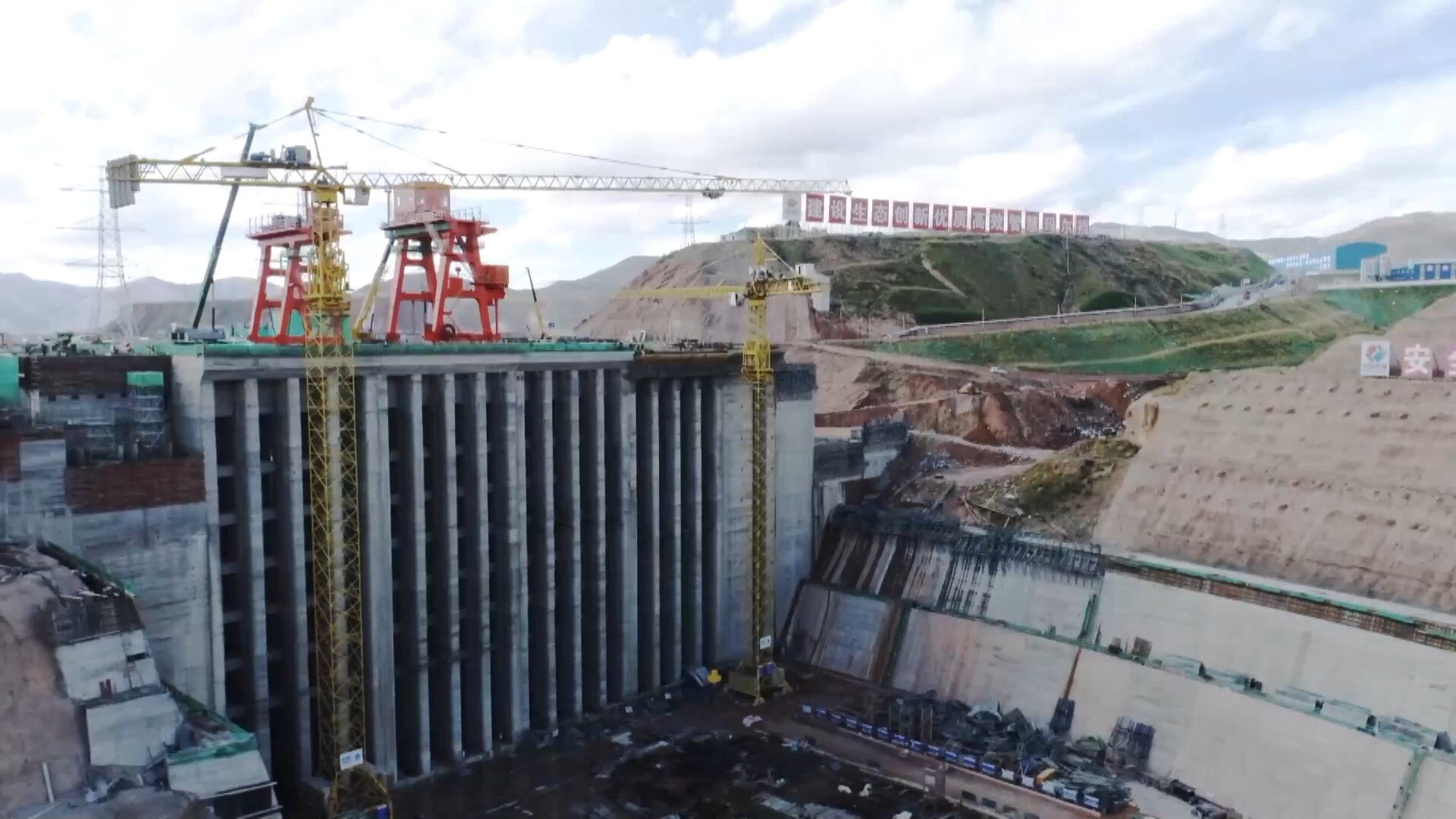
The project team has overcome the world-class technical bottleneck of connecting an 85 meter high asphalt concrete core wall dam with a roller compacted concrete dam. Two self-developed equipment have obtained national patents, and all test items have passed the inspection in one go. During the peak construction period, the local workforce exceeded 5000 people, accounting for over 90% of the total. Through mentoring and skill training, the project department has cultivated a group of local technical backbones who can independently complete power station operation and maintenance. China Africa energy cooperation has moved from short-term aid construction to sustainable deep cooperation.Editor/Gao Xue
Comment



 Praise
 Collect
 Comment

 Share
Share


Write something~