 Search


- This century long passage is bringing Kashgar, China closer and closer to the hinterland of Central Asia
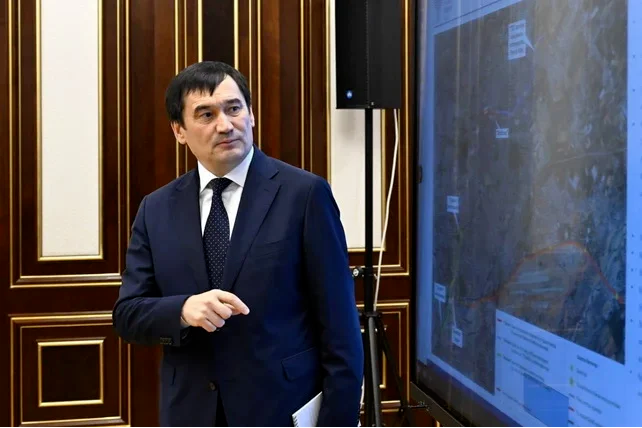
In the Tianshan branch at an altitude of two to three kilometers, the roar of bulldozers overshadowed the wind. At the end of July 2026, the Minister of Transport of Uzbekistan stood next to a construction road in Kyrgyzstan, with a valley crossing bridge taking shape behind him - eight key control bridges were simultaneously opened, with over 10000 workers and more than 7000 sets of professional equipment pressing on 542 kilometers of the route. He gave a decisive judgment: the originally planned six-year construction period is expected to be completed at least one year earlier.
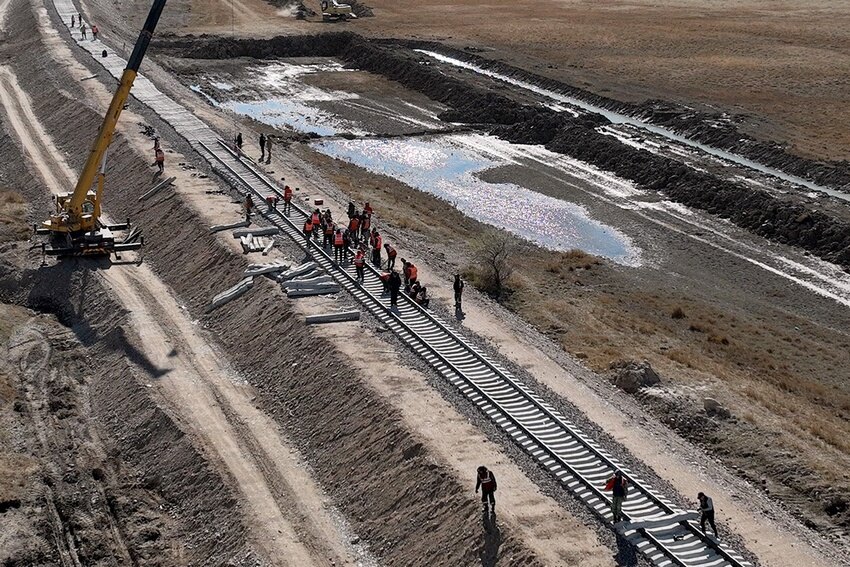
From the signing of the Memorandum of Understanding among the three countries in 1997 to the first blow of the launching ceremony in Jalalabad on December 27, 2024, it took more than 20 years for the China Kyrgyzstan Uzbekistan railway to truly enter the rock layers from the blueprint. On April 29, 2025, the three key tunnels of Fergana Mountain, Naren No.1, and Koshtbor were the first to be blasted; In July of the same year, the main construction of the entire section within the territory of Kyrgyzstan began. Now the progress bar is stuck at about 17%, but it has turned the four words "Century Project" from diplomatic jargon into tangible bridge piers and openings.
Ten thousand people rush to build progress
The route departs from Kashgar, Xinjiang and exits through Turgat Port: approximately 167 kilometers within China, 305 kilometers within Kyrgyzstan, and 70 kilometers within Ukraine. The hardest part of the Kyrgyzstan section is 50 bridges and 29 tunnels, with a bridge tunnel ratio of about 39%. Place names such as Markmar, Jalalabad, and Andijan, which were originally hidden in map folds, now swallow hundreds of carts of cement and steel rails every day.
The confidence in speeding up does not solely lie in manpower. The three countries first straightened the money table: established the China Kyrgyzstan Uzbekistan Railway Joint Venture Company, with the Chinese side holding 51% of the shares and Kyrgyzstan and Uzbekistan each holding 24.5%; The total investment is about 4.7 billion US dollars, of which about 2.3 billion US dollars will be injected by the Chinese side through a 35 year loan, and the remaining part will be contributed in equity ratio (about 1.224 billion US dollars for the Chinese side and about 588 million US dollars for the Jilin and Urumqi respectively). In Jifang's half of the share capital, there is also a layer of China Export Import Bank's 25 year preferential loan, with an annual interest rate of 1.5% and a 5-year grace period, directly dispelling the doubts about the "debt trap".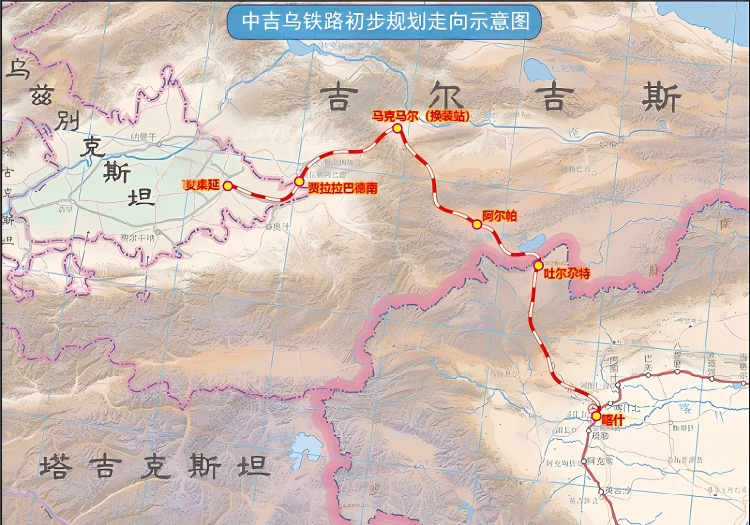
Standard gauge wide gauge relay
The gauge is the most delicate blade of this railway. China uses a standard gauge of 1435mm, while Kyrgyzstan and Ukraine inherit the Soviet Union's 1520mm wide gauge. The difference of 85mm has not been reached in the past 20 years. The final plan is very clever: Kashgar Turgat Markmar will follow the standard track, Markmar Jalalabad Andijan will follow the wide track, and the replacement yard will be located in Markmar in the mountainous area of Kyrgyzstan. When the goods arrive here, either the container needs to be emptied or the bogie needs to be replaced. The efficiency of China's railway network is preserved, and Jilin and Uzbekistan have both wide gauge networks that do not need to be overturned and rebuilt.
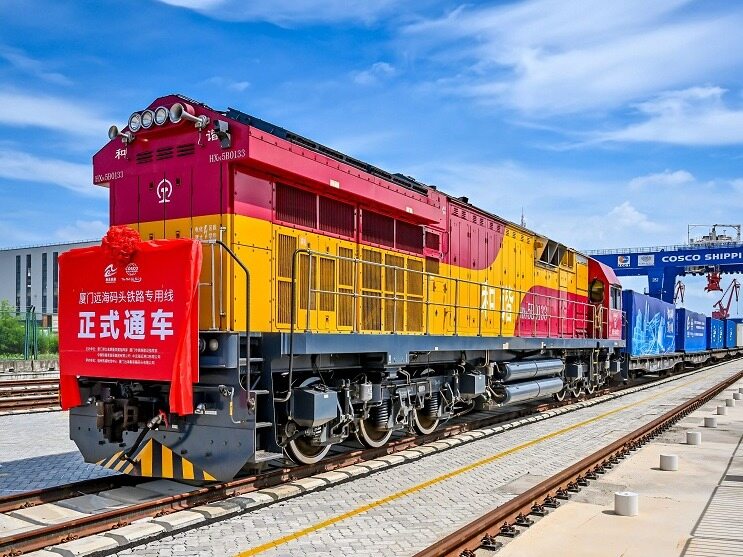
This compromise has led to the re pricing of Markmar from a remote mining town - in the future, it will serve as both a replacement hub and an inland port for China and Central Asia that Kyrgyzstan wants to build. In the initial stage, the railway will be put into use with a single line diesel engine and a speed of 120 kilometers per hour, with reserved space for electrification and double line upgrades; After the second phase of renovation is completed, this line will not only be "connected", but also "fast".
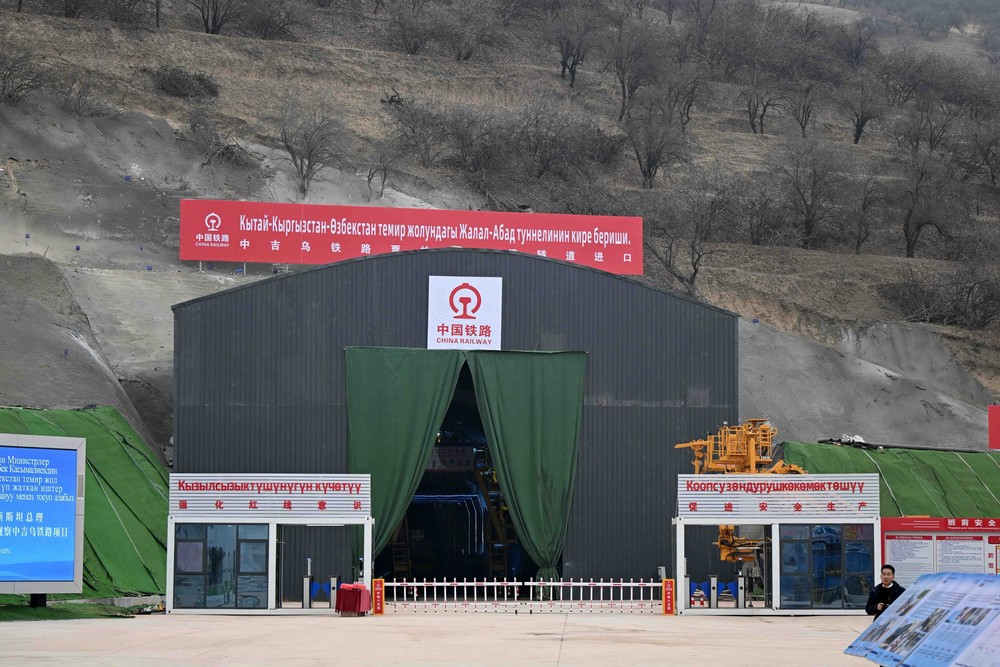
Channel reshaping Central Asia
When the hard engineering was pushed forward, the soft environment was not left to dry either. The three parties of China, Kyrgyzstan, and Ukraine are pushing for customs clearance time at ports, promoting electronic documentation, and eliminating logistics barriers, with the goal of achieving license free freight transportation. The effect has already emerged: the freight volume between China and Ukraine through Kyrgyzstan has increased sevenfold, which is equivalent to the fact that the railway has not yet been opened, and the transportation capacity pool has already heated up.
After its opening, the land route from China to the Middle East and Southern Europe will be shortened by about 900 kilometers, saving 7 to 10 days, reducing logistics costs by about 30%, and planning an annual cargo volume of 10 to 12 million tons. It bypasses the traditional Russia Kazakhstan northern line, adding a southern arc to China Central Asia Iran Türkiye Europe; For Kyrgyzstan, it means an annual transit fee of 200 million to 300 million US dollars and a 1% to 2% increase in GDP, while for Ukraine, it pushes the "landlocked country" one step further towards becoming a "landlocked country". The President of Ukraine called it the 'Century Project to Change the Regional Geopolitical Landscape', which is weighty but visible in every detail.keywords:Engineering infrastructure
The wind in Tianshan is still cold, but as the sleepers are laid down one by one, the distance from Kashgar to Anjian is no longer just a number on the map.Editor/Yang Meiling
Comment


 Praise
 Collect
 Comment

 Share
Share


Write something~