 Search


- Self built railway landing, consolidating the foundation of Central Asian connectivity
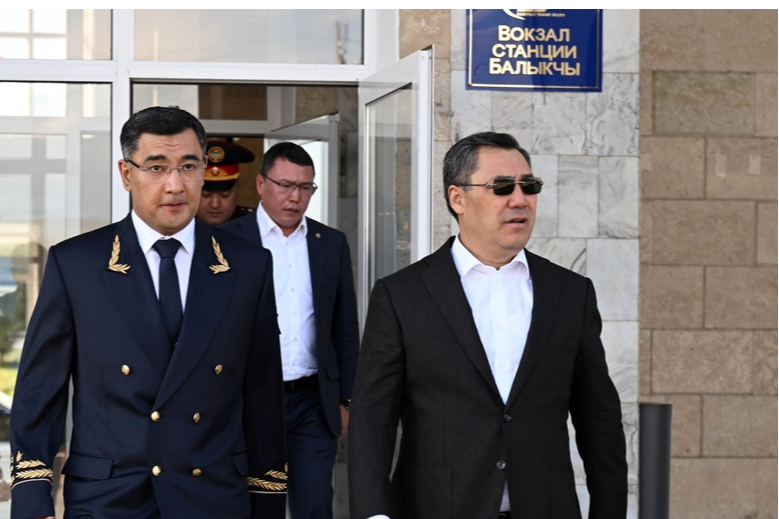
After the full efforts of local teams, Kyrgyzstan has achieved a historic breakthrough in transportation. On July 25, 2026, the country's brand new Barek Chicochkor Railway officially opened, ending the 78 year history of no self built roads. This purely locally built railway not only fills the gaps in domestic transportation, but also reserves a channel to connect with the China Kyrgyzstan Uzbekistan Railway, laying the groundwork for the country to open up a new cross-border logistics channel.

Breakthrough in local road construction
The railway that will be opened this time has a total length of 63 kilometers and is the first phase of the local north-south railway corridor. It was independently prepared and fully funded by Kyrgyzstan, with no foreign investment or technical personnel involved throughout the entire process. Previously, foreign contractors quoted a price of up to 5 million to 8 million US dollars per kilometer, while the domestic team controlled the cost at about 950000 US dollars per kilometer, significantly reducing the construction cost. The Kyrgyz National Railway Company stated that the project has overcome external doubts and confirmed the strength of local infrastructure construction. The feasibility studies for the second and third phases of the project will be carried out in an orderly manner in the future.
Connecting cross-border development patterns
This railway is the first independently built railway in Kyrgyzstan in nearly 80 years and has a milestone significance. According to the plan, the route will continue to extend to Karakche, Markmar and other places, connecting the north and south regions of Kyrgyzstan. Keywords: Kyrgyzstan, Central Kyrgyzstan Uzbekistan Railway
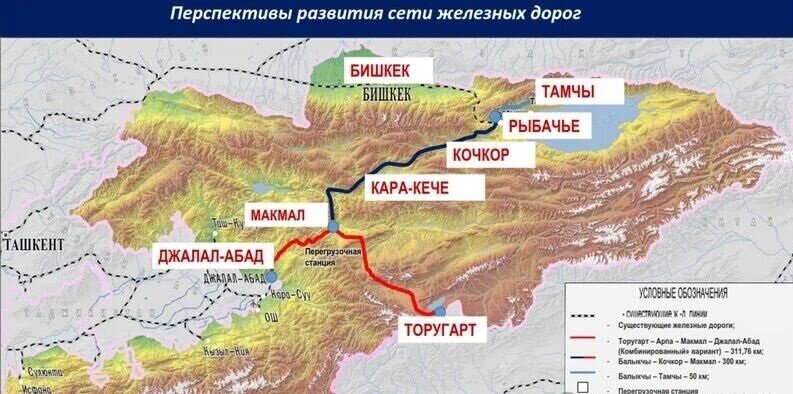
In the future, this local railway channel will be integrated into the China Kyrgyzstan Uzbekistan Railway Corridor, relying on the advantages of cross-border transportation trunk lines, greatly enhancing the country's transit transportation capacity, driving foreign trade exports, investment attraction, and cultural tourism industry development, helping Kyrgyzstan transform into an important cross-border transportation hub on the Eurasian continent, and continuously improving the connectivity network of the Central Asian region.Editor/Min Jing
Comment





 Praise
 Collect
 Comment

 Share
Share


Write something~