 Search


- Innovative pilot project for coal to olefin production is promoted, with investment reduced by 25% and energy consumption halved

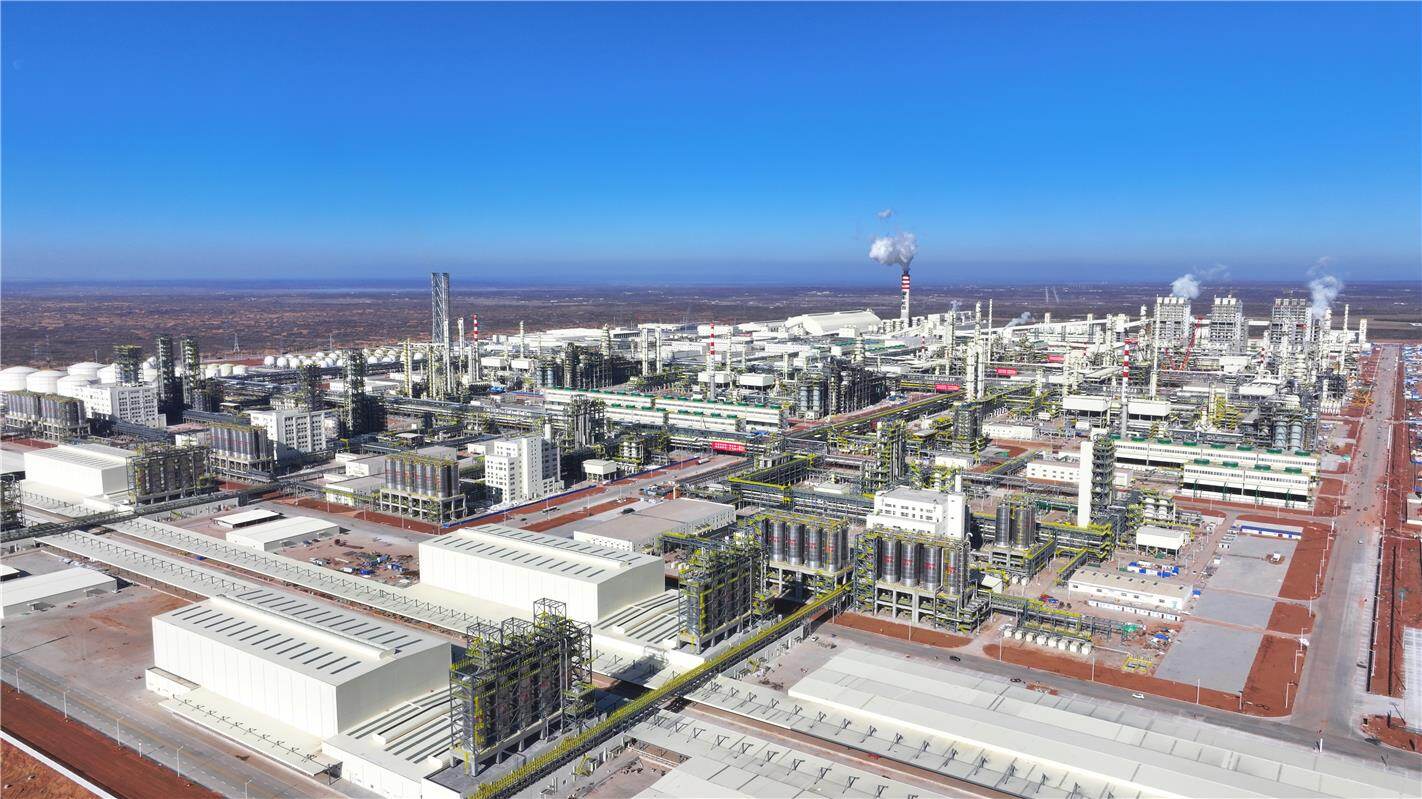
In the Tuke Industrial Project Area of Wushen Banner, Ordos, Inner Mongolia, an innovative pilot project related to the future direction of the coal chemical industry is steadily advancing. Zhongtian Hechuang Energy Co., Ltd. has officially released the first public announcement of the environmental impact assessment for the 1500 ton/year one-step synthesis gas olefin project, marking the early preparation stage of this industrial trial project supported by the core technology of the research and development team of the Department of Chemical Engineering at Tsinghua University. From the traditional two-step method of coal to olefin conversion to one-step direct conversion, China's coal chemical technology is moving towards shorter processes, lower energy consumption, and fewer emissions.

The pilot project is steadily advancing
The project is located in the Tuke Industrial Project Area of Wushen Banner, Ordos City, and is under the jurisdiction of the Sulige Economic Development Zone in Ordos. It is a new industrial experimental project. The core construction content is a one-step synthesis gas to olefin side line pilot plant with a test scale of 1500 tons/year. The total investment of the project is 50 million yuan, and the construction period spans from 2024 to 2026. According to the established construction schedule, the project will start the foundation construction of public works in March 2026, complete the installation and commissioning of main equipment in April of the same year, and plan to carry out hot commissioning work in June. The smooth construction and trial operation of this pilot plant will accumulate detailed process parameters and mature engineering practice experience for the large-scale industrial application of innovative processes.
Technological innovation reduces costs and carbon emissions
Compared to the traditional coal to olefin process, this innovative technology route eliminates the intermediate process of methanol synthesis and achieves direct conversion of synthesis gas to produce olefins. After process optimization, there is no need to configure large-scale supporting equipment such as high-pressure methanol synthesis reactors, methanol refining units, and MTO low-pressure reaction regeneration systems, greatly simplifying the production process. Based on the research and development achievements of Professor Qian Weizhong's team from the Department of Chemical Engineering at Tsinghua University, this technology can effectively improve the conversion efficiency of carbon monoxide, olefin selectivity, and overall product yield. According to public data, under the same production scale conditions, engineering investment can be reduced by about 25%, comprehensive energy consumption can be reduced by nearly 50%, carbon dioxide emissions can be reduced by more than 30%, and production water consumption can be reduced by more than 30% simultaneously. Keywords: New Energy News, Chemical Industry, Coal to Olefins

Industrial foundation supports innovation
Zhongtian Hechuang relies on a stable operating system and industrial layout, and has formed a large-scale production capacity, with a coal production capacity of 16 million tons per year, a methanol intermediate product production capacity of 3.6 million tons per year, and a polyolefin production capacity of 1.37 million tons per year. It is one of the large-scale coal to olefin projects that have been put into operation in China. The project has maintained stable operation since entering commercial operation in 2017, laying a solid industrial foundation for technological innovation iteration. This pilot project is led by Zhongtian Hechuang Chemical Branch and is an upgraded and iterative solution for the traditional coal to olefin process, providing important technical support for the green upgrading, energy conservation and carbon reduction development of the domestic coal chemical industry.Editor/Gao Xue
Comment




 Praise
 Collect
 Comment

 Share
Share


Write something~