 Search


- The rise of Henan's hardcore industry firmly controls the global diamond industry discourse power
- After 60 years of deep cultivation and hard work, China's diamond industry has gone from self-developed to leading the world

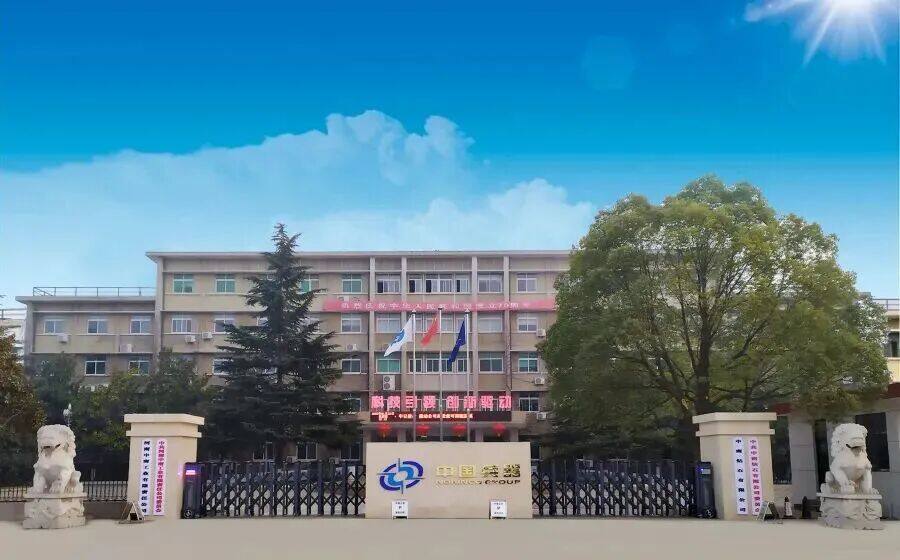
Sixty years ago, several shiny crystals that popped out of the double-sided press machine at Zhengzhou Sanmo were once seen by outsiders as objects that could only scratch glass. Who would have thought that the light that was lit up to break the Western blockade would shine on three battlefields at the same time today: wedding ring counters, missile fairings, and Nvidia GPU cooling substrates.
From cutting glass to breaking through global diamond hegemony
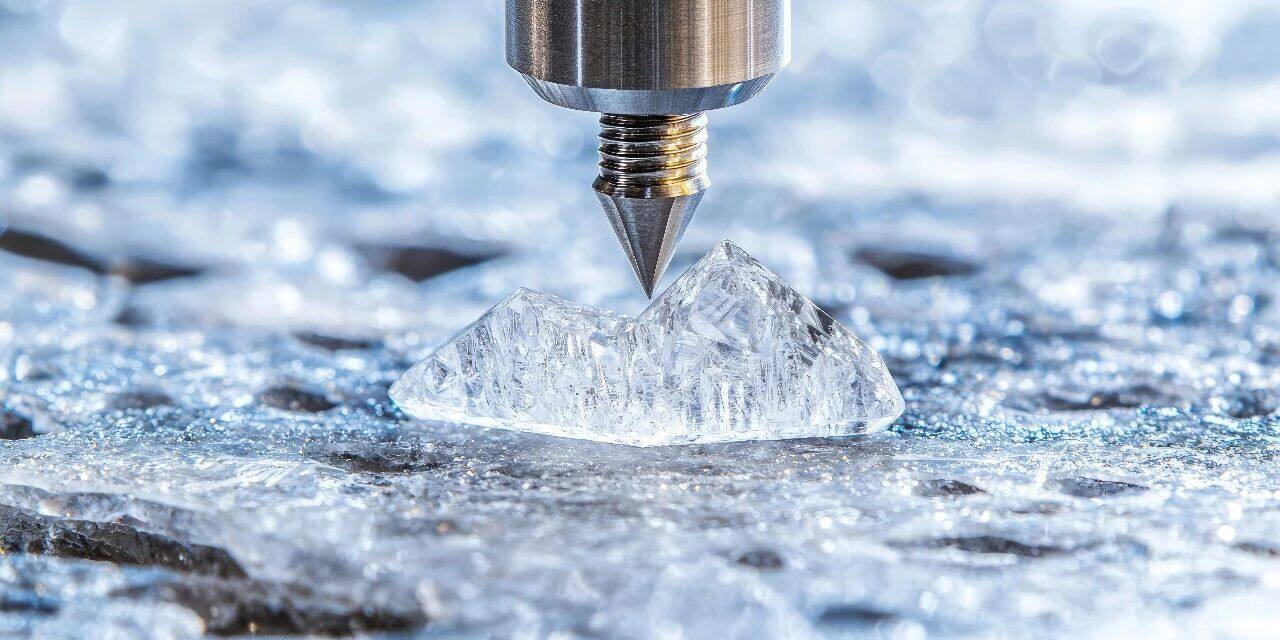
The Chinese story of diamonds has never been a carnival on the wind. The first artificial diamond was introduced in 1963, which solved the problem of industrial teeth; Afterwards, Henan radiated a whole network of Fangcheng, Zhecheng, and Changge from Sanmo, connecting the six sided top press machine, micro powder, cultivation drill, and heat sink into a one hour supply circle, relying on a generation of people guarding the high-temperature and high-pressure chamber to grind out the process warehouse. When De Beers' natural diamond myth was shattered by Henan's large-scale production capacity, one out of every two cultivated diamonds in the world was produced in Henan. This dimensionality reduction blow proves that once Chinese manufacturing takes root in the industrial chain, it can redefine the value coordinates of the global market.
The hardcore confidence behind export controls
More importantly, this carbon crystal is no longer an ordinary commodity. More than 90% of the global production capacity of industrial grade diamonds is in the hands of China. Core equipment such as missile infrared fairings, shipborne radars, and laser weapons all rely on their high temperature resistance and high thermal conductivity. After China implemented export controls on key items of superhard materials, the Pentagon's tension was not just a show. From being blocked to seeking cooperation, from selling carats to selling thermal conductivity, the turnaround of domestically produced diamonds is essentially a victory of "long termism+complete industrial chain+dual circulation of national defense and civilian use". Even if the United States invests heavily, it is difficult to replicate the efficient and collaborative industrial clusters within Henan counties in the short term.
Grasp the ultimate heat dissipation key in the era of computing power
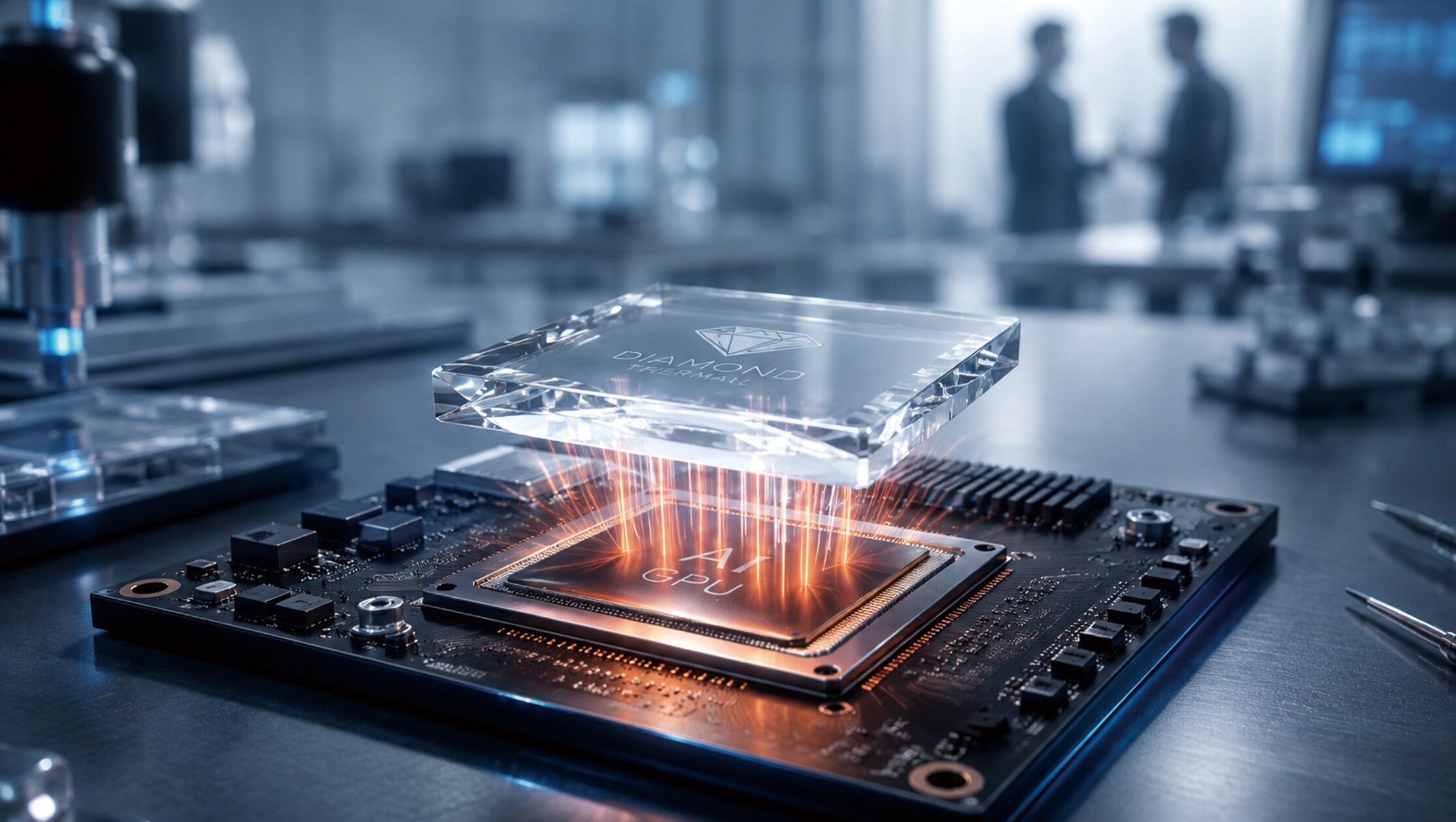
Compared to the ballast effect in the military industry, the competition for AI computing power has led to a reevaluation of the value of diamonds. When the power consumption of high-end chips exceeds the critical point, traditional copper aluminum liquid cooling technology fails collectively, and diamond, with a thermal conductivity 5.5 times that of copper, becomes the optimal solution to break through the chip's thermal wall. Huang Renxun made a special trip north to knock on the door, and Nvidia's new generation GPU has fully switched to diamond composite heat dissipation solution, marking the official entry of this material into the semiconductor core supply chain. From large-sized wafers of Power Diamond to 8-inch heat sink wafers of Yellow River Cyclone, Chinese companies are trying to turn production centers into value centers. Keywords: Diamond, Made in Henan, Capacity Monopoly, Technological Leadership
It must be soberly recognized that a dominant player in production capacity does not necessarily equate to a dominant player in value. Currently, the gem grade raw materials are strong, while downstream cutting and grinding brands are weak. The global finished diamond processing process is still dominated by external forces; Although semiconductor grade heat sink wafers have been validated, wafer level yield, interface bonding, and standard setting are still in the climbing stage. The hardest thing about diamonds is never the crystal itself, but the determination of an industry to use sixty years without changing tracks, not chasing hot topics, and turning the cold bench into a moat. The door to the era of computing power is closing, and China happens to have the toughest key in its hands.Editor/Gong Ziwei
Comment





 Praise
 Collect
 Comment

 Share
Share


Write something~