 Search


- Brazil's TGRU1 data center is advancing construction, accelerating the upgrade of AI adapted computing infrastructure nationwide

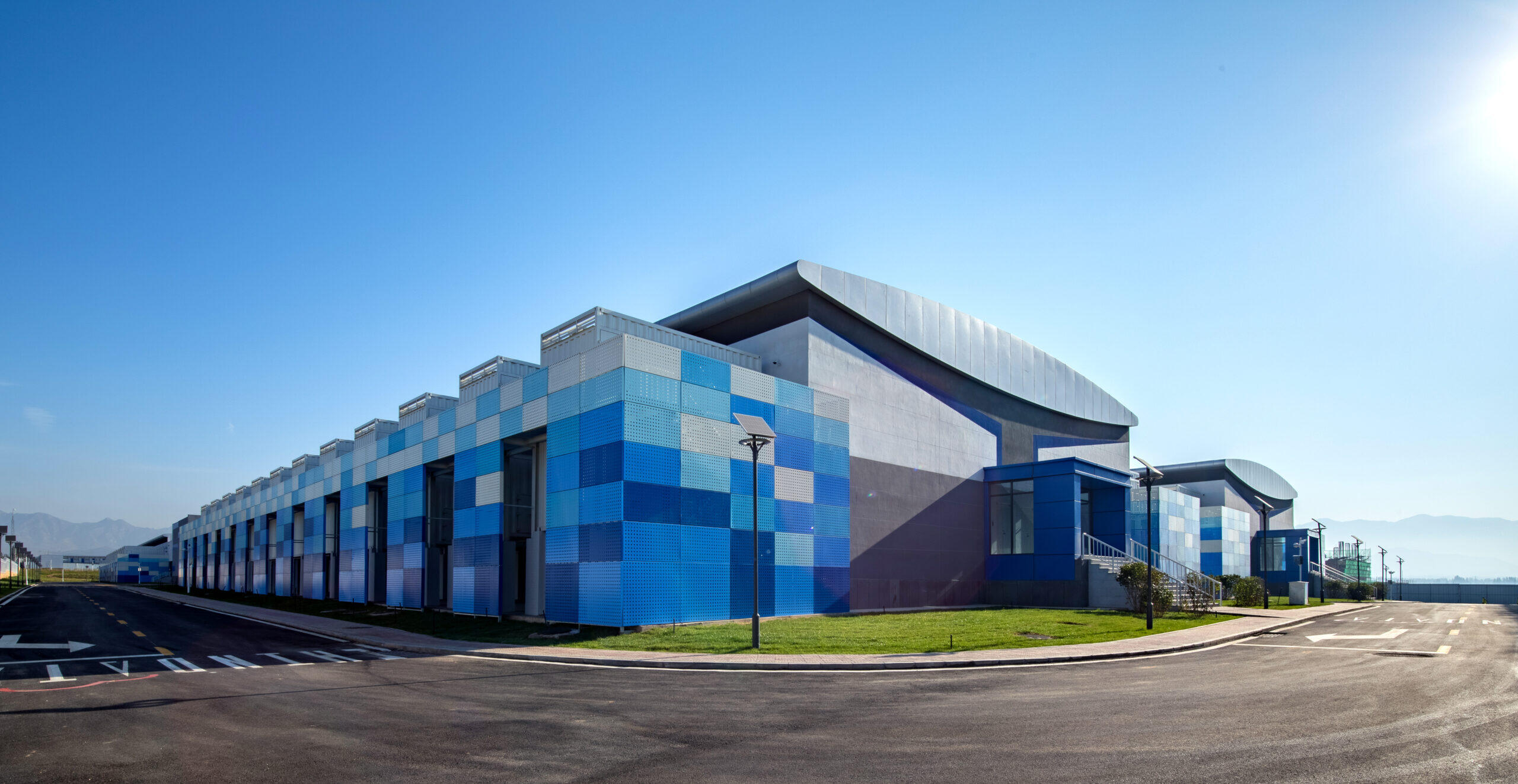
In August 2026, at the TGRU1 data center construction site in Santana Dipanaiba, S ã o Paulo, Brazil, the first batch of high-density computing power cabinets had just been poured. In the enterprise clusters in the remote S ã o Paulo metropolitan area, a large amount of computing power demand for generative AI training tasks is continuing to flow towards this emerging new computing power park.
With the construction of Tecto Data Centers, a super large data center with a maximum capacity of 200 megawatts, the Brazilian data center market has officially opened the curtain for a comprehensive upgrade to AI adapted high-density infrastructure. The largest digital economy in Latin America is restructuring its own computing industry map.
The formation of a national multi center computing power pattern
As the largest digital economy in Latin America, Brazil's banking, e-commerce, fintech, and other fields have long generated stable demand for data processing. The explosion of generative AI has further increased server power density and driven the need for supporting upgrades in power, cooling systems, and high-speed networks.
According to the "2025 Industry Report" by Brasscom, the Brazilian information and communication technology industry association, approximately 205 data centers will be put into operation in Brazil by 2026. It is expected that the installed power of IT in China will increase from 843 MW in 2024 to 2192 MW in 2029, with a five-year growth rate of about 160%. By 2030, the total market capacity is expected to reach 2.5 times the current level, with a cumulative investment of nearly 400 billion reals across the entire chain. The support from the demand side is also strong. From 2026 to 2029, Brazil's cloud computing investment will reach 765.6 billion Brazilian reals, and artificial intelligence investment will reach 736.6 billion Brazilian reals, directly transforming into massive computing power and storage rigid demand. About 88% of Brazil's electricity structure is renewable energy, which naturally adapts to the emission reduction and clean energy procurement requirements of multinational customers, providing unique advantages for the development of the data center industry.
Currently, Brazil has formed a clear multi center collaborative layout logic, with one type being close to enterprise customers, cloud platforms, and network exchange nodes, focusing on low latency and high interconnection density, represented by S ã o Paulo as the core. Another type is close to electricity, land, and submarine cable resources, focusing on large-scale computing power carrying capacity, with typical representatives in the states of Cear á, Rio de Janeiro, and some southern regions. More than half of the country's data centers are located in the southeast, with 96 in the state of S ã o Paulo alone. S ã o Paulo, Campinas, and Rio de Janeiro have 59, 26, and 24 data centers, respectively. Based on the advantage of the core international submarine cable landing point in the southern hemisphere, Fortaleza in the state of Cear á undertakes international data processing and energy intensive computing services. The projects in southern areas such as Porto Alegre focus on serving customers in southern Brazil, connecting the Southern Cone markets such as Argentina through communication networks.
Expansion and acceleration of three axes in S ã o Paulo state
As the core of national computing power, the data center industry in S ã o Paulo state is rapidly expanding along three axes, becoming the main carrier of new computing capacity in Brazil.
The first axis covers the city of S ã o Paulo, Barueri, Tambor é, Santana Dipanaiba, and Cotia regions, which are adjacent to financial institutions, large enterprise headquarters, and core network nodes. It gathers top operators such as Equinix, Scala, Ascency, Tecto, etc. The TGRU1 project is located here, with a planned capacity of 200 megawatts to support large GPU clusters and high-density AI computing environments. At present, the land, power access, and expansion space in the region are gradually tightening, and the progress of the power grid project will directly determine the production pace of new projects.
The second axis is the Greater Campinas region, covering surrounding cities such as Campinas, Vinhedo, Hortol â ndia, etc. Here, the industrial foundation is well-established, the reserve of technical talents is sufficient, and the land supply and park development conditions are relatively relaxed. It is the core carrying area for the new capacity of S ã o Paulo state. CloudHQ plans to invest 15.6 billion Brazilian reals in Paul í nia to build six data center buildings with a total planned capacity of 288 megawatts, while Takoda also plans to invest approximately 2 billion Brazilian reals in Hortol â ndia to build a data center cluster. Brazilian energy research company EPE disclosed in 2026 that the total electricity demand for potential data center projects in S ã o Paulo state is about 8.8 gigawatts, and some projects may be scheduled to start production earlier than the transmission expansion project. The approval of grid access and the progress of substation construction will become key variables for project implementation.

The third axis extends along the Dutera Highway, covering cities such as San Jose Duskampus and Pindamonhangaba. The first commercial data center project of San Jose Duskampus has an investment of about 50 million reais. The first phase of 100 kilowatts is expected to be put into operation in 2026. The project of Pindamonhangaba is expected to have an investment of more than 5 billion reais, and is expected to be put into operation in 2028. These emerging nodes are mainly oriented to regional customers, disaster recovery scenarios and edge computing needs. Keywords: computing power, data center
The wave of upgrading in the Brazilian data center market is fully underway, from the computing power base being poured by Santana Dipanaiba to the transatlantic submarine cable that Fortaleza is about to connect to. Tecto plans to invest $2 billion in five new data centers from 2026 to 2028, confirming the strong investment vitality of the market. However, planned capacity does not equal actual operational computing power. Core indicators such as power access, customer acquisition, and financing delivery are the key factors determining the future growth and development of Brazil's computing power market.Editor/Cheng Liting
Comment





 Praise
 Collect
 Comment

 Share
Share


Write something~