 Search


- Drive the annual freight volume of China Africa general cargo liner in Yantai Port to exceed 6 million tons for the first time
- Stable position as the top port for non African trade in China
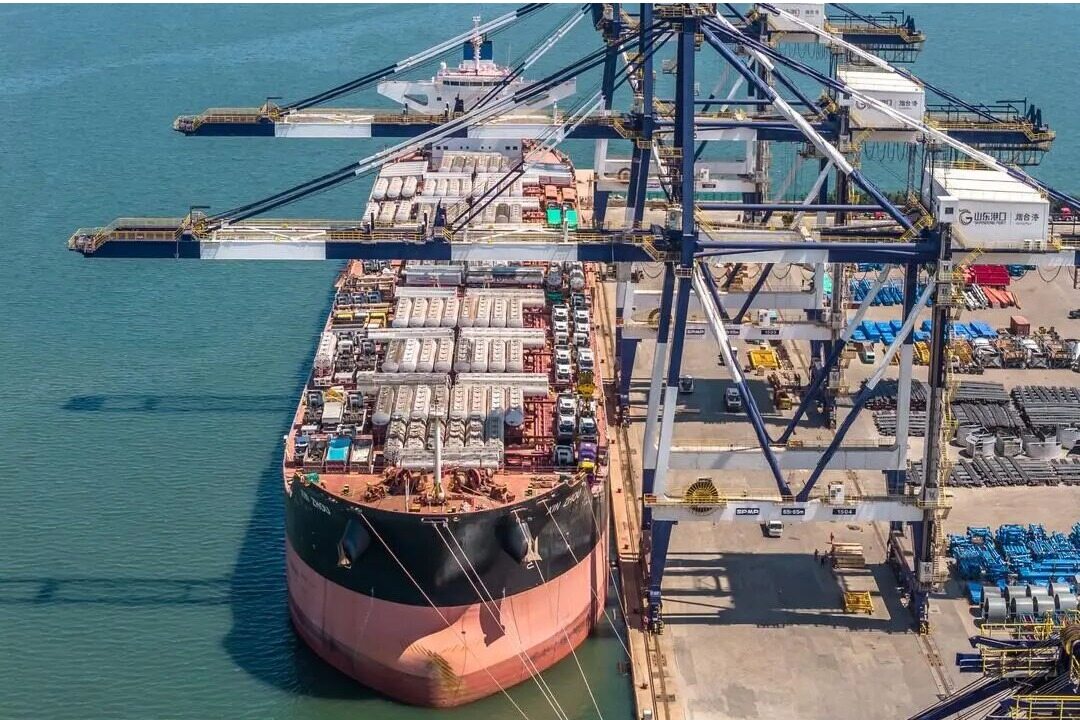
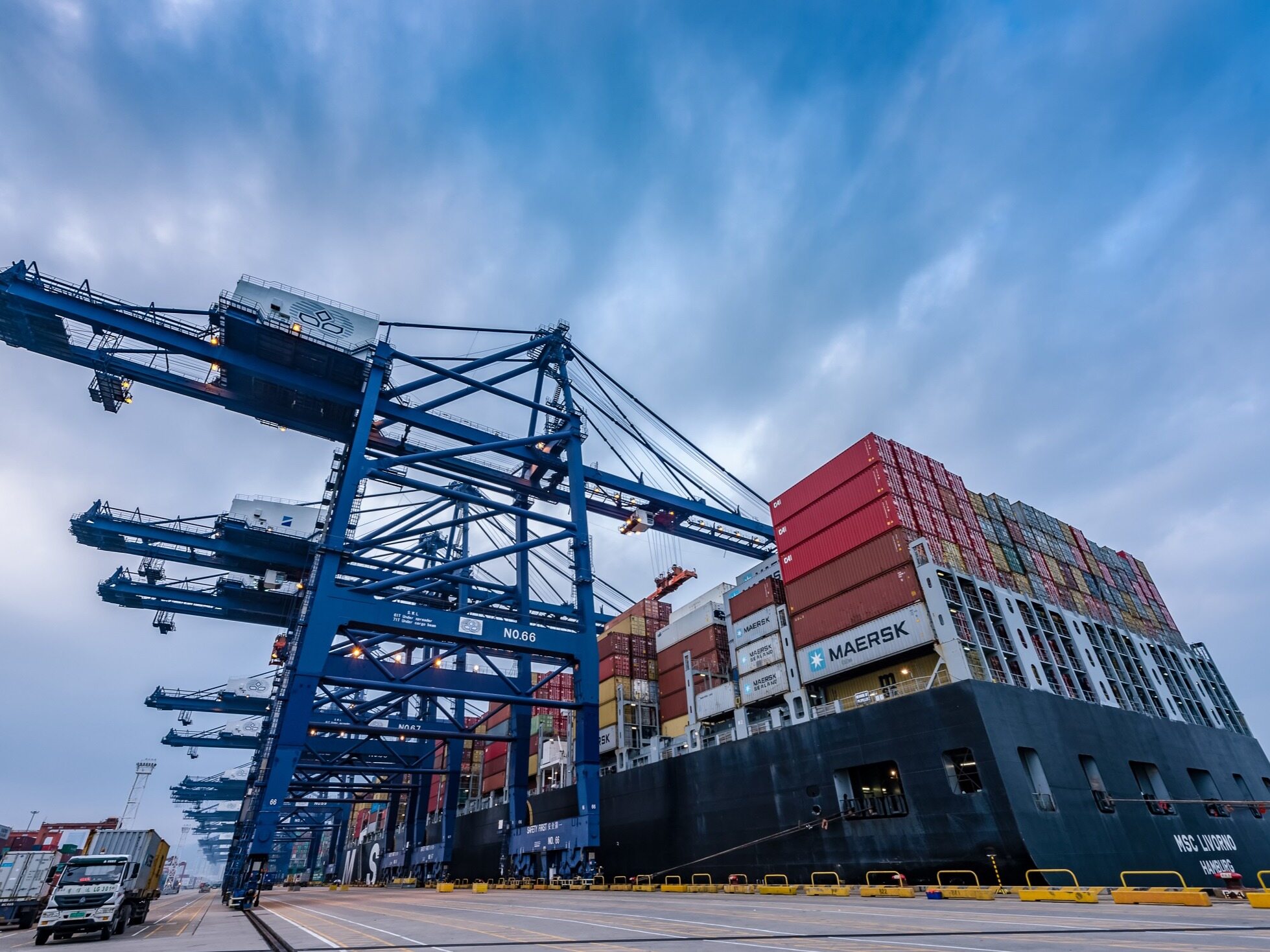
In the morning light of Bohai Bay, a long whistle sounded. The cargo ship loaded with 558 mechanical vehicles and complete sets of construction materials slowly left the Yantai Port in Shandong Province and headed towards Ghana in West Africa. This is not an ordinary ship - as it unties its cables, the annual shipping volume of the Yantai Port Central African General cargo liner route has exceeded 6 million tons for the first time in history, surpassing the annual scale of 5.81 million tons in 2025 four months ahead of schedule, a year-on-year increase of 66.1%, and leading the country in the density of 30 ships per month.
At the right time for the equipment to go out to sea
The African continent is in the initial stage of industrialization, with concentrated demand for port equipment, construction machinery, energy equipment, and infrastructure building materials. Yantai Port, as a hub for general cargo transportation in Shandong and northern China, will establish four new routes from Yantai to Algeria, Dakar, Namibia, and Djibouti in 2026, weaving a land sea intermodal network that connects the Yellow River Basin to the west, the Yangtze River to the south, the northeastern hinterland to the north, and more than 20 countries and regions in Africa.
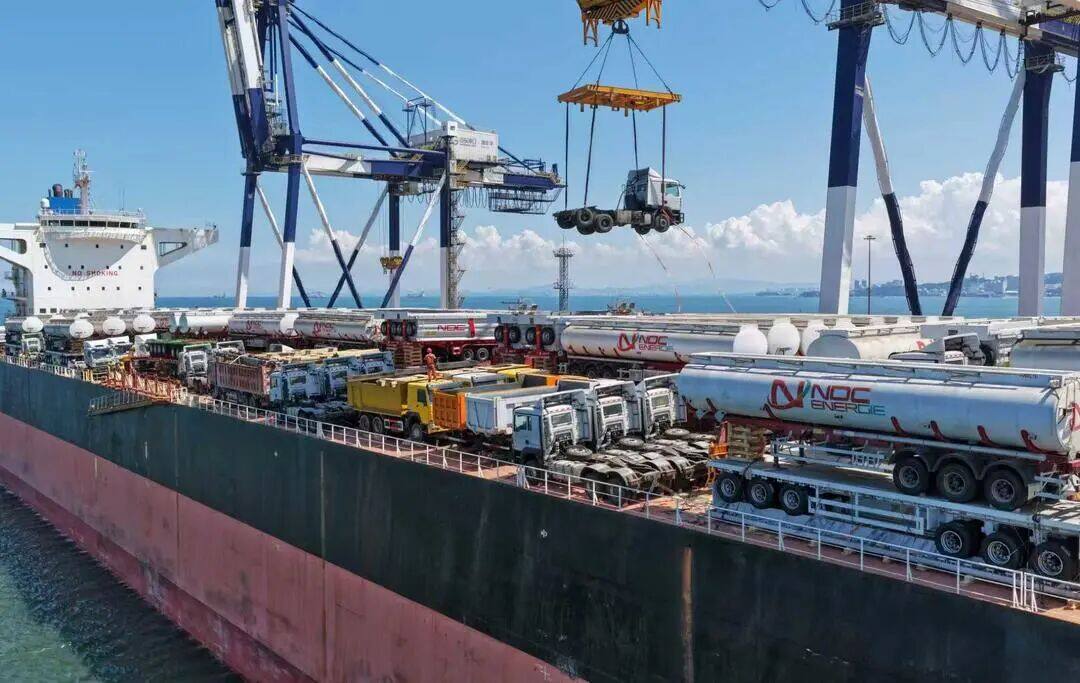
From the arrival of the first bauxite shipment at the Port of Bouquet in Guinea in 2015, to the normal export of over 200 categories of goods including domestic excavators, heavy trucks, buses, wind turbines, fertilizers, and agricultural inputs, this channel directly connects domestic industrial clusters with African end-users. Stable shipping schedule, wide range of products, and high efficiency in ship consolidation, enabling Chinese manufacturing to land on overseas construction sites on time.
Go back to running in both directions again
What really made this route break free from one-way exports was the return of bauxite and miscellaneous goods.
After unloading the Guinea bauxite mine, the return empty cabin will no longer return to China by empty ship, but will be loaded with railway locomotives, engineering machinery, steel and cement on site before heading to Africa. In 2025, a ship unloaded 200000 tons of bauxite and reloaded 19000 tons of locomotives and building materials back to West Africa; From January to July 2026, the bi-directional shipping volume of bauxite and general cargo in Yantai Port reached 44.806 million tons, a year-on-year increase of 23.5%, surpassing 40 million tons two months earlier than last year.
On one hand, it provides raw materials for the domestic alumina industry, and on the other hand, it supplies infrastructure production and daily life in Africa. The same ship weighs heavily on both ends, causing logistics costs to decrease and cabin turnover to increase. The supply chain between China and Africa has shifted from one-way output to two-way circulation.
Smart dock improves efficiency
There are many miscellaneous goods, vehicles, and heavy items, and relying on human naval tactics is not feasible. Yantai Port Unicom International Grocery Terminal uses a dedicated single ship operation team, with AI loading, intelligent scheduling, and intelligent cargo handling covering the entire area, and all elements of cargo, yard, vehicle, and ship are coordinated. Zero loading error and 100% fulfillment rate, with the lowest pressure during port stops, the record of exporting 617 engineering vehicles per ship was born here.
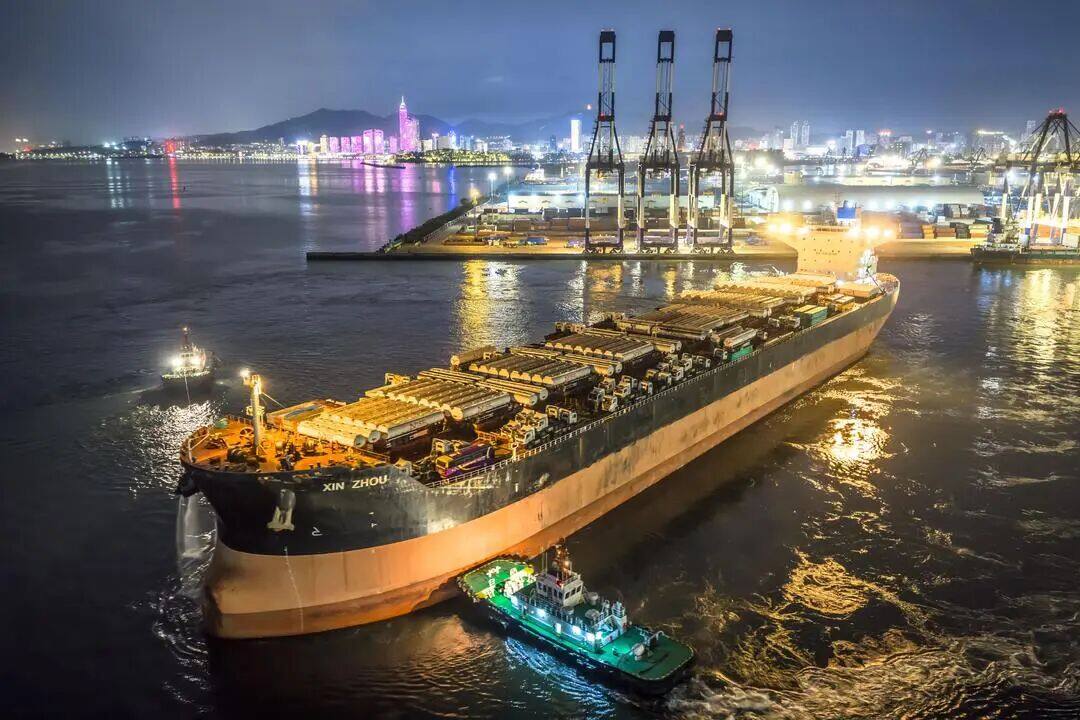
On the port side, Yantai Customs, Maritime, Border Inspection, and Pilot Station are working together to implement classified supervision, pre tallying, centralized inspection, and early declaration. Single ship inspection has been shortened by two to three days compared to the past, and vehicles and ships are seamlessly connected. The acceleration of both the dock and the port is necessary to support the high-frequency shipping of 30 trips per month.
2026 marks the beginning of the 15th Five Year Plan and the 70th anniversary of China Africa diplomatic relations. From the Bohai Bay to the Gulf of Guinea, Yantai Port has a transportation capacity of 6 million tons of general cargo and 44.806 million tons of two-way liner shipping. This is a footnote: the sea passage is not only for transporting goods, but also the most practical connector between Chinese manufacturing and African development needs.Editor/Yang Meiling
Comment



 Praise
 Collect
 Comment

 Share
Share


Write something~