 Search


- This is a crucial leap for Central Asian countries to break the single transit fate
- Injecting new momentum into China Kyrgyzstan trade

In a conference room in Bishkek, sunlight shone through the high windows onto a long table covered with maps. Marcel Sarahonov, Chairman of the Kyrgyzstan Cross border E-commerce and Logistics Association, traced the red lines connecting China and Kyrgyzstan with his fingers, his eyes filled with determination. During the recent Jizhong Investment Forum, he revealed a grand national plan to the outside world: in the next 4 to 5 years, this Central Asian mountainous country will completely tear off the label of a simple transit channel and transform into a regional cross-border e-commerce and comprehensive logistics hub.
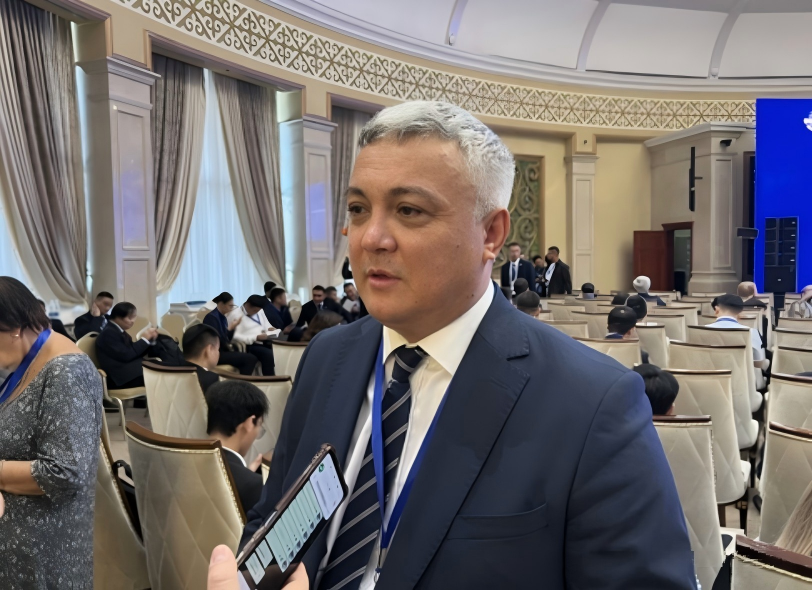
This is not a fantasy. In fact, Kyrgyzstan is at a crossroads of geopolitical and economic transformation. With the advancement of the China Kyrgyzstan Uzbekistan railway project and the continuous densification of international road freight routes, Kyrgyzstan is transforming from a traditional inland country to a crossroads on the Eurasian continent. However, President Sadr Zaparov looked further ahead. He has issued clear instructions to government departments and the business community that he must not only work as a freight forwarder, but must also deeply develop the country's high value-added logistics service industry.
Build a regional hub in four years
The schedule has been clearly defined: 4 to 5 years. This is the official strategic sprint period set by Kyrgyzstan. Sarakhonov revealed that the authorities are currently working hard to create all feasible conditions, from policy support to infrastructure construction, to comprehensively accelerate. This plan is not only related to logistics, but also to the upgrading of the national economic structure.

Breaking through the barriers of high value-added services
How to achieve the transition from channel to hub? The answer is value-added services. Kyrgyzstan is no longer satisfied with allowing goods made in China to transit, but needs to complete sorting, secondary packaging, labeling and coding within its borders. These seemingly subtle operations are the key points for Kyrgyzstan to achieve revenue generation and industrial upgrading at present. By embedding itself in the core links of the supply chain, Kyrgyzstan hopes to truly retain the logistics dividend locally.
Open up trade bottlenecks between China and Kyrgyzstan
Under the grand blueprint, the barriers of reality still need to be cleared. Sarakhonov frankly stated that one of the top priorities at present is to eliminate institutional barriers that hinder smooth trade between China, Kyrgyzstan, and Central Asian countries. For example, promoting mutual recognition of Kyrgyzstan's product testing and certification in the Chinese market, achieving mutual recognition and interoperability of electronic digital signatures, and synchronously connecting bilateral trade regulatory laws and regulations. The resolution of these technical challenges will expand the scope of bilateral trade and pave the way for high-quality local products from Kyrgyzstan to successfully enter the Chinese market.

The Chinese market has always been a top priority for Kyrgyzstan's foreign cooperation. With the gradual resolution of a series of bottleneck issues, a more smooth and mutually beneficial new trade channel is about to emerge. For Kyrgyzstan, this is not only a reconstruction of the logistics map, but also a turning point in the country's economic destiny.Editor/Yang Meiling
Comment


 Praise
 Collect
 Comment

 Share
Share


Write something~