 Search


- Marking the connection between the Beijing Shanghai auxiliary channel and key nodes of the coastal high-speed railway
- Reshaping the temporal and spatial distance between Beijing Tianjin Hebei and Shandong Peninsula, empowering high-quality development along the route
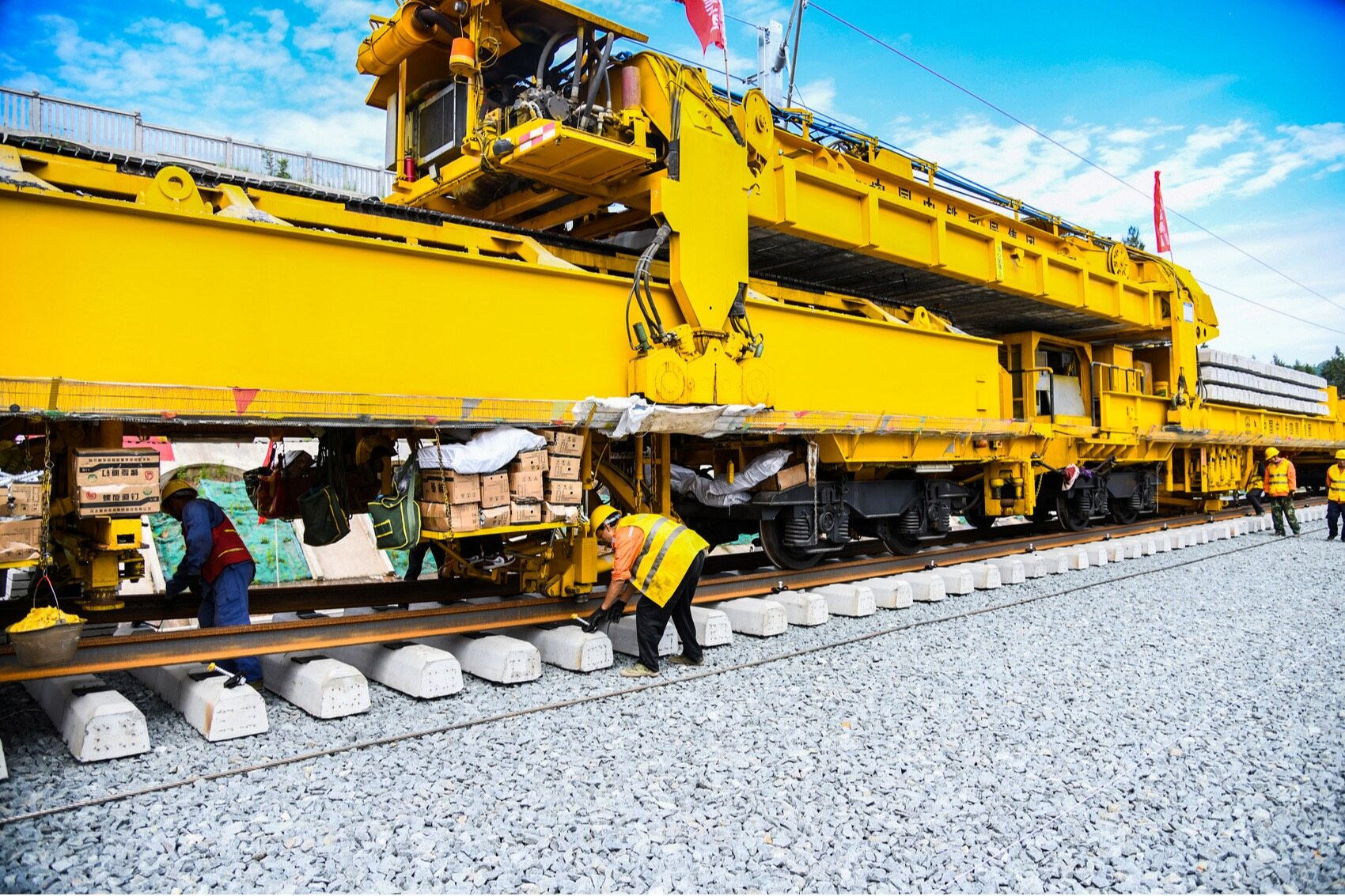
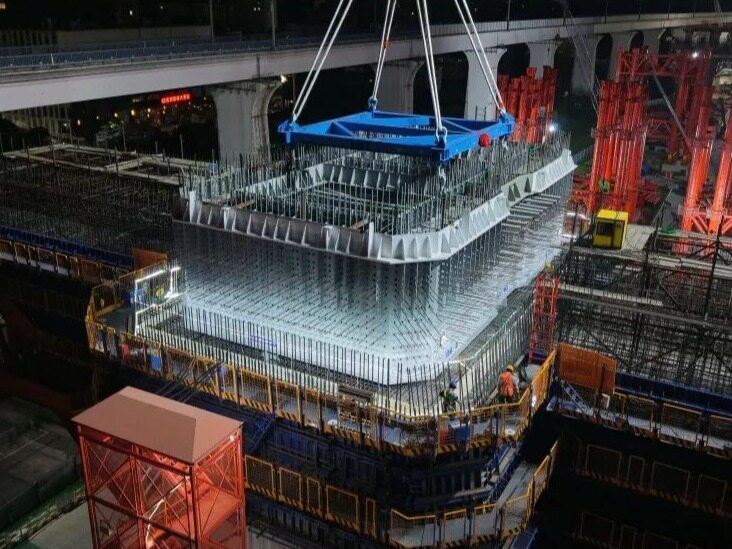
At 10:30 am on September 1, 2026, at the construction site of Binzhou Station, a pair of 500 meter long steel rails were smoothly placed on the ballastless track bed; At the same time, the long track laying was also launched in the direction of Dongying South Station. At the moment when the steel rails extend forward, the Jinwei High speed Railway, constructed by Xiong'an High speed Railway Co., Ltd., officially enters the track laying stage from the offline stage of bridge pier body and box girder erection.
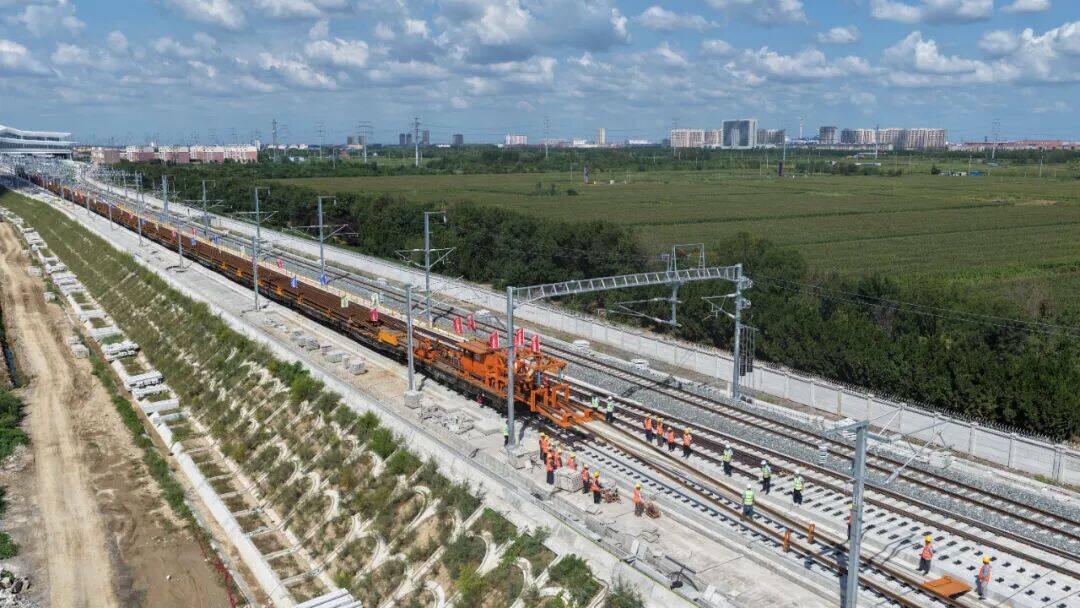
Double point starting track laying
This track laying is not a single point promotion, but a synchronous development of Binzhou and Dongying South stations. The total length of track laying for the entire line is 768 kilometers, requiring the laying of 114 sets of ballastless turnouts and 28 sets of ballasted turnouts. The storage, transportation, welding, and precision adjustment of long steel rails are interlocked, which puts extremely high demands on construction organization and millimeter level accuracy. China Railway Fourth Bureau and other participating units clearly stated at the oath taking ceremony that they will promote the remaining processes with the standards of safe engineering and high-quality engineering. According to the current timeline, the project is planned to be completed and open to traffic by 2027.
348 kilometers across five cities
The Jinwei High speed Railway starts from Tianjin Binhai Station in the north and connects to Jiqing High speed Railway Weifang North Station in the south. The total length of the main line is 348 kilometers, with a designed speed of 350 kilometers per hour, spanning three provinces and cities of Tianjin, Hebei, and Shandong. It has 10 passenger stations including Binhai, Huanghua North, Binzhou, Dongying South, and Weifang North. It is not only a component of the Beijing Shanghai auxiliary channel in the national eight vertical and eight horizontal high-speed railway network, but also an important backbone of the coastal channel. The line connects Tianjin, Cangzhou, Binzhou, Dongying, and Weifang, filling the gap in the Tianjin Weifang section of the Bohai Rim high-speed railway network and providing an additional coastal expressway from Northeast China, eastern Beijing Tianjin Hebei region to the Shandong Peninsula and Yangtze River Delta.
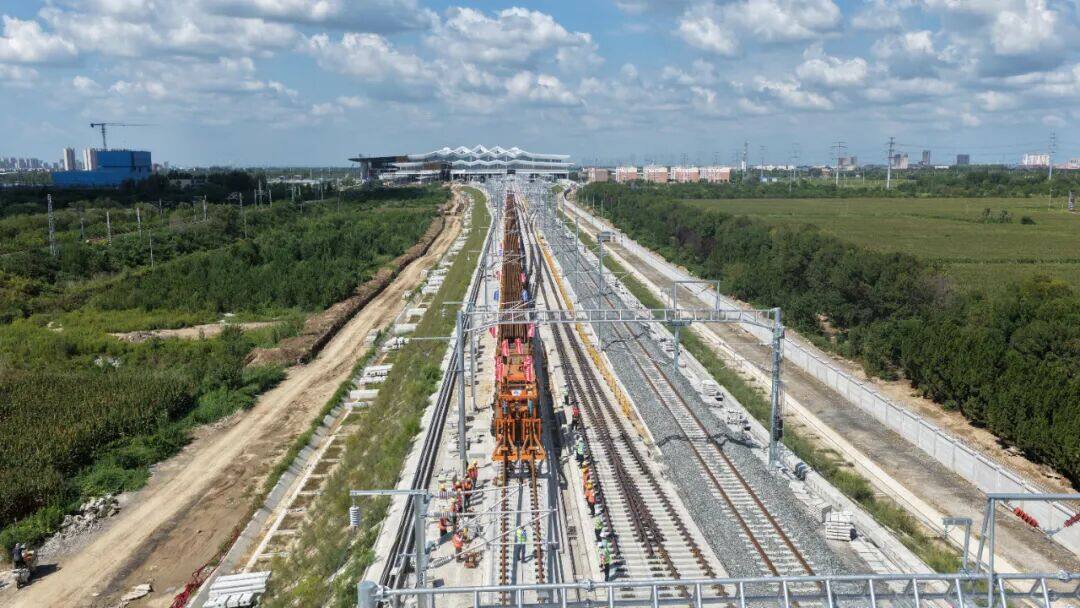
New speed along the route
For cities along the route, this steel rail brings about a reconstruction of the travel map. Dongying will end its history of not being able to travel by high-speed rail. In the future, the fastest travel time from Dongying to Beijing will be about 2 hours, and travel time to Jinan and Qingdao will be reduced to less than 1 hour; Node cities such as Binzhou and Huanghua are synchronously connected to the national high-speed rail backbone network. Deeper changes are at the level of the road network: the Jinwei high-speed railway diverts some of the medium and long-distance passenger flows from the Beijing Shanghai high-speed railway, easing the pressure on existing lines, and leveraging the connecting lines with the Jinqin high-speed railway, Jingbin intercity railway, and Jiqing high-speed railway to tightly integrate the coordinated development of the Beijing Tianjin Hebei region with the Shandong Peninsula urban agglomeration.keywords:Engineering infrastructure
From the start of construction in November 2022, to the continuous promotion of Lianghelong and Liangjia in 2025, and now to the double station track laying today, every kilometer of the Jinwei High speed Railway is laid forward, and the puzzle of the Bohai Rim High speed Railway is complete. When all 768km rails are in place and the joint commissioning and test are completed, there will be no detour between Beijing Tianjin and Weifang, and the coastal passage and the Beijing Shanghai Second Passage will really hold hands in the east of the North China Plain.Editor/Yang Meiling
Comment


 Praise
 Collect
 Comment

 Share
Share


Write something~