 Search


- Develop a replicable and scalable decarbonization path for the aviation industry, which is the most difficult to reduce emissions
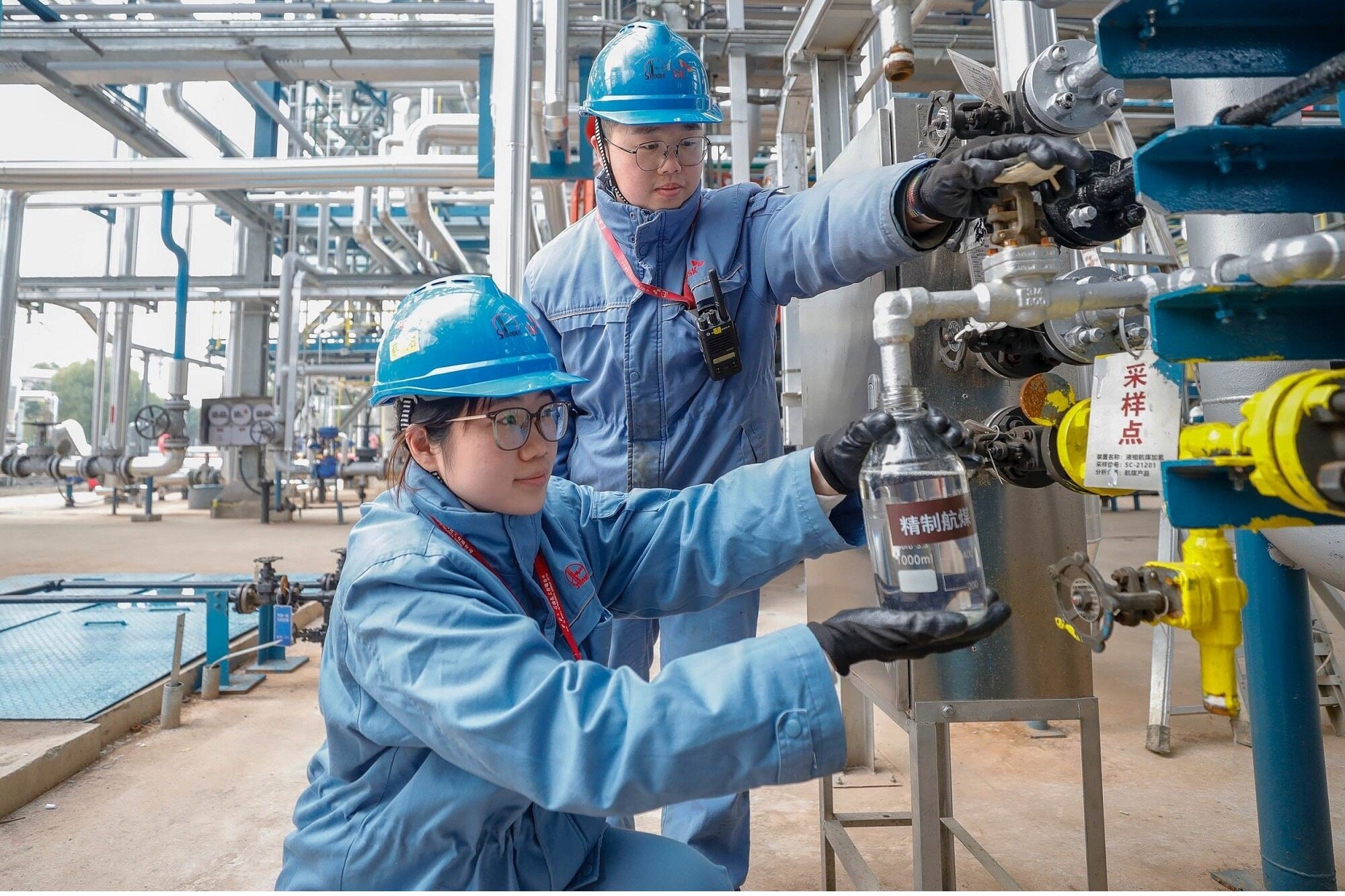
The wind on the Gobi Desert hardly stops all year round. In the past, in Yiwu, people used to convert wind into electricity generation; Starting from September 19th, these winds have been arranged for a longer journey - first turning into green electricity, then electrolyzing into green hydrogen, and then meeting with carbon dioxide captured from industrial exhaust to form aviation kerosene that can be directly added to airplanes under the action of catalysts.
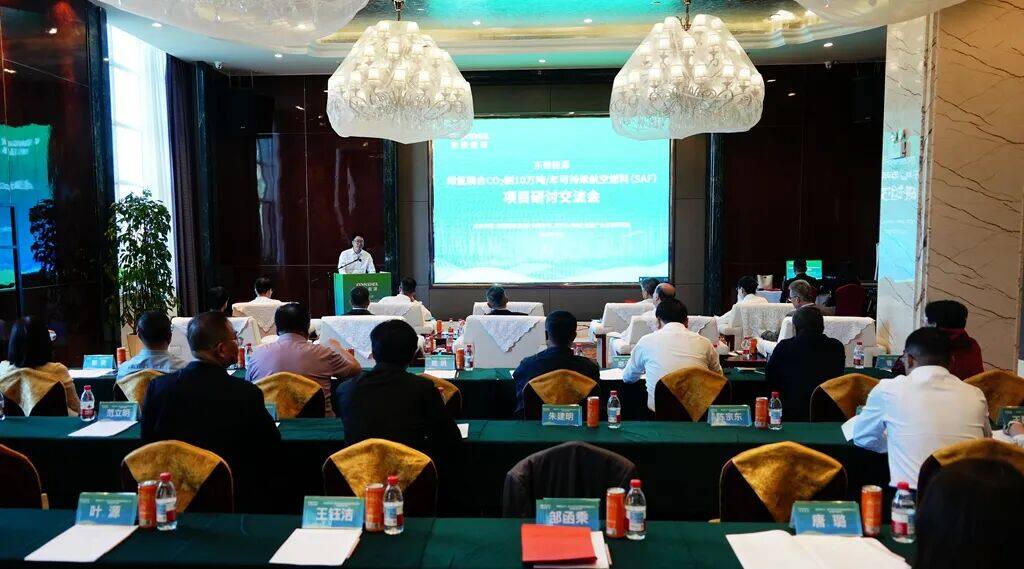
On September 19-20, 2026, the centralized bidding and project launch ceremony for the East German Energy Green Hydrogen Coupled Carbon Dioxide to 100000 tons/year Sustainable Aviation Fuel Project was held in Yiwu County, Hami City, Xinjiang. This domestic first and largest negative carbon aviation coal demonstration project has officially entered the implementation stage.
From 1000 tons to 100000 tons
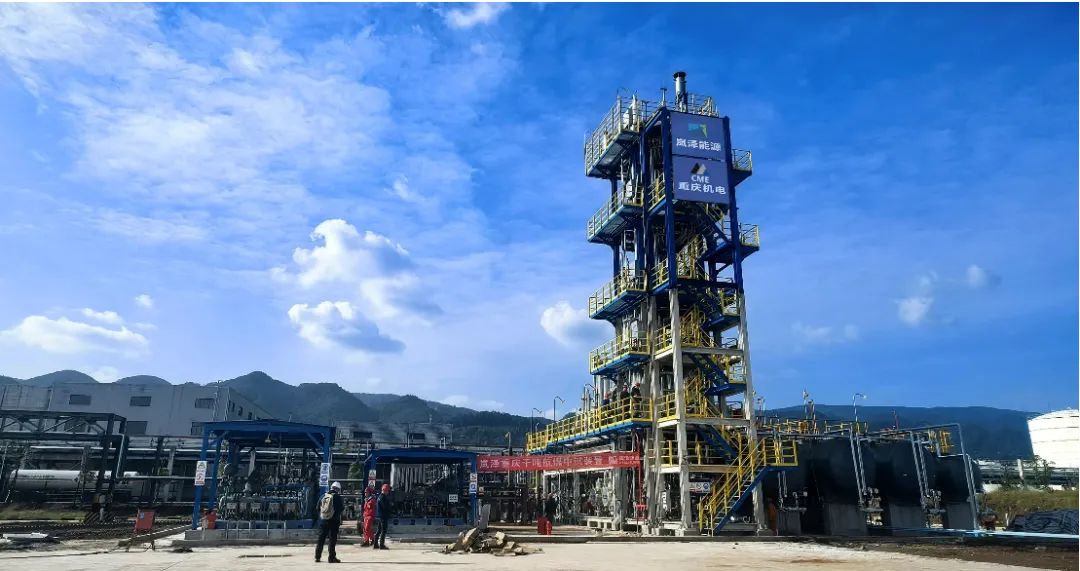
Any new process moving towards industrialization cannot avoid the hurdle of step-by-step amplification. Xie Menghao, General Manager of East Germany Energy (Xinjiang) Co., Ltd., introduced that the project will be promoted through pilot testing, commissioning at the 10000 ton level, and demonstration at the 100000 ton level.
On August 17th, the 1000 ton pilot plant passed the assessment in Meishan, Sichuan, and was recognized by experts as having reached the international leading level of technology, filling the gap in relevant domestic technologies; This month, the 10000 ton project started debugging in Ordos, Inner Mongolia; The 100000 ton project that landed in Yiwu this time is the first and largest demonstration project in China, undertaking the task of transitioning from technical verification to industrialization and large-scale demonstration. The engineering data left by the first two stages of the device is the source of confidence for the 100000 ton device to dare to launch.
A negative carbon industry chain
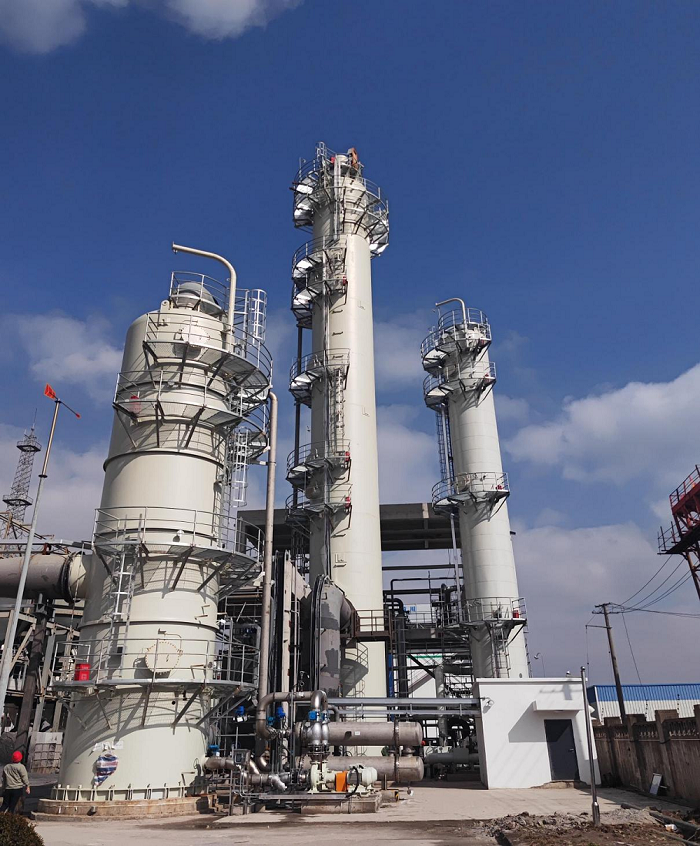
The total investment of the project is 11 billion yuan, with a supporting construction of 2GW wind power and an annual production line of 50000 tons of green hydrogen. It can capture and utilize 400000 tons of carbon dioxide annually and produce 100000 tons of green sustainable aviation fuel annually, building a complete negative carbon industry chain of green electricity green hydrogen carbon capture green aviation coal.
According to this calculation, for every 1 ton of green aviation coal produced, about 4 tons of carbon dioxide need to be absorbed. The traditional combustion of aviation kerosene releases carbon that has been stored in the geological strata for billions of years, only increasing and not decreasing; And this route first captures carbon and then turns it into fuel, which is equivalent to reducing emissions while also consuming existing emissions. At present, the preliminary work of new energy power, carbon dioxide capture, and chemical synthesis systems is steadily advancing and has entered the critical stage of feasibility study and procurement.
Why is it Yiwu
The project's arrival in Yiwu was not accidental. Yiwu County is rich in wind and solar resources, with a potential development capacity of over 250 million kilowatts for wind and solar new energy, and an existing installed capacity of 11.36 million kilowatts. At the same time, it has a mature coal chemical industry foundation and sufficient industrial carbon sources, providing unique conditions for the negative carbon chemical industry. Wu Huijing, Deputy Secretary of Yiwu County Committee and Executive Deputy County Mayor, stated that she will continue to provide comprehensive service guarantees and make every effort to promote the rapid implementation and construction of the project.
Greater impetus comes from the industry. The aviation industry is widely recognized as one of the most difficult areas to reduce emissions. The International Civil Aviation Organization's carbon offset and reduction mechanism will come into effect in China in 2027, and the European Union has also set a requirement for sustainable aviation fuel blending to reach 6% by 2030. China's aviation coal consumption is expected to reach approximately 42 million tons by 2025 and is projected to rise to over 53 million tons by 2030, with increasing pressure to reduce emissions. The policy side has also continued to increase its efforts: green fuel has been included in the government work report for the first time, sustainable aviation fuel has been included in the encouraged category of the industrial structure adjustment guidance catalog, and the pilot program for normalized refueling at the four major airports has been launched. Starting from January 2026, independent customs codes will be used, and the annual export quota will be raised to 1.7 million tons. The 15th Five Year Plan for Renewable Energy will also include it in the national strategy.keywords:Engineering infrastructure
Of course, the challenge remains real. At present, the production cost of green fuels is about 1.5 to 2 times that of traditional fossil fuels, and the gap between electricity and aviation coal is even greater. The core value of the Yiwu project lies in completing the industrial validation of the entire process, accumulating engineering data for subsequent cost reduction and technological iteration. Xie Menghao stated that the next step will be to accelerate project approval and construction progress, striving for early production and effectiveness.Editor/Yang Meiling
Comment



 Praise
 Collect
 Comment

 Share
Share


Write something~