 Search



- This agreement connects Chinese satellite resources to Uzbekistan's digital base
- Open up new growth space for Asia Pacific satellites in Central Asia
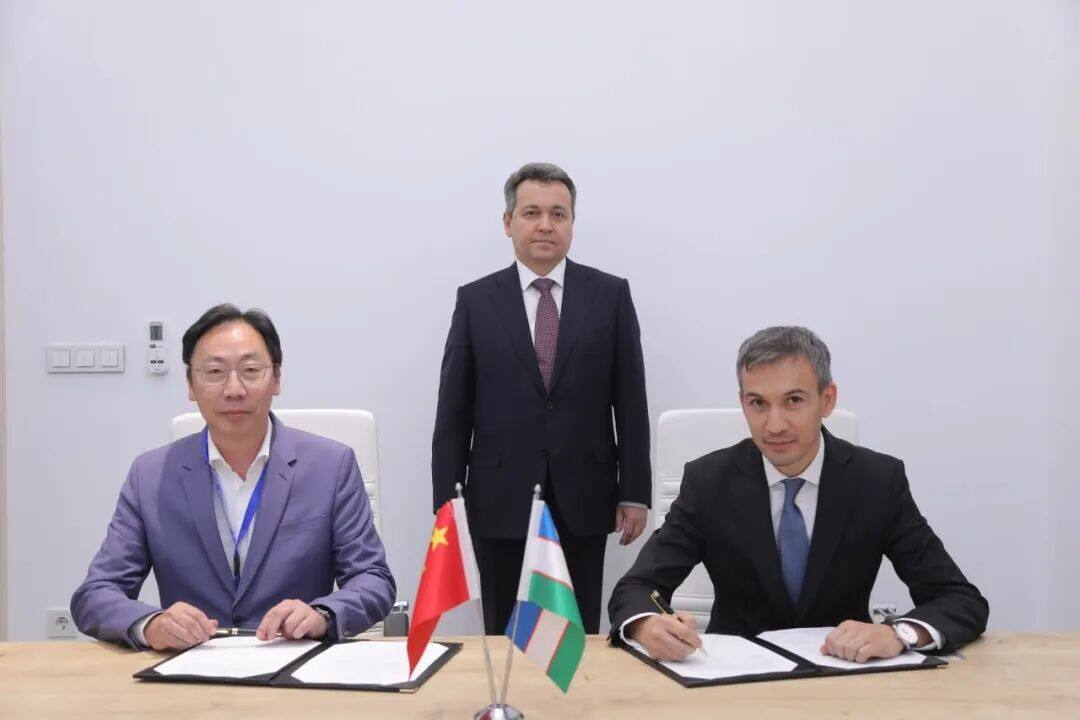
On September 25th in Tashkent, the exhibition hall of Uzbekistan Information and Communication Technology Week 2026 was bustling with people. At the meeting between the Minister of Digital Technology, Sherzod Shermatov, and the Executive Director and President of Asia Pacific Satellite, Wang Hongbin, a cooperation agreement was signed. This is the first time that the senior management of Asia Pacific Satellite has set foot on the land of Tashkent, and the question it needs to answer is actually how to connect to the internet in the corners of mountains and deserts far outside the exhibition hall, where ground base stations and fiber optics are difficult to reach.
Originating from Shanghai, landed in Tashkent
This handshake was not an impromptu idea. Prior to the World Artificial Intelligence Conference, Shermatov had exchanged views with Asia Pacific satellite executives on topics such as the development of satellite communication services and the construction of modern communication infrastructure. Both sides agreed to advance the organizational and legal procedures involved in the cooperation and agreed to announce the relevant results to the public during ICT Week in Tashkent in 2026. Now that the agreement has been implemented, it happens to fulfill that promise. The Ukrainian side hopes to enhance the resilience of the national communication network and create new opportunities for telecommunications infrastructure by introducing mature satellite communication technology and operational experience.
Broadband broadcasting goes to the sky together
According to the agreement, the two sides will establish practical cooperation in the field of satellite communications and digital infrastructure, and explore the use of Asia Pacific satellite resources to provide satellite communications, broadband Internet access, television and radio services, and other telecommunications and digital services. Asia Pacific Satellite also introduced plans to expand its satellite fleet and launch new satellites equipped with advanced technology. Both sides exchanged views on using these resources to expand satellite connectivity between Uzbekistan and Central Asia.

For Uzbekistan, this account is clear. The mobile network coverage rate of the country has reached 99%, the broadband mobile Internet coverage rate is about 98%, and the total length of optical fiber lines is 170000 kilometers. However, under the coverage rate, there is still a gap in the experience of remote areas. Uzbekistan has planned to allocate US $100 million to launch satellite Internet services in 2026, and give satellite communication enterprises preferential treatment such as profit tax, property tax, land tax and value-added tax in the next five years. UZ SAT, established in March 2021, is a local platform that undertakes such collaborations, with Satellite Group holding 65%, state-owned telecommunications operator Uztelcom holding 30%, and Neotech holding 5%.
The sky in Central Asia is becoming increasingly crowded
The sky in Central Asia has become increasingly lively recently. On September 22, UZ-SAT just became the authorized dealer of Amazon Leo, the Amazon satellite Internet project. The latter has launched nearly 400 satellites, and finally plans to have more than 3000; Viasat also collaborated with the Ukrainian Digital Technology Department, UZ SAT, and Uztelcom to complete the first satellite direct connection mobile SMS demonstration; Kazakhstan has launched the star chain, and the EU's Central Asia satellite Internet project is also advancing.

In such a crowded sky, the strategy of Asia Pacific Satellite focuses on stability and comprehensiveness: the company operates Asia Pacific 5C, 6C, 7, and 9 satellites, and operates Asia Pacific 6D and 6E high-throughput satellites through joint ventures, serving areas where about 75% of the world's population is located, and about 80% of its business comes from overseas; At the same time, pre research on the next generation of new satellites has been launched, and a localized team and one-stop services have been used to deeply cultivate key markets.
Starting from Tashkent, both sides also discussed the development of regional satellite infrastructure, international connectivity, as well as potential joint projects between Asia Pacific satellites, UZ SAT, and Uzbekistan enterprises and institutions. For this satellite operator listed in Hong Kong and backed by China Aerospace Science and Technology Corporation, Central Asia is not just a new coordinate, but also a practical battle to push the integration capability of space and earth to the inland hinterland. The signing of the agreement marks the substantive stage of cooperation between the two sides, which is expected to promote further expansion of digital infrastructure in Uzbekistan and Central Asia.Editor/Yang Meiling
Comment







 Praise
 Collect
 Comment

 Share
Share


Write something~