 Search


- Replacing encryption algorithms with physical laws to build an unbreakable security foundation for critical national information
- By 2030, the Russian Railways quantum backbone network will expand from 8000 kilometers to 15000 kilometers and extend to Vladivostok
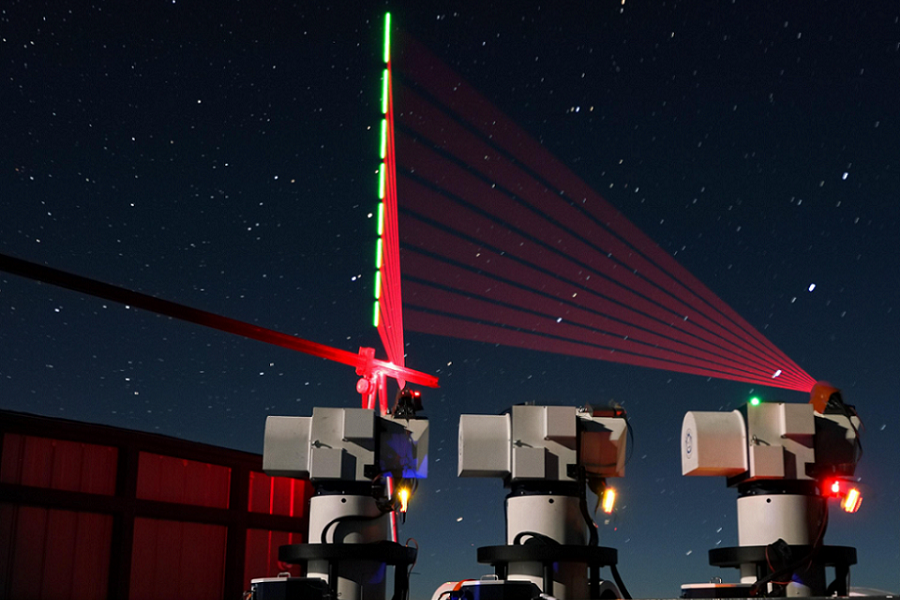
In early summer 2021, the first batch of quantum keys were quietly generated in a fiber optic cable between Moscow and St. Petersburg. This 700 kilometer long line was built on the Russian Railways' own optical cable, and was Russia's first and at the time the largest quantum secure communication trunk in Europe. At that time, no one expected that a railway state-owned enterprise transporting coal and passengers would become one of the world's largest builders of quantum networks in a few years.

Starting point of 700 kilometers
The cross-border quantum communication of Russian railway companies is not accidental. In September 2020, the Russian government approved the development of a national quantum communication roadmap led by it, covering areas such as fiber optics, atmosphere, and satellites, involving over 120 projects; At the end of 2022, the company announced that it had officially entered this high-tech field according to an agreement with the government, and, as instructed by President Putin, jointly formulated a development plan up to 2030 with the Ministry of Digital Development, the Ministry of Economic Development, and the scientific community. The national budget also continues to be injected, with a cumulative investment of about 9.4 billion rubles between 2021 and 2024, and an additional 4.5 billion rubles for expansion in 2023 and 2024. Starting from 700 kilometers, this network was initially expected to reach 7000 kilometers by 2024, but now the actual scale has reached 8000 kilometers.
8000 to 15000
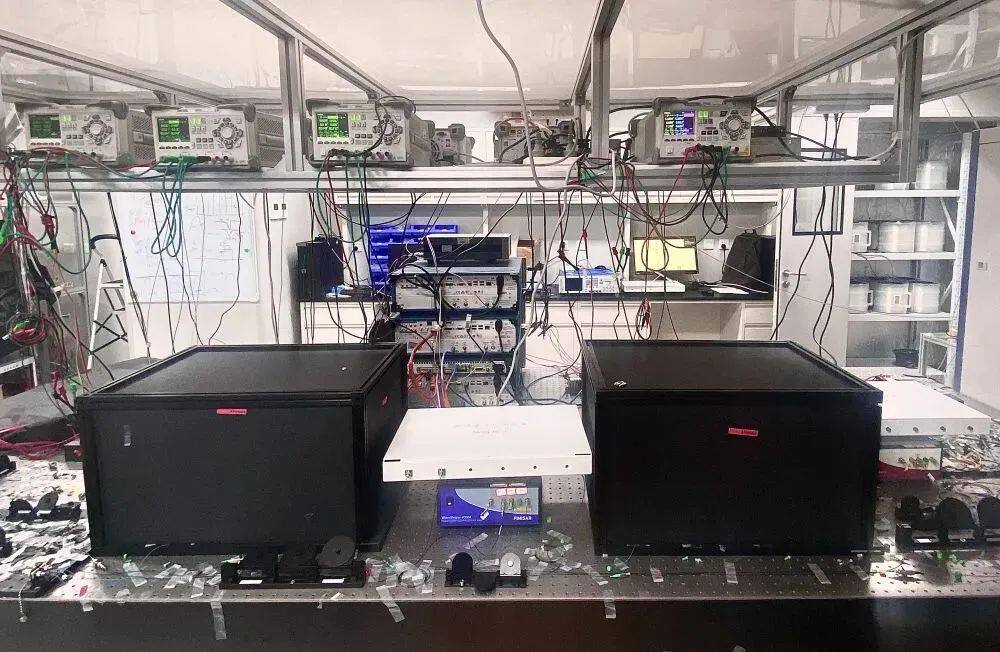
The new goal is more ambitious. Russian Deputy Prime Minister Vitaly Savilyev stated at an international youth forum that by 2030, the length of the backbone quantum network will increase from the current 8000 kilometers to 15000 kilometers, almost doubling, and will be extended to Vladivostok. This means that quantum communication will traverse the northern end of the Eurasian continent, from the Baltic coast to the Pacific coast, covering most of Russia's territory. At present, the infrastructure built by Russian Railways is one of the largest quantum networks in the world. According to the 2030 roadmap, its main tasks focus on three aspects: building infrastructure, expanding geographical coverage, and deploying various services on this basis.

Not relying on algorithms, relying on physics
The value of quantum communication lies in a new set of security logic. Traditional encryption relies on the complexity of mathematical problems. Once the computing power jumps or the algorithm is broken, the ciphertext intercepted today may be decrypted tomorrow; Quantum key distribution is based on physical principles such as quantum unclonability. Any eavesdropping will disturb the quantum state and leave traces, and its security is not affected by the growth of computing power. Therefore, Savilyev emphasized that this technology has special significance for the development of unmanned technology and other directions - autonomous trains and unmanned dispatch systems must be built on communication that cannot be tampered with midway. The challenge is equally realistic: the loss of photons in optical fibers limits the transmission distance, and core components have long relied on imports. The Russian side has raised the threshold for the localization rate of core equipment to no less than 80% through regulatory ideas. The lengthy construction across Siberia will be the most direct test of this Pacific quantum artery.Editor/Yang Meiling
Comment






 Praise
 Collect
 Comment

 Share
Share


Write something~