 Search


- Provided replicable samples for increasing deep-sea oil and gas reserves and production in China
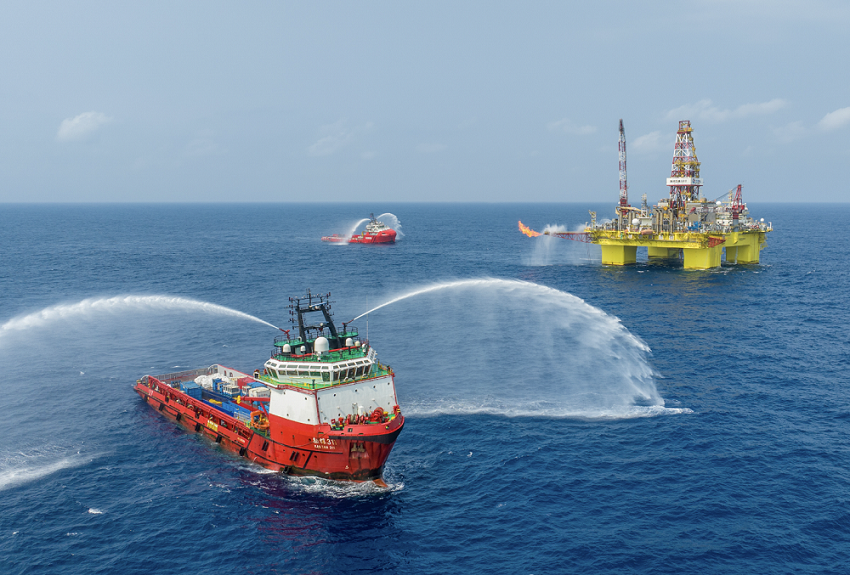
In the east of the South China Sea, in the waters of the the Pearl River Mouth Basin, about 240 kilometers southeast of Shenzhen, an oil tanker slowly untwisted and left the berth. The cabin is loaded with 42000 tons of crude oil from over 300 meters deep, which is about to cross hundreds of kilometers and be transported to land. With the departure of the North Sea Development vessel from the second offshore platform, the cumulative export of crude oil from the secondary development project of Liuhua Oilfield has been frozen at 2.02 million tons - just two years after production, the 53rd ship's oil lifting operation has been successfully completed, and China's first deepwater oilfield secondary development project has produced over 2 million tons of crude oil.
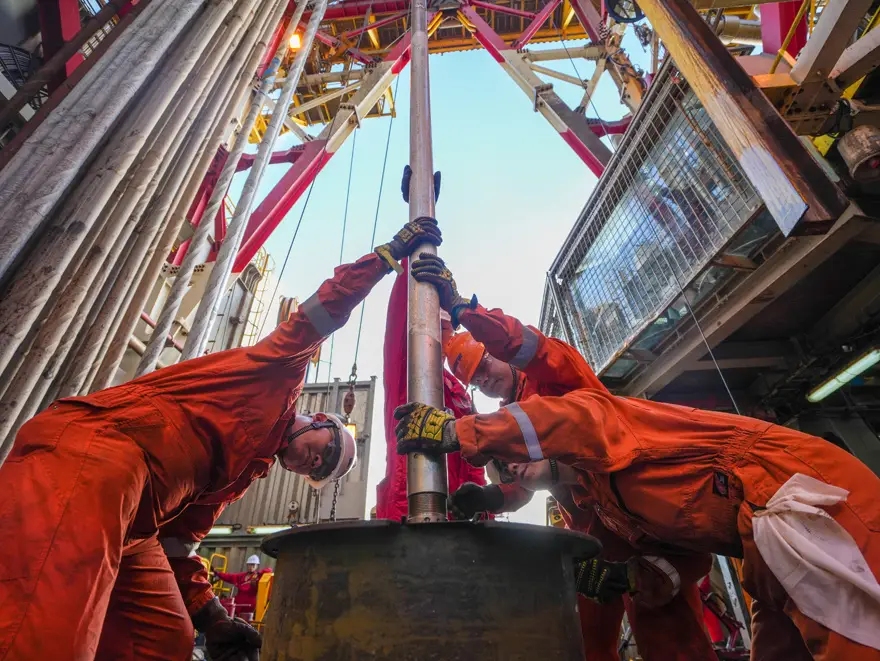
The tacit understanding between two heavy weapons
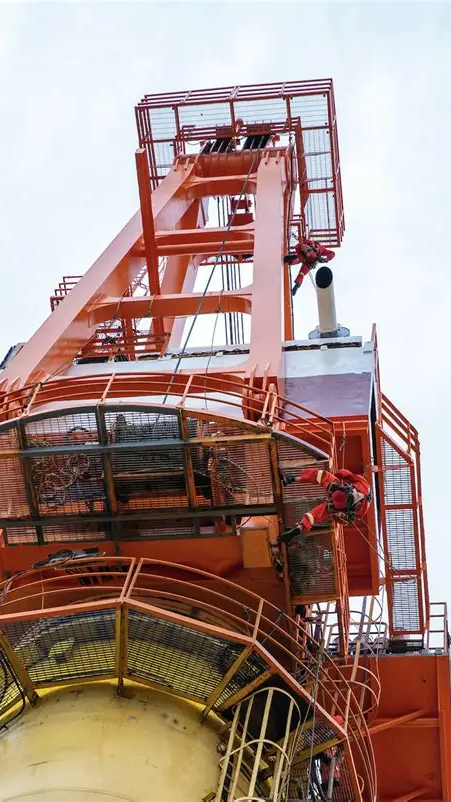
The average water depth of the secondary development project of Liuhua Oilfield is 305 meters, and it is operated by two large heavy vehicles, Haiji-2 and Haikui-1, carrying underwater production systems in coordination. The total height of Haiji-2 is 428 meters, and the underwater pipeline rack alone is 338.5 meters, bringing the production system from the deep seabed to the platform; The total weight of Haikui No.1, located 2.5 kilometers away, is about 37000 tons, with a maximum storage capacity of 60000 tons. It can process 5600 tons of crude oil per day and is responsible for deep processing, storage, and export. The 7 submarine cables connecting the two have a total length of 69 kilometers and are responsible for the transmission of oil and gas and optoelectronic signals. Crude oil is extracted from underwater, preprocessed by the platform, and then refined and stored in a cylindrical offshore oil and gas processing plant, with the entire chain being independently controllable. At present, the project has put 32 production wells into operation, with a maximum daily crude oil production of 3900 tons.
Old oil fields are rejuvenated
The Liuhua 11-1 oilfield was built and put into operation as early as 1996. It is a deep-water reef limestone oilfield with great development difficulty, and after years of exploitation, the recovery rate is less than 20%. How to restore oil production from old oil fields is the key to secondary development. After ten years of research and development, the scientific research team has explored and formed a technology system for stabilizing oil and controlling water in offshore reef limestone. The comprehensive water content of the development well has significantly decreased compared to the design, and the recoverable reserves and recovery rate have been significantly improved. The oilfield development life has been extended by 30 years. Faced with frequent typhoons and internal waves in the South China Sea, the team innovatively adopted a dual export point and dual stern towing operation mode, equipped with internal wave flow monitoring, real-time mooring tension monitoring and other systems. The utilization rate of the export operation window period throughout the year remained above 90%; When the typhoon comes, people evacuate, and the remote land command center takes over the production remotely through the digital intelligent system. This model has been successfully applied 11 times. Since its launch, the export operation has maintained zero safety accidents, and the qualified rate of oil products is 100%.
Advance towards deeper blue
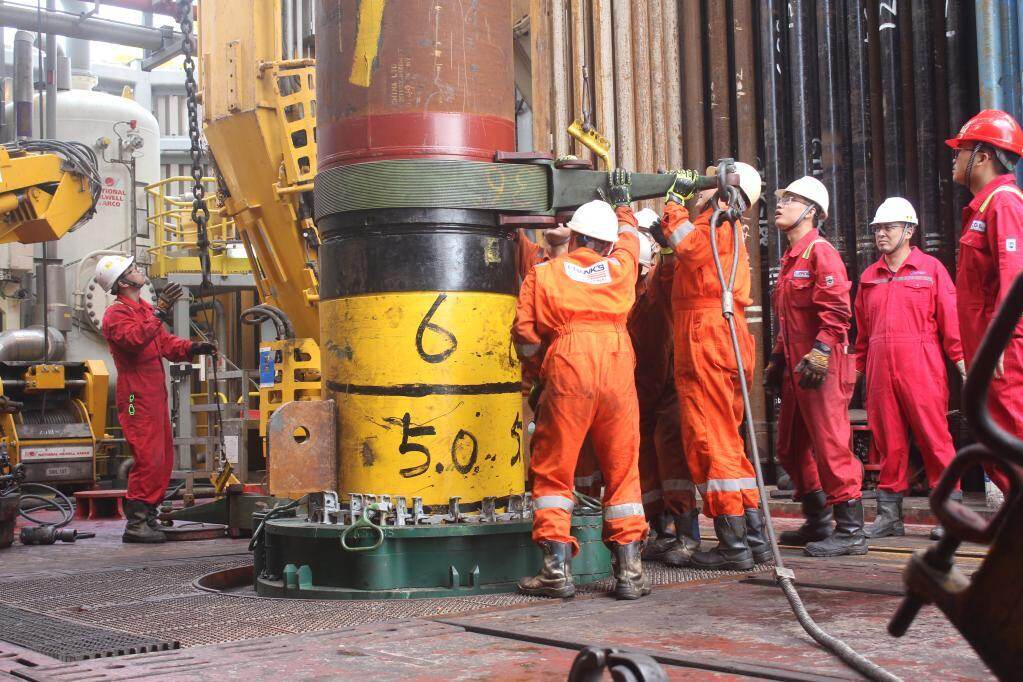
Deepwater is known as the temple of world ocean oil exploration and development, and is the main replacement area for global oil and gas resources in the future. The breakthrough of Liuhua Oilfield is also a microcosm of China's overall increase in deep-water capabilities. In recent years, China has successively overcome world-class technical challenges such as conventional deep water, ultra deep water, and deep water high temperature and pressure. It has independently developed deep water conservancy equipment such as Xuanji, Haijing, and Haimai, forming a group of deep water technology systems with independent intellectual property rights, and possessing comprehensive operational capabilities from deep water to ultra deep water, from the Red Channel to the polar regions. After the second phase of the Deepsea No.1 ultra deep water atmospheric field is fully put into operation, the peak annual production has jumped from 3 billion cubic meters to 4.5 billion cubic meters, and the annual oil and gas production in 2025 will exceed 4.5 million tons of oil equivalent. China's deepwater oil and gas exploration and development has achieved a historic leap from 300 meters to 1500 meters, successively obtaining multiple deepwater and ultra deepwater oil and gas fields, accounting for one-third of the top ten marine oil and gas exploration discoveries. As of now, China's deepwater oil and gas production has exceeded 12 million tons of oil and gas equivalent, providing solid support for ensuring national energy security.Editor/Yang Meiling
Comment


 Praise
 Collect
 Comment

 Share
Share


Write something~