 Search


- Angola’s huge renewable energy potential, its energy 2025 vision and diversification of its energy structure
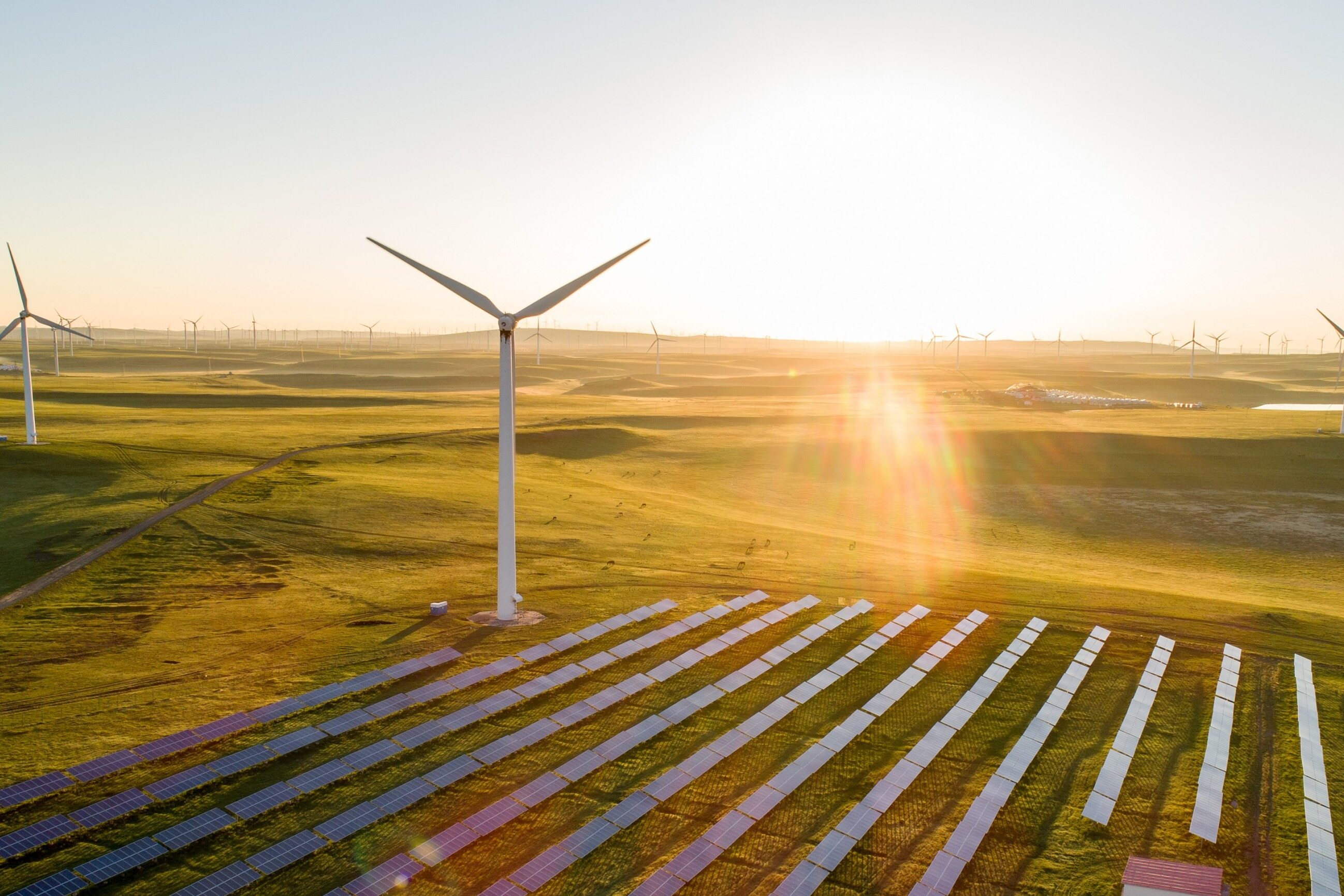
Angola—the third largest economy in Sub-Saharan Africa, a major oil exporter and an OPEC member state—has made increasing power supply a top priority for the country, with the goal of achieving 9.9 GW of installed capacity and 60% of the total installed capacity by 2025. Electrification rate. Offshore oil resources—accounting for 30% of the country’s gross domestic product, more than 95% of total exports and 52% of fiscal revenues—the country is firmly committed to using renewable energy to support the national power system.
Currently, Angola’s installed power generation capacity is 6,143 MW, of which hydropower accounts for 56% (3,440 MW), natural gas accounts for 12% (750 MW), and the combination of solar, wind, biomass and waste accounts for 32% (1,965 MW). watt). At present, the nationwide electrification rate is 45%, the urban electrification rate is 65%, and the rural electrification rate is 6%. However, surveying studies conducted in 2014 showed that the country may have 55 GW of solar power, 3 GW of wind power, and 18 GW of hydropower.
Despite this potential, Angola still faces some challenges that must be addressed, including the credibility of public utilities, tariffs that reflect costs, and local currency risks. However, the large-scale projects implemented since 2017/18 have made a significant contribution to Angola's energy transition. The Soyo Combined Cycle Natural Gas Power Plant and Laúca Hydropower Project have added 750 MW and 2.1 GW, respectively, to diversify the country’s energy matrix.
As the population of Angola increases and the economy grows, energy demand is expected to increase from 103,000 barrels of oil equivalent (BOE) in 2020 to 270,000 barrels of oil equivalent in 2035 and 660,000 barrels of oil equivalent in 2050. In order to meet growing demand and electrification goals, Angola is therefore choosing to integrate renewable energy and fossil fuels into its energy transition.
Renewable energy: projects and potential
Through the development and implementation of micro and micro grids, renewable energy is well-suited to meet rural needs-where grid connections are not feasible. In June 2019, the Italian energy company Eni and the Angolan national hydrocarbon company Sonangol jointly developed Solenova, a joint venture to implement renewable energy projects in the country. The first project of the joint venture includes the installation of a 50 MW photovoltaic (PV) power plant in the Namibe province of southern Angola. In September 2019, the Minister of Energy and Water Resources, João Baptista Borges (João Baptista Borges) announced that Angola plans to incentivize the private sector to install 30,000 solar photovoltaic off-grid systems in rural areas of the country in order to Produce 600 megawatts of solar power by 2022.
Angola’s power generation capacity is mainly composed of hydropower, which has quadrupled the country’s installed capacity in the past ten years. The Angolan government has taken note of the country's hydropower potential, which is estimated at 18.2 GW, of which 20% is currently in use. According to the Evaluation Report of the Suitable Energy Fund for Africa (SEFA) conducted by the African Development Bank in December 2020, the Angolan government has identified 100 suitable sites for micro hydropower stations to generate 600 MW of electricity. -Separate water and electricity. It is worth noting that the Caculo Cabaça Hydropower Station is a planned 2,172 MW hydroelectric power facility currently under construction in the province of Kwanza Norte.
In addition, the International Renewable Energy Agency pointed out in its Africa 2030 report that Africa’s rich solar potential can provide the African continent with up to 10 terawatts of installed capacity. Solar energy is seen as an important part of Angola's national strategy for transition to renewable energy. MINEA announced a strategy with the goal of installing 142 solar photovoltaic systems that will provide 534.6 kilowatts of electricity for medical centers, schools, administrative buildings and infrastructure. As part of the 2025 vision, the Angolan government has set a goal of installing 100 megawatts of solar capacity, of which 30 megawatts will be off the grid. France’s Total (a subsidiary of Total SA) is cooperating with Greentech-Angola Environment Technology to build a 35 MW solar power plant in Huíla Province, Angola. The energy produced by the plant is expected to make a significant contribution to Angola’s renewable energy plan and reduce the country’s power shortage.
In addition to hydropower and solar energy, Angola has plenty of opportunities to develop wind energy potential. The SEFA assessment report shows that two to five wind farms in the south of the country can generate 100 megawatts of electricity.
Angola Energy 2025 Vision
The Angolan government implemented the Energy Vision 2025 plan, which is a comprehensive framework for the country’s electrification rate to be expanded to 60%. The installed capacity will be increased to 9.9 GW by 2025, using 66% of water sources, 19% of natural gas, and 8% of Renewable energy and 7% of heat energy. The government predicts that under the plan, the energy sector will receive 23 billion U.S. dollars in investment-12 billion U.S. dollars for power generation, 4 billion U.S. dollars for power transmission, and 7.5 billion U.S. dollars for power distribution. Therefore, the plan envisages that renewable energy will account for 70% of the country's installed capacity.
During the 2021 Angola + Green Virtual Symposium organized by Portugal, the presidency of the European Council, Minister Borges determined that diversification of the energy structure and universal access to electricity are the priorities of this Central African country. In addition, in order to achieve a universal electrification rate of 60% by 2025, Power Africa and the African Development Bank are working with the Angolan government to develop and expand infrastructure and promote new power connections. The cooperation will also assess the country's 1,000 megawatts of potential energy to improve power supply and strengthen the financial viability of the industry.
Development challenge
According to the data from the Institute of Safety Research, Angola is expected to see its electrification rate increase to 52% by 2030, 68% by 2040, and 80% by 2050, according to the current development trajectory. Without additional efforts or investment, the country will not be able to increase the national electricity price to 60% by 2025.
The majority of Angola's population with electricity is located in the country's 18 provincial capitals, 70% of which are located in Luanda. According to the United States Agency for International Development (USAID), the cost of electricity supply in Angola is very high, with an allocation of US$220 per MWh, which is 60% higher than the reference value. High variable and investment costs, technical losses and increasing network unavailability, coupled with the country’s inadequate power generation infrastructure and inefficiency, have proven to be challenges facing Angola’s energy transition.
In order to offset the high cost of electricity supply, the Angolan government implemented an intensive subsidy policy to compensate operating companies and protect consumers from overwhelming electricity costs due to the population’s overreliance on diesel generators and domestic inefficiencies. Departmental infrastructure. In addition, in order to unlock its renewable energy potential, Angola will need to implement private investment, combined with the establishment and institutionalization of related frameworks, to achieve the goals envisaged in its 2025 Vision Plan.
In view of these challenges, the Angolan government has formally requested assistance from SEFA to encourage private investment in renewable energy power generation to reduce the country's dependence on its depleted fossil fuel resources. SEFA has agreed to provide technical assistance to create an enabling environment for independent power producers/public-private partnership projects and solve capacity building issues in procurement, design, implementation, and monitoring. Editor/Xu Shengpeng
Comment

 Praise
 Collect
 Comment

 Share
Share


Write something~