 Search


- A layout that concerns the future competition pattern in deep space is quietly unfolding
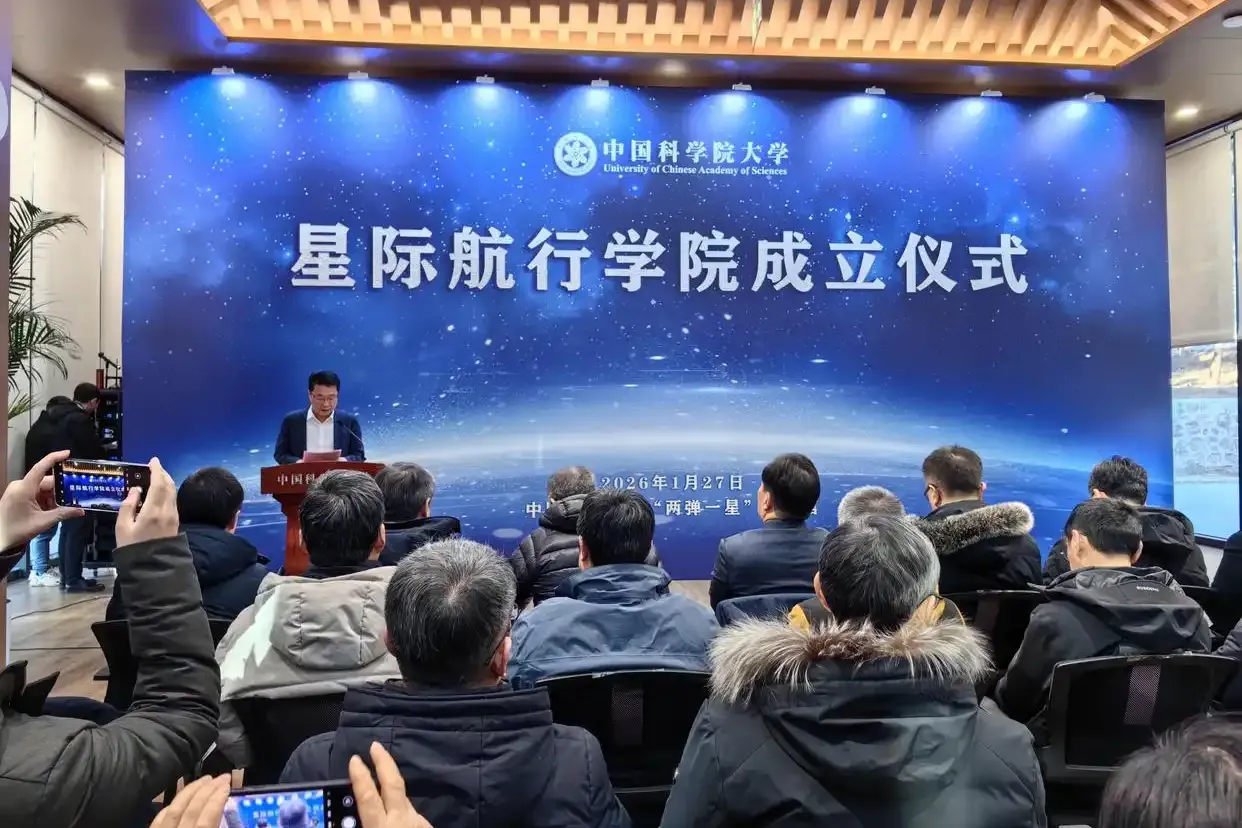
On the morning of January 27, 2026, Huairou, Beijing - The Interstellar Navigation School of the University of Chinese Academy of Sciences was officially inaugurated in the Chinese Academy of Sciences and the Memorial Hall of "Two Bombs and One Star", a holy land bearing the spirit of self-reliance in science and technology of the Republic.
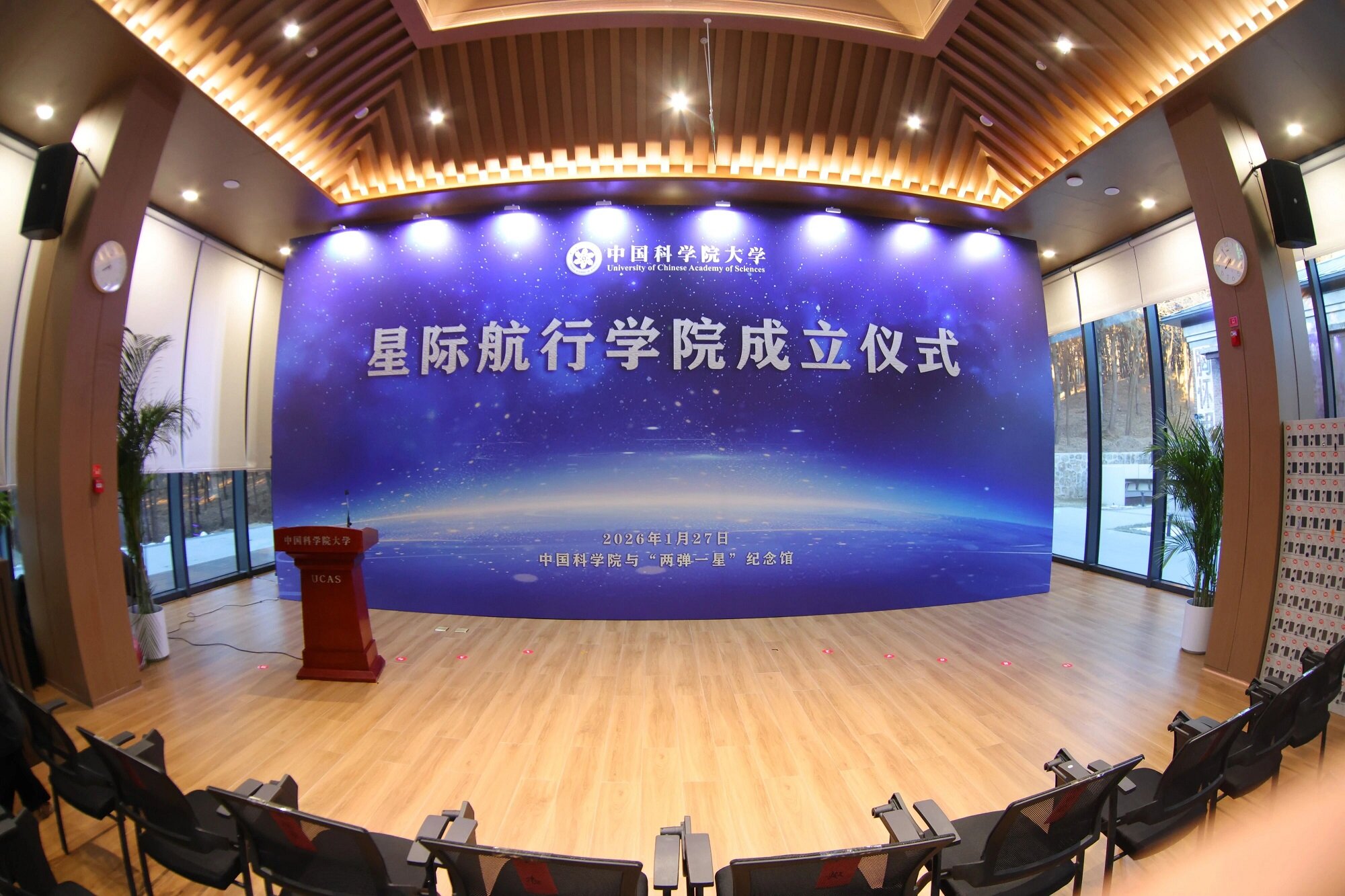
Academician Zhu Junqiang, Director of the Bureau of Strategic High Technology Research of the Chinese Academy of Sciences, became the first president, marking the full implementation of China's key measures in seizing the scientific and technological commanding heights of deep space exploration and laying out the cultivation of the next generation of star navigation leaders.
The "Interstellar Voyage" of the University of Science and Technology of China: The unveiling ceremony of the college was held at the Memorial Hall, which witnessed the great achievements of China's two bombs and one satellite, with profound implications. From the shocking sound of breaking the nuclear monopoly in the past, to the profound gaze aimed at the stars and the sea today, the spiritual lineage of Chinese scientists has completed another important inheritance at this moment.
The ceremony was simple yet solemn, without excessive formalities, yet it gathered many top scholars from fields such as space science, aerospace engineering, and planetary science.
The next 10 to 20 years will be a critical window period for China's interstellar navigation field to achieve leapfrog development, "Academician Zhu Junqiang said at the ceremony." Primitive innovation and technological breakthroughs will reshape the pattern of deep space exploration and profoundly affect national competitiveness. The establishment of the academy is precisely to respond to the urgent call of this era
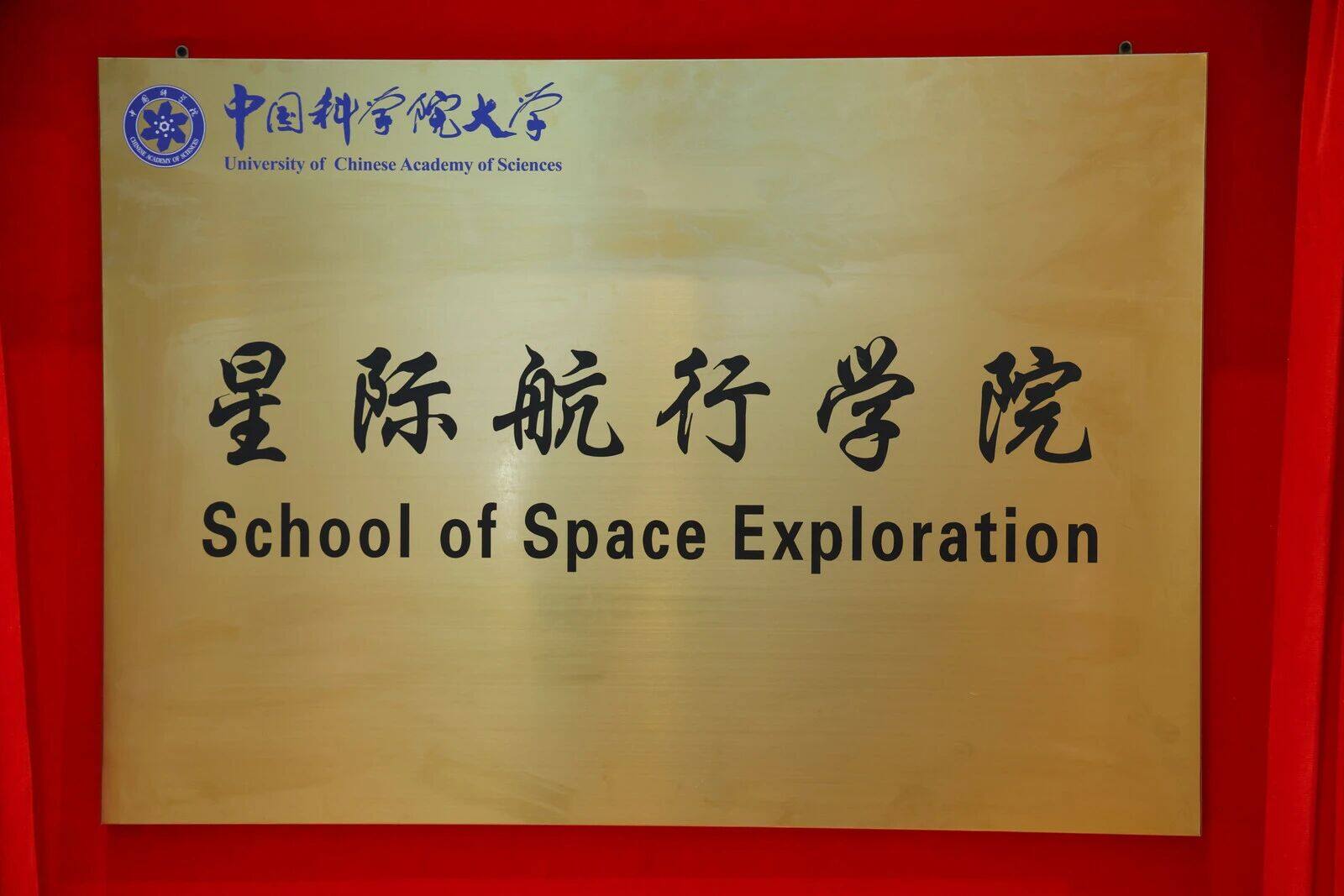
Seize the future window and lay out talent in Xinghai
The blueprint for the construction of the college has already been drawn. As early as November 2025, the University of the Chinese Academy of Sciences has decided to establish the Interstellar Navigation Institute, which is regarded as an important part of the core task of seizing the commanding heights of science and technology.
The mission of the college is clear and grand: to provide solid talent and intellectual support for major strategic needs such as national deep space exploration and space science research.
In terms of disciplinary construction, the college has demonstrated a grand vision and solid foundation. Its curriculum system will cover 14 first level disciplines or professional categories such as aerospace science and technology, planetary science, etc.
The college is not starting from scratch, but is deeply integrating and expanding on the basis of 97 existing high-quality courses, with plans to add 22 core courses.
These new courses directly address the core challenges and cutting-edge thinking of interstellar navigation, such as principles of interstellar power and propulsion, perception and utilization of interstellar navigation environments, planetary dynamics and livability, and even proactively establish directions in interstellar sociology and governance, aiming to achieve deep integration of scientific exploration, technological innovation, and application scenarios.
Practice platform benchmarking against reality, immersing in cultivating future pioneers
Looking up at the starry sky, it is even more important to be down-to-earth. The Interstellar Navigation Academy is well aware that the engineers and scientists who will be piloting starships in the future must be forged in the environment closest to real challenges.
In the teaching practice section, the college will fully utilize the advantages of the large scientific facilities and research platforms gathered in Huairou Science City. Based on the existing cutting-edge science, key technology, and strategic application platforms, the college plans to build six unique high-level practical platforms.
This includes a drone intelligent patrol simulation platform, a space science satellite full process teaching practice platform, and the most core interstellar navigation space earth collaborative experimental teaching and innovation platform.
These platforms will build a highly simulated 'interstellar mission environment', allowing students to immerse themselves in the entire process from task design, technical breakthroughs to system integration, and cultivate practical abilities to solve complex engineering and scientific problems.
Top committee escorts and guides the direction of talent cultivation
To ensure a high starting point and high quality of talent cultivation, the college quickly established a strong academic guidance system on the day of its establishment - the Interstellar Navigation Talent Training Special Teaching and Training Guidance Committee, and held its first plenary meeting.
The lineup of the steering committee is shining brightly, led by three heavyweight academicians:
Academician Wang Chi, Director of the National Space Science Center of the Chinese Academy of Sciences, Academician Zhu Junqiang, Director of the Institute of Geology and Geophysics of the Chinese Academy of Sciences, and Academician Di Qingyun, Director of the Institute of Geology and Geophysics of the Chinese Academy of Sciences, served as co directors of the Steering Committee.
This top expert think tank will provide strategic guidance and authoritative oversight for the discipline construction, curriculum design, research direction, and talent cultivation mode of the college, ensuring that the college always navigates on the right track and steadily advances towards the goal of cultivating leading talents capable of undertaking the mission of interstellar exploration.
With the unveiling of the Interstellar Navigation Academy, a special "waterway" connecting Earth civilization with the vast stars has begun to be laid. It cultivates not only future scientists and engineers, but also the confidence and dream of a nation moving towards the era of deep space.
When the ceremony ended, the attendees walked out of the memorial hall, and the winter sun shone on the brand new buildings of Huairou Science City. Not far away, in the laboratories that simulate deep space environments, the first group of young people with dreams of stars are about to be welcomed.
The story of China's deep space exploration is opening a new chapter in talent cultivation.Editor/Yang Meiling
Comment

 Praise
 Collect
 Comment

 Share
Share


Write something~