 Search


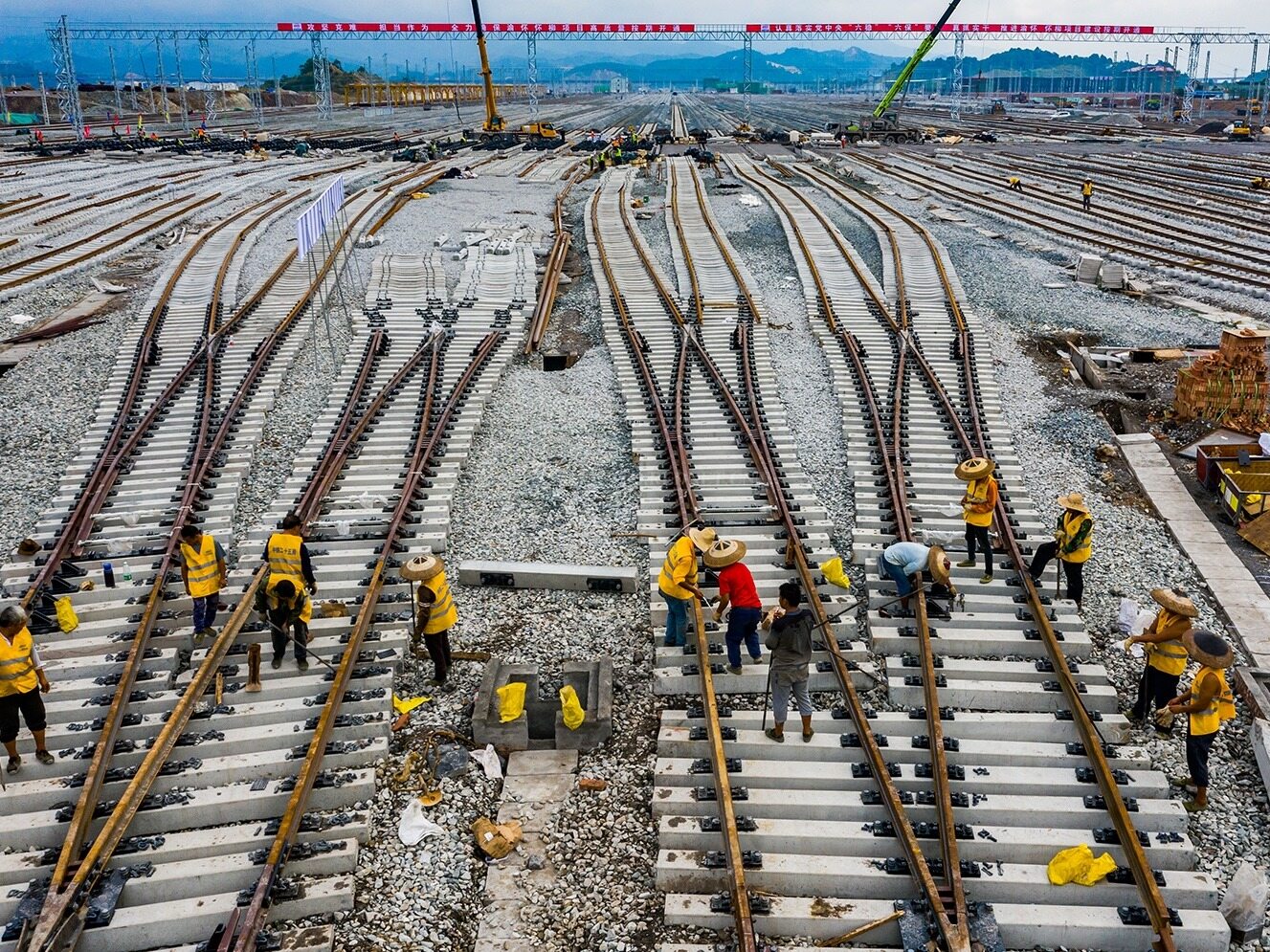
- This railway is the backbone of the China Nepal Trans Himalayan Three Dimensional Interconnection Network
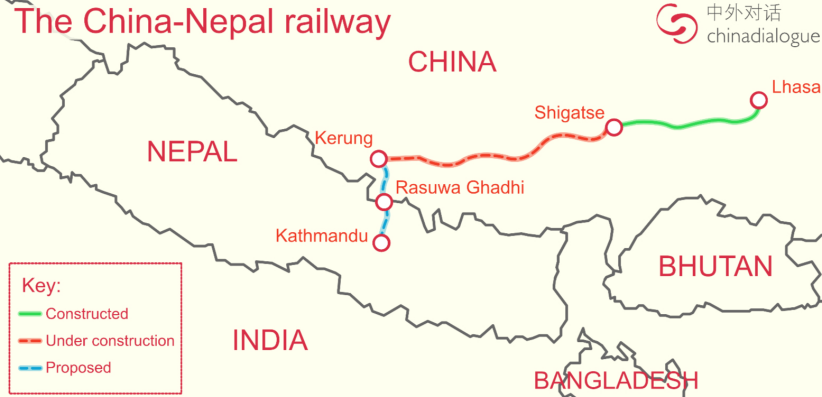
Wang Gonggang, a geological engineer of CREEC, finished a section of rock core sampling up to 400m deep in the Nuwakot Mountains at the southern foot of the the Himalayas. He pointed to the mountain of samples piled up next to the drilling rig and said to his Nepalese colleagues, "This is the most intense 'wound' of the collision of the Earth's plates, but it is also the 'stitch' we are about to stitch together." This scene is a microcosm of the feasibility study battle for the China Nepal cross-border railway (from Jilong to Kathmandu). According to the Kathmandu Post on February 26th, the "technical judgment" that will determine the life and death of the project is expected to be completed in June this year.

From paper warfare to geological decision-making
Since the technical expert group of China Railway First Institute set foot on Nepalese soil in December 2022, this 42 month long "geological expedition" has entered its final sprint stage. Nepalese Ministry of Infrastructure and Transport official Bhandari confirmed that the feasibility study report covers three regions: Kathmandu, Nuwakot, and Rasuwa, and the content is as detailed as a hair.
This is not just a blueprint, but a 'survival manual,' "Bandari said. The report will accurately pinpoint the length of the route, the precise number of tunnels and bridges, the distribution of stations, and the core project cost. For this report, both China and Nepal invested approximately 3.4 billion Nepalese rupees (about 180 million RMB) in research costs, focusing on evaluating whether the technology can withstand the "temper" of the Himalayas and whether the huge investment can bring economic returns.
The engineers of China Railway First Institute have gone through the toughest field work. In April 2025, the geological survey work entered its final stage, and the team obtained deep rock mass data from 80 drilling points. These data will directly answer whether humans can safely 'chisel' a railway on the collision zone between the Indian Plate and the Eurasian Plate.
A sky high bill of 260 million yuan per kilometer
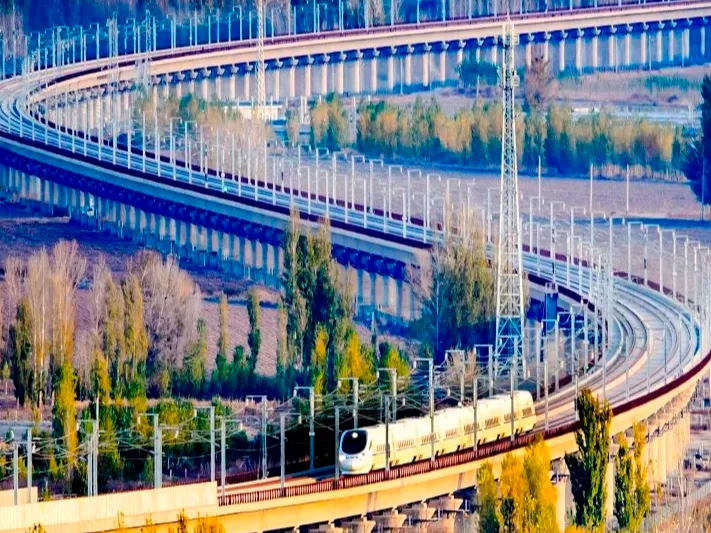
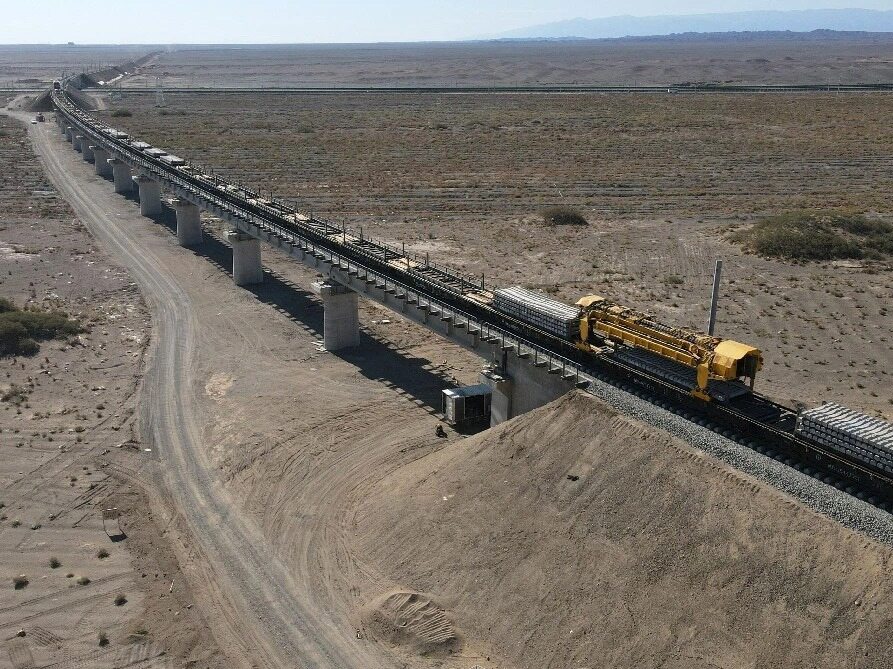
The pre feasibility study data reveals the 'crazy' nature of this railway. The 72.25 kilometer railway line in Nepal is almost entirely "hidden" within the mountains and in the air, with a bridge to tunnel ratio of up to 98.5%. This means that passengers may only be able to see sunlight outside the window for a short 1.1 kilometers when taking this train in the future.
Such a high bridge to tunnel ratio has directly pushed up the cost label of "the world's most expensive". Preliminary estimates show that the total investment for the Nepal section is about 2.75 billion US dollars, equivalent to a cost of about 260 million yuan per kilometer. This number far exceeds that of ordinary high-speed trains, and even surpasses some underwater tunnel projects. The high cost comes from the extreme construction environment: the line needs to cross the main ridge of the the Himalayas, with a great altitude drop, and is located in a high intensity earthquake area. The construction party not only needs to deal with rock fractures (rock bursts) in high-altitude areas, but also needs to design flexible structures that can withstand frequent seismic activity.
Nepal's strategic breakthrough and China's pivot in South Asia
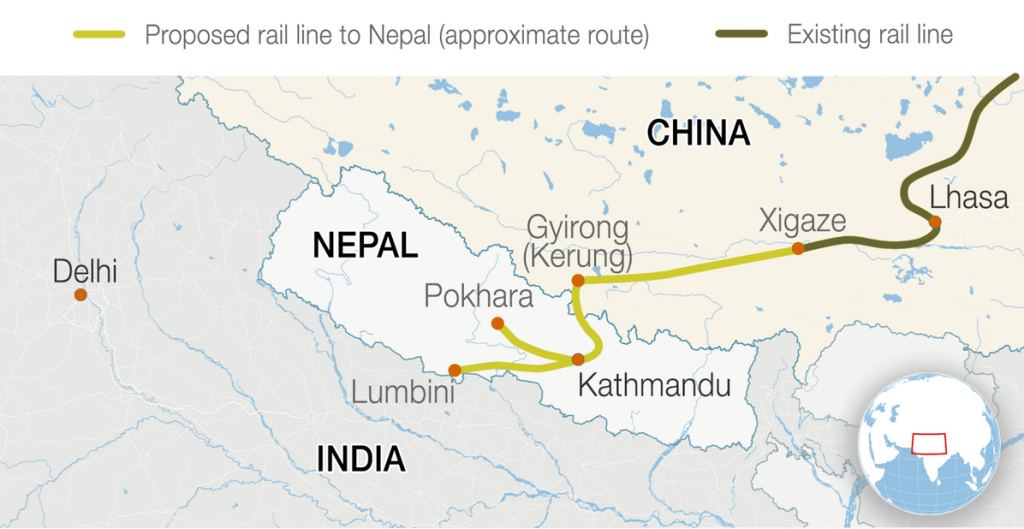
For Nepal, the report released in June is crucial to the country's fortunes. Currently, 87% of Nepal's foreign trade must bypass India due to geopolitical constraints. After the completion of the China Nepal Railway, it only takes 15 days for goods to reach Kathmandu directly from the Shigatse International Land Port in Xizang, which is more than 30 days shorter than the sea route through India. This is not only about speeding up transportation, but also a relaxation of national sovereignty.
For China, this is the ultimate export of its infrastructure experience to the roof of the world. China Railway First Survey and Design Institute is carrying the experience of "resisting high altitude sickness" from the Qinghai Tibet Railway and the Sichuan Tibet Railway, attempting to replicate miracles in plate collision zones. As an important fulcrum of the the Belt and Road in South Asia, this railway will form a triangle echo with the China Laos Railway and the China Pakistan Economic Corridor, and directly deliver China's economic radiation to the southern foot of the Himalayas.Editor/Yang Meiling
Comment


 Praise
 Collect
 Comment

 Share
Share


Write something~