 Search


- With over 3.5 billion US dollars and three major tracks being rolled out simultaneously, China International Capital Corporation

The energy pulse of Central Asia meets the power of Eastern capital, and a deep transformation of cross-border production capacity cooperation is accelerating. Recently, China's diversified investment group Zhongjin Guantai held an official meeting with the Consulate General of Uzbekistan, announcing a special layout for a total investment of over 3.5 billion US dollars in Uzbekistan. The funds will be precisely allocated to the three core areas of new energy, mining, infrastructure, culture and tourism. This is not only a capital journey, but also a strategic node for China's industrial strength to deeply embed into Central Asian entities.
1 billion for new energy, 2 billion for mining, and 500 million for infrastructure, culture, and tourism
The meeting was led by the Consulate General of Uzbekistan, and the Chairman of CICC Guantai personally attended the negotiation. The company has officially submitted a cooperation letter and established a comprehensive strategic cooperation intention. Clear and precise fund allocation: The investment in the green energy sector is 1 billion US dollars, the mining sector is 2 billion US dollars, and the infrastructure and cultural tourism sector is 300 million to 500 million US dollars, with a total investment of over 3.5 billion US dollars.
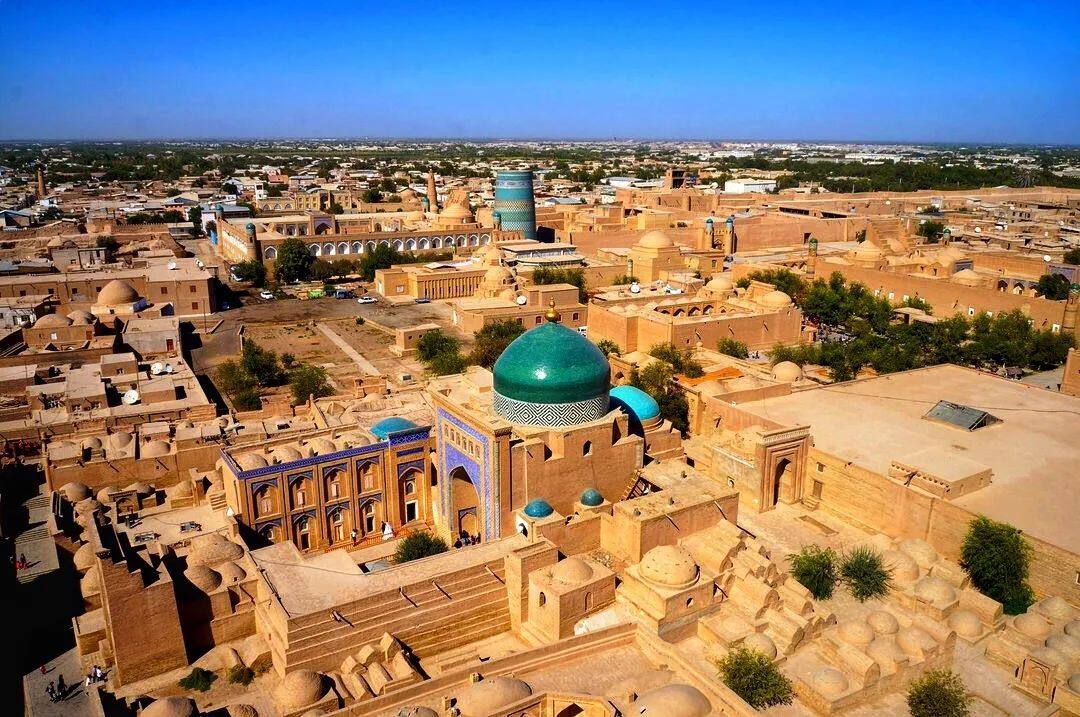
Zhongjin Guantai has completed a comprehensive on-site investigation in Uzbekistan and plans to leverage China's technological advantages to implement projects such as wind and solar power stations, power grid upgrades, and coal infrastructure renovation. In the mining industry, enterprises will collaborate with leading domestic mining companies to establish a global mineral fund worth billions of RMB, focusing on the development of key minerals such as gold and copper. After the meeting, both sides confirmed that a high-level delegation of Chinese experts will go to Ukraine in July 2026 to conduct on-site docking and accelerate the implementation of cooperation plans.
Uzbekistan accelerates investment attraction and intensifies cooperation in resources and energy
Uzbekistan is vigorously promoting the iteration of energy infrastructure and the commercial development of mineral resources, while accelerating the improvement of road networks, industrial parks, and cultural tourism facilities. It urgently needs the dual empowerment of foreign capital and technology. The country has abundant mineral reserves, with strategic resources such as gold, copper, and uranium ranking among the top in Central Asia. The potential for new energy development is also abundant, coupled with its location advantage of connecting the east and west, making it a core node for Chinese investment in Central Asia.
Currently, the economic and trade cooperation between China and Ukraine continues to deepen, with foreign investment access policies gradually relaxed. Energy, non-ferrous minerals, and infrastructure have become the mainstream tracks of bilateral cooperation. From policy dividends to resource endowments, from location advantages to market space, cross-border industrial investment is entering a rare window period.

Using energy and mineral resources as a lever, deeply binding Central Asian resources
Zhongjin Guantai is a diversified industrial investment group in China, mainly engaged in five business sectors: industrial investment, new energy, cultural tourism and medical care, infrastructure parks, and supply chain. It has long-term strategic cooperation with domestic central and state-owned enterprises, and its business network has covered multiple countries and regions such as the Americas, Southeast Asia, the Middle East, and Eastern Europe.
This layered investment layout precisely meets the urgent needs of Uzbekistan's industrial development, driven by the dual wheels of energy and mineral resources, supporting infrastructure and cultural tourism formats, effectively avoiding the investment risks of a single project. The enterprise takes resource development as the starting point, deeply binds to the local advantages of Uzbekistan, further improves the overseas asset layout in Central Asia, expands the cross-border industrial investment map, and lays a solid foundation for the establishment of a long-term bilateral industrial cooperation mechanism. Editor/Gao Xue
Comment






 Praise
 Collect
 Comment

 Share
Share


Write something~