 Search


- Xinjiang goods now have a stable new channel for export from the east
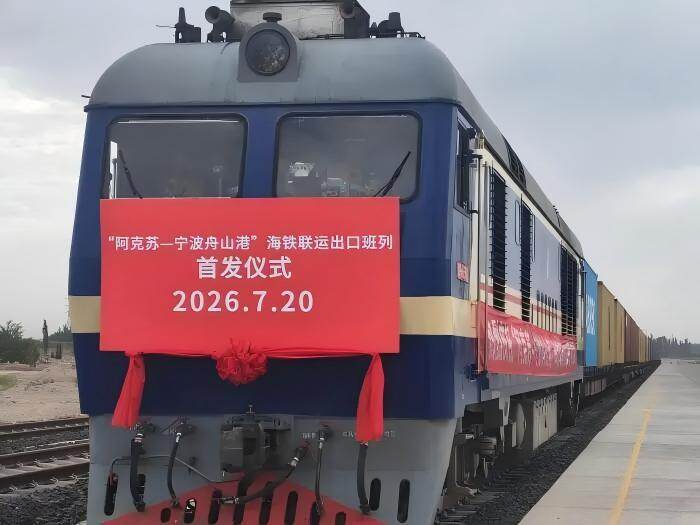
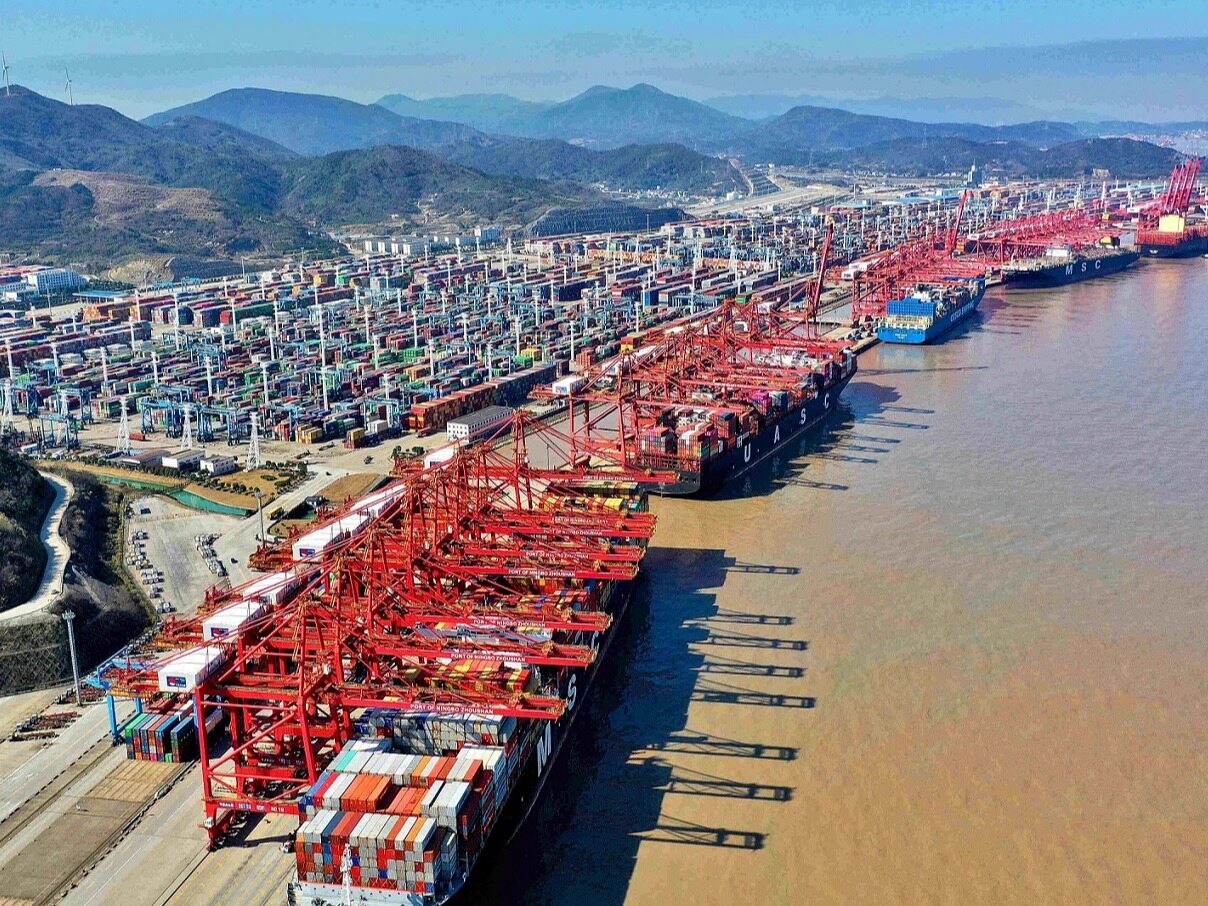
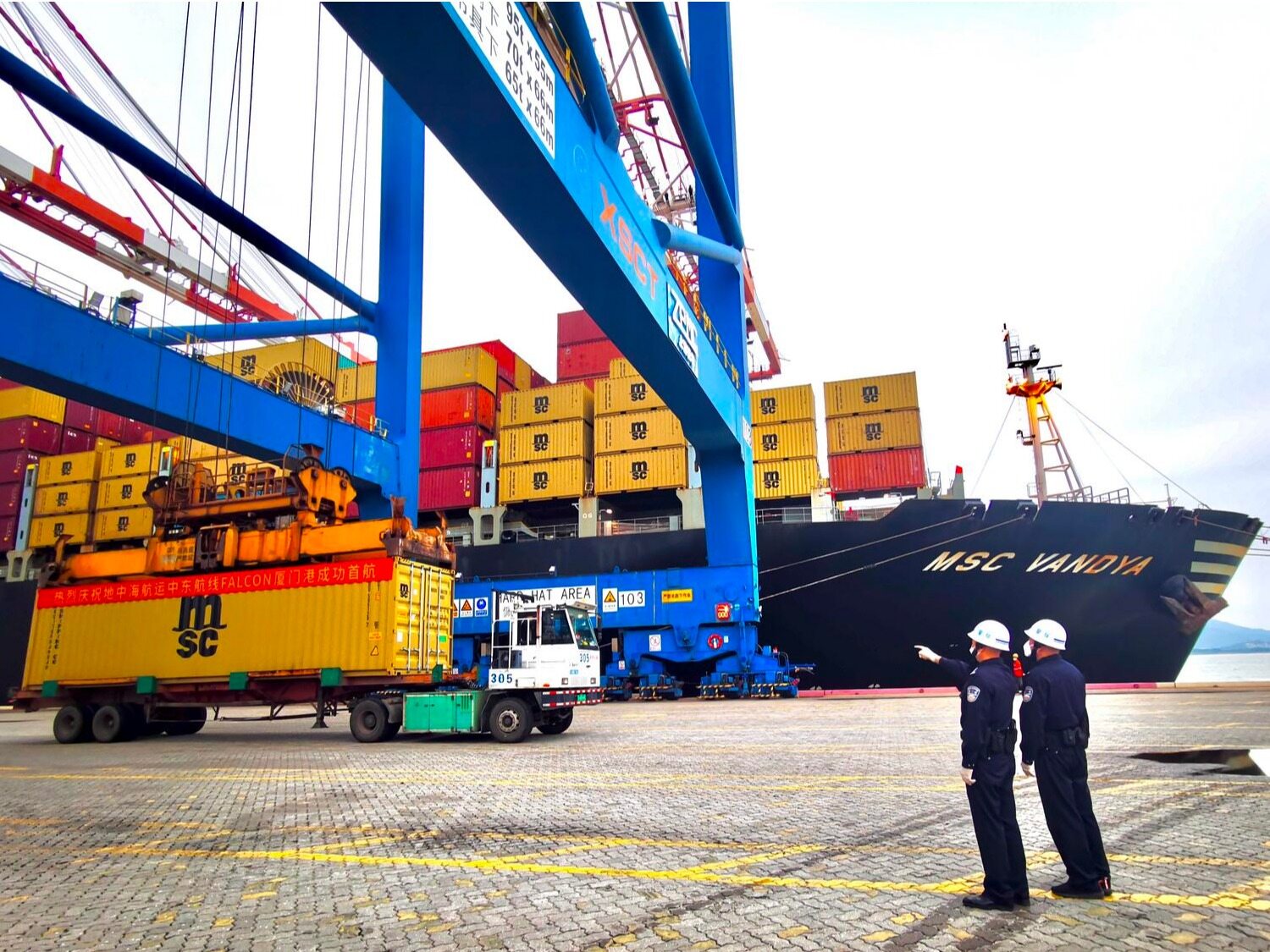
On the morning of July 20, 2026, at 10 o'clock, a train carrying heavy containers started sounding its horn on the railway dedicated line of Aksu Textile Industry City Logistics Park. On the car were over 2300 tons of local cotton fabric, feed additives, and other goods, totaling 47 standard boxes. It has to run 4910 kilometers of railway, cross six provinces, pass through 68 stations, and continue all the way to Ningbo Zhoushan Port on the east coast, and then change ships to Thailand. This is the first export train in southern Xinjiang that directly connects to the eastern super port. With the sound of the whistle, the main artery of Aksu's eastward sea voyage is officially opened.
The eastward passage has been opened
In the past, more than 90% of Aksu's foreign trade went through the western route of Central Asia. Cotton fabrics and dried fruits had to be transported to Southeast Asia or Europe and America through Urumqi or long-distance transportation by road, with repeated unloading and reloading taking more than ten days. The Zhejiang Provincial Aid Xinjiang Command has brought Ningbo Zhoushan Port, Urumqi Railway Bureau, and Urumqi Customs to a table, gradually connecting transportation capacity and customs clearance, and directly moving the sea outlet to the entrance of the enterprise factory. After the first train arrives at the port, it will connect to the shipping network and later cover markets such as Bangladesh, Singapore, and Vietnam, forming an east-west complementary relationship with the westward Central Asia train.

Save time and money
The railway department has set a hard target for this line: the overall delivery time is reduced by about one-third compared to the old mode, and the goods arrive at the port within 5 to 7 days; One box to the end, the original box goes out to sea, without changing or opening the box halfway, reducing the comprehensive logistics cost of a single box by more than 20%. Zhu Jiangwei, Secretary of the Party Branch of Aksu Branch of Korla Railway Logistics Center, calculated straightforwardly that in the past, he was afraid of cargo damage and delays. Now, once the container door is locked and opened in Ningbo, cotton yarn and cloth can be shipped quickly and efficiently.

Industry follows suit
Li Jianfang, the head of a textile enterprise, said that with low-cost channels, local cotton resources, and customs clearance facilities, there are even more reasons for Eastern counterparts to invest and build factories. Liao Hongyu, a member of the local committee and deputy commander of the Zhejiang Provincial Aid Xinjiang Command, made it clear that this is not only filling the gap in logistics, but also using channels to bring logistics and logistics to cluster industries. In the future, the local authorities also plan to increase the frequency of train services, coordinate the bi-directional opening of the Zhejiang Xinjiang Jilin freight train, and gradually implement the integration of waterless ports, empty container handling, and customs clearance, transforming Aksu from an inland hinterland to an east-west bi-directional open node.
As the train departed, the crane was pushing the last box of cotton cloth onto the flatbed. For foreign trade in southern Xinjiang, this road not only connects goods, but also provides confidence in accepting orders.Editor/Yang Meiling
Comment


 Praise
 Collect
 Comment

 Share
Share


Write something~