 Search


- Kazakhstan Railway launches innovative financing model to support the construction of the Eurasian Corridor
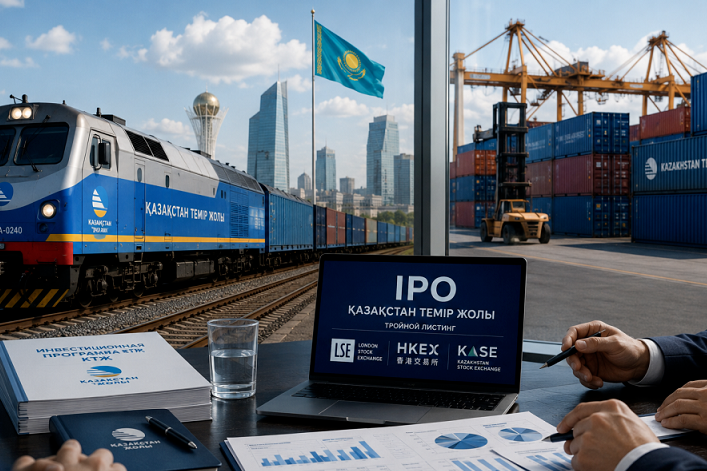
The value of the Eurasian logistics channel continues to rise, and Kazakhstan National Railway Company has finalized a new listing plan to alleviate debt pressure and expand operational capacity. The company has finalized a synchronized IPO plan for three regions, targeting the two major capital markets of Asia and Europe, and setting a new model for the capitalization transformation of the regional railway industry.

Core listing plan
Kazakhstan National Railway Company held a shareholders' meeting and decided to list on the Astana, London, and Hong Kong stock exchanges simultaneously in the first quarter of 2027. The listing plan has undergone multiple adjustments, extending from the initial 2025 to 2026 and 2027. The company plans to issue 25% of its common stock, and according to local regulations, at least 7.5% of the shares must be listed on the Astana International Exchange. All funds raised from this IPO will be retained and used by the company.
Core motivation for listing
The core purpose of this listing is to alleviate debt pressure and help the company operate steadily. As of the end of April, the company's nominal debt reached 4.7 trillion tenge, approximately 10 billion US dollars, a significant increase from 3.7 trillion tenge in December 2025. As a core railway operator in Central Asia, it undertakes over 60% of Kazakhstan's freight volume and 20% of its passenger volume, and relies on the China Europe Middle Corridor to undertake cross-border logistics business. Capacity upgrades and equipment updates require significant financial support. Keywords: Kazakhstan Railway, Railway Financing Transformation
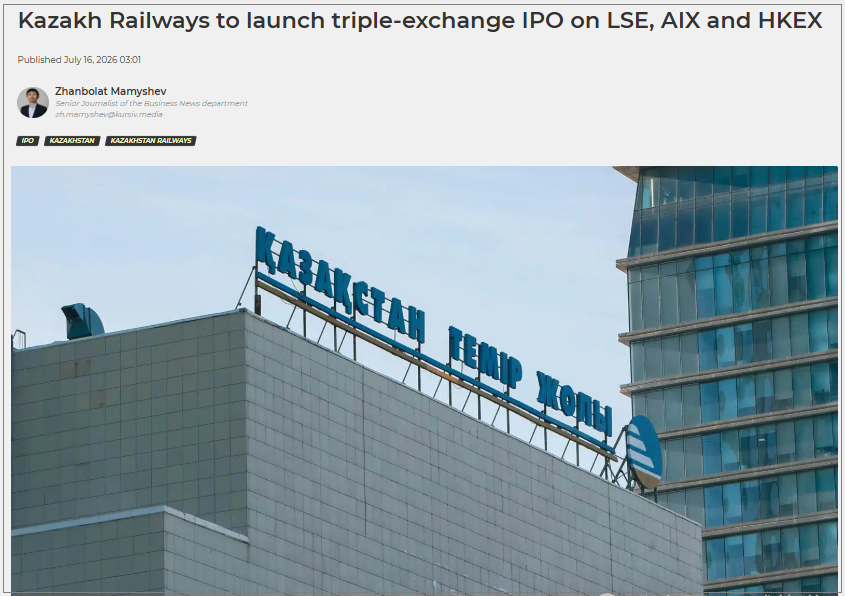
Industry financing transformation
The listing of the three cities this time is a typical epitome of the global railway industry's financing model transformation. The development of traditional railways heavily relies on government finance and policy loans, and now the industry is gradually shifting from single project financing to diversified enterprise financing. Relying on the capital markets of London, Hong Kong, and Astana, enterprises can accurately absorb Eurasian capital, adapt to the growing demand for freight transportation in the middle corridor, and promote the comprehensive upgrading of the railway industry from engineering construction to capital operation and long-term operation.Editor/Min Jing
Comment






 Praise
 Collect
 Comment

 Share
Share


Write something~