 Search


- Annual capture of 1.5 million tons of industrial carbon dioxide coupled with green hydrogen to produce one million tons of green alcohol
- Starting construction in 2027 and completion in 2030, decarbonization in coal chemical industry will resume
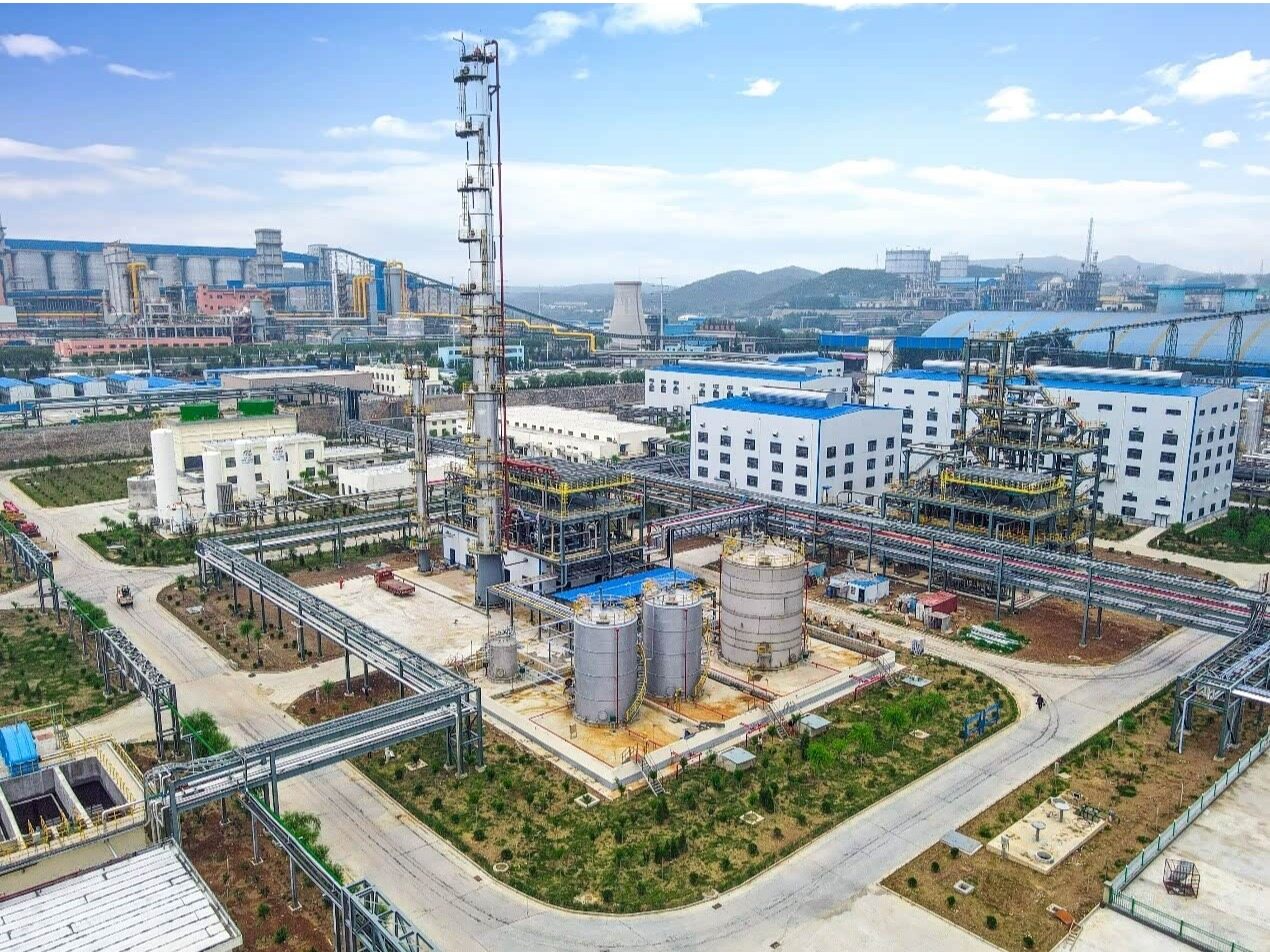
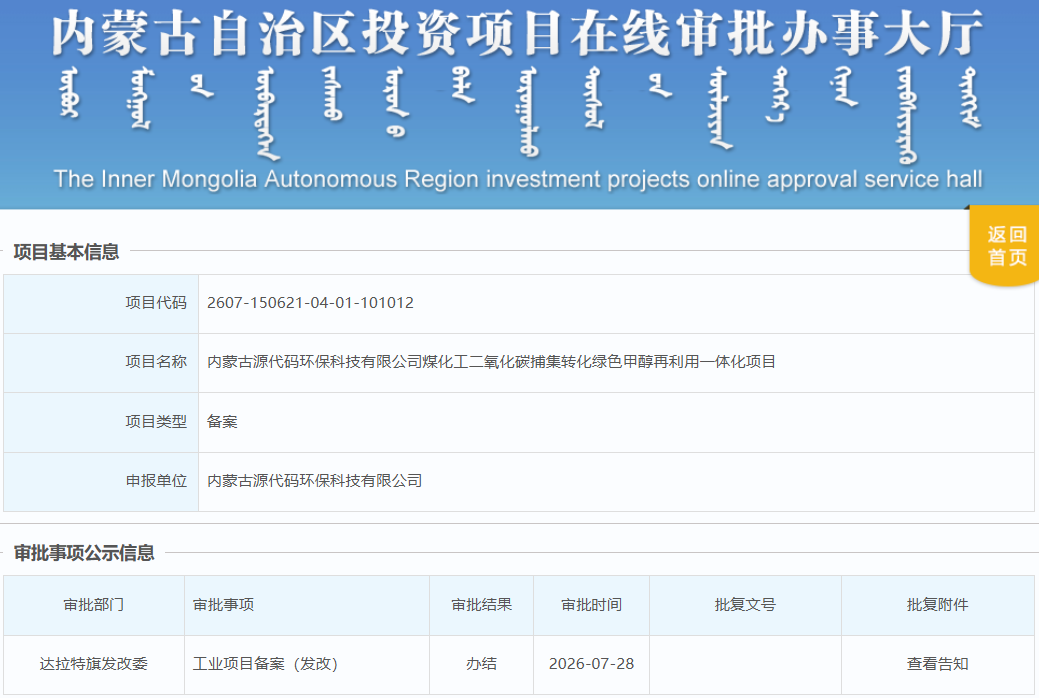
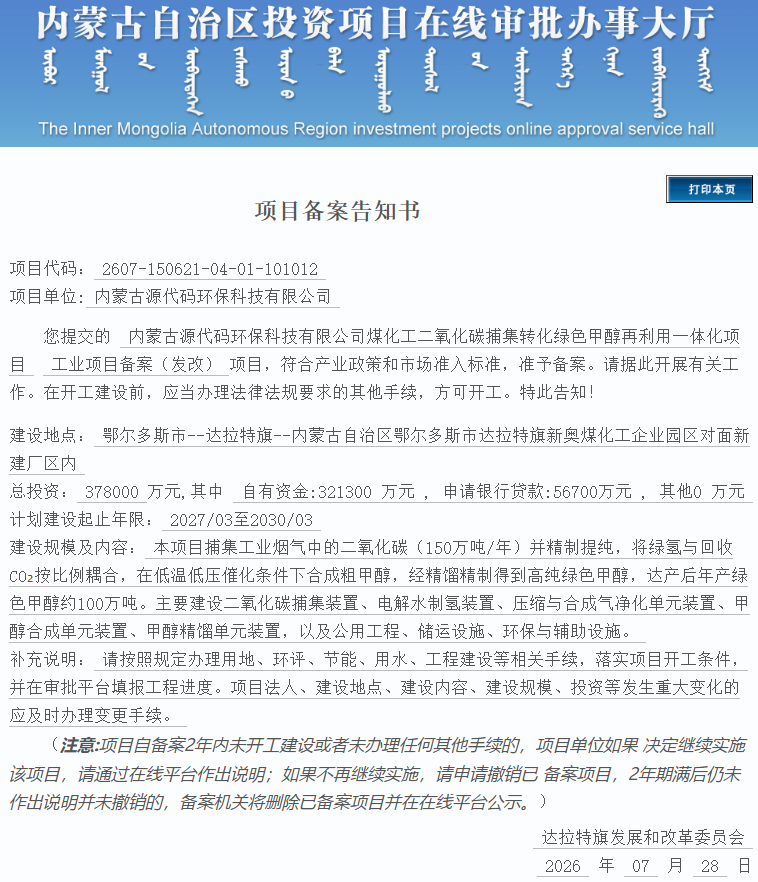
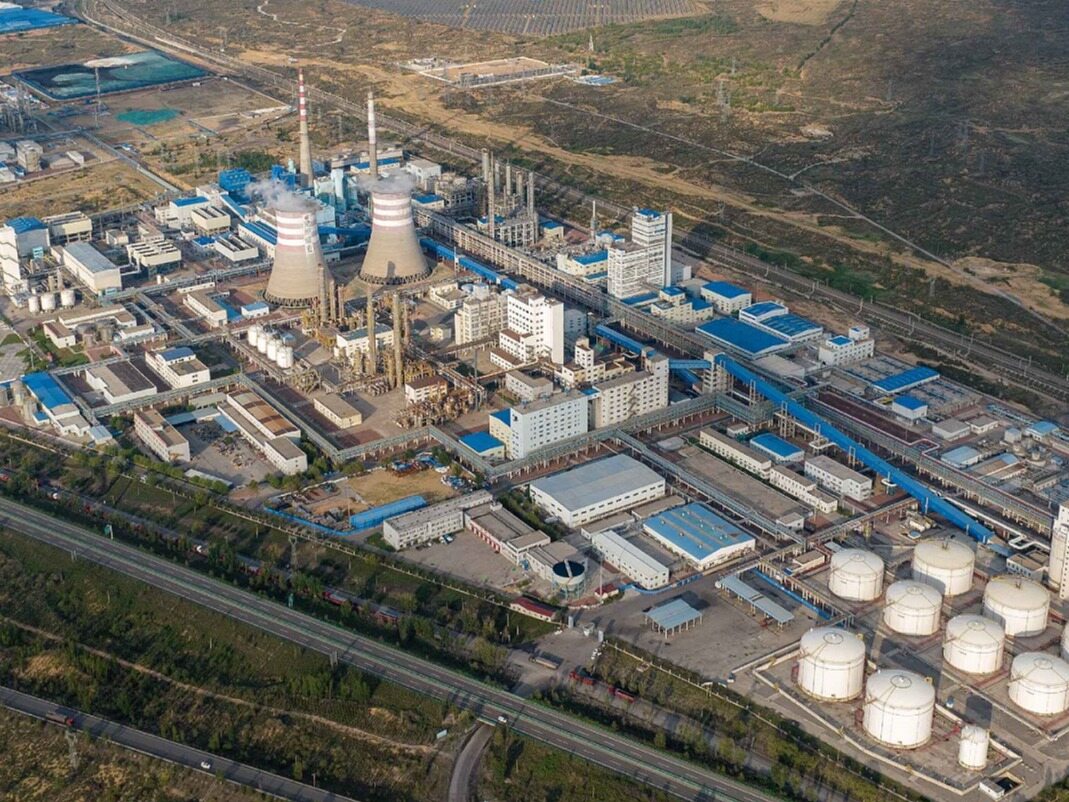
On the bend of the Yellow River in Dalate Banner, Ordos, a new factory building is about to grow across from a coal chemical industrial park under the rotating photovoltaic panels of wind turbines. On July 28, 2026, Inner Mongolia Source Code Environmental Protection Technology Co., Ltd. officially registered the coal chemical carbon dioxide capture and conversion green methanol reuse integration project, which will bring back the carbon dioxide previously discharged from chimneys to the production line and turn it into green methanol.
Flue gas to raw materials
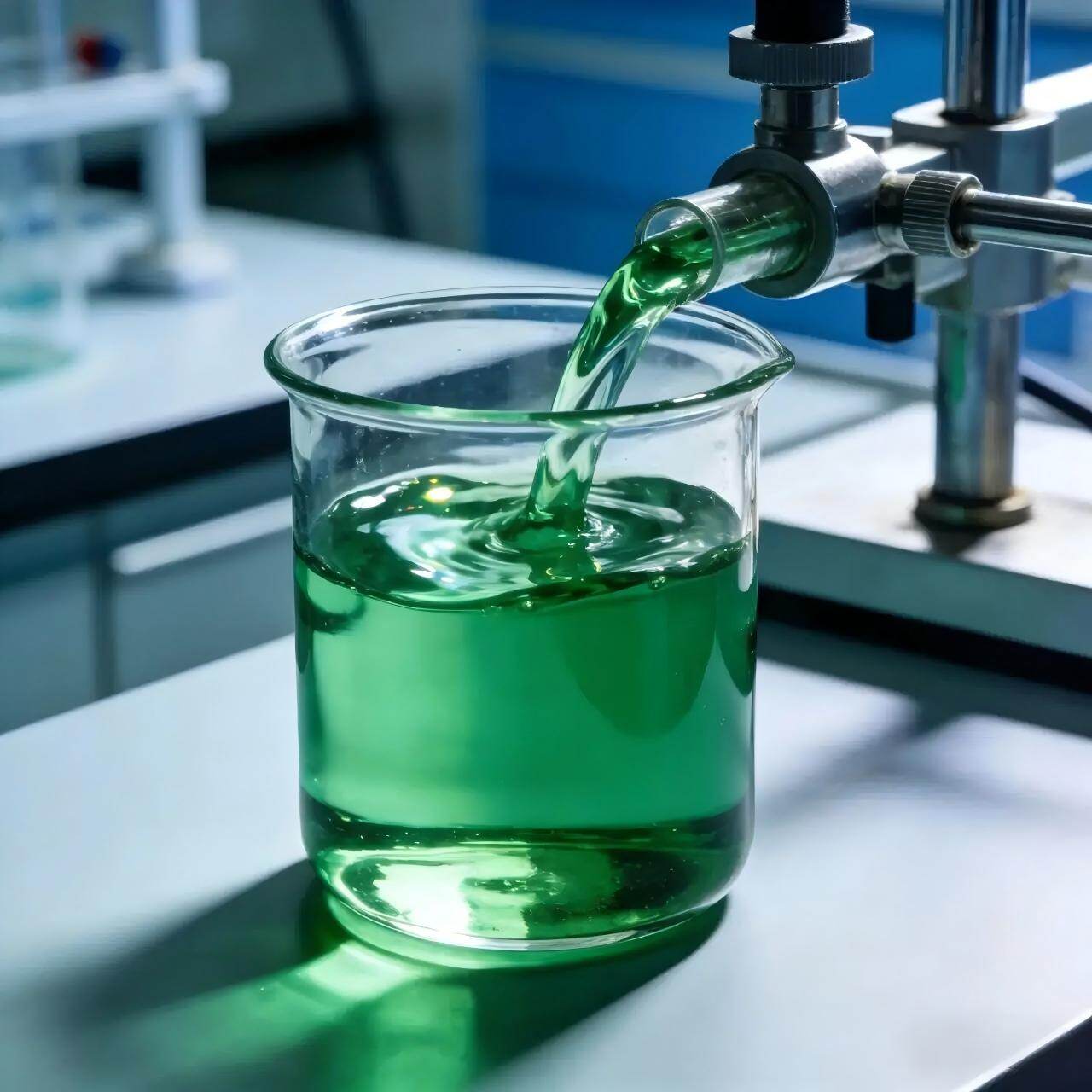
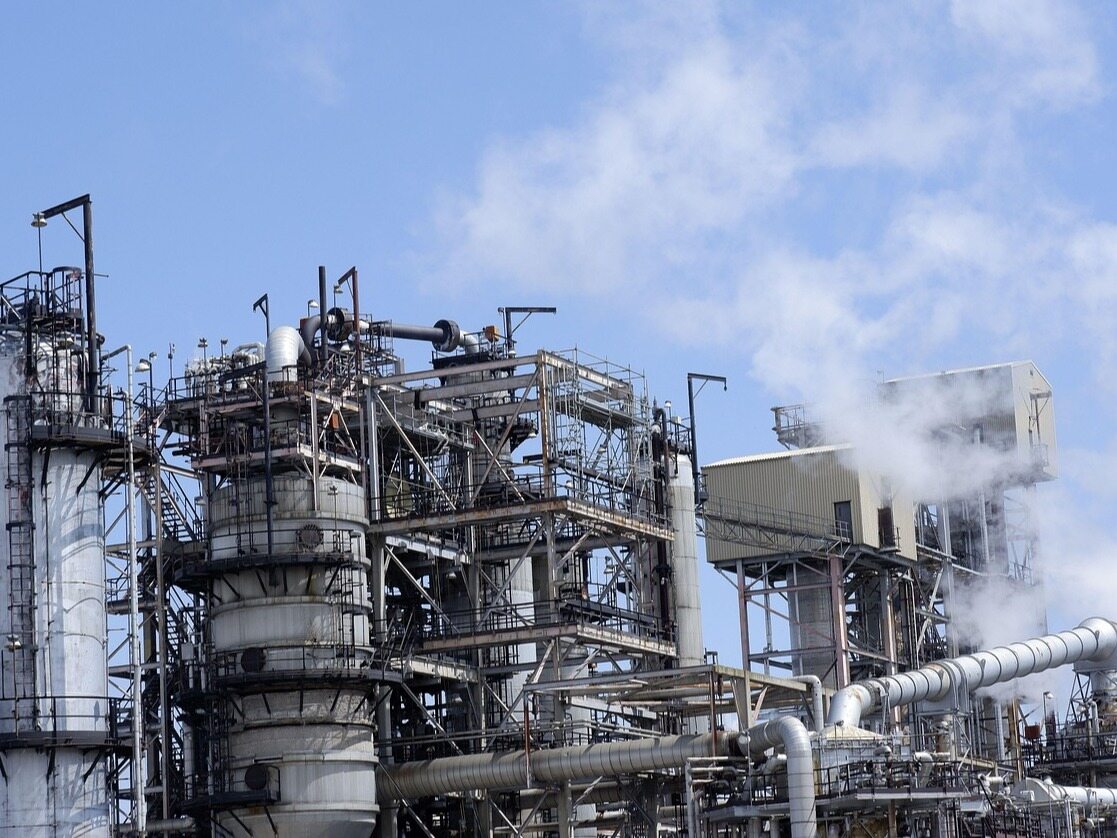
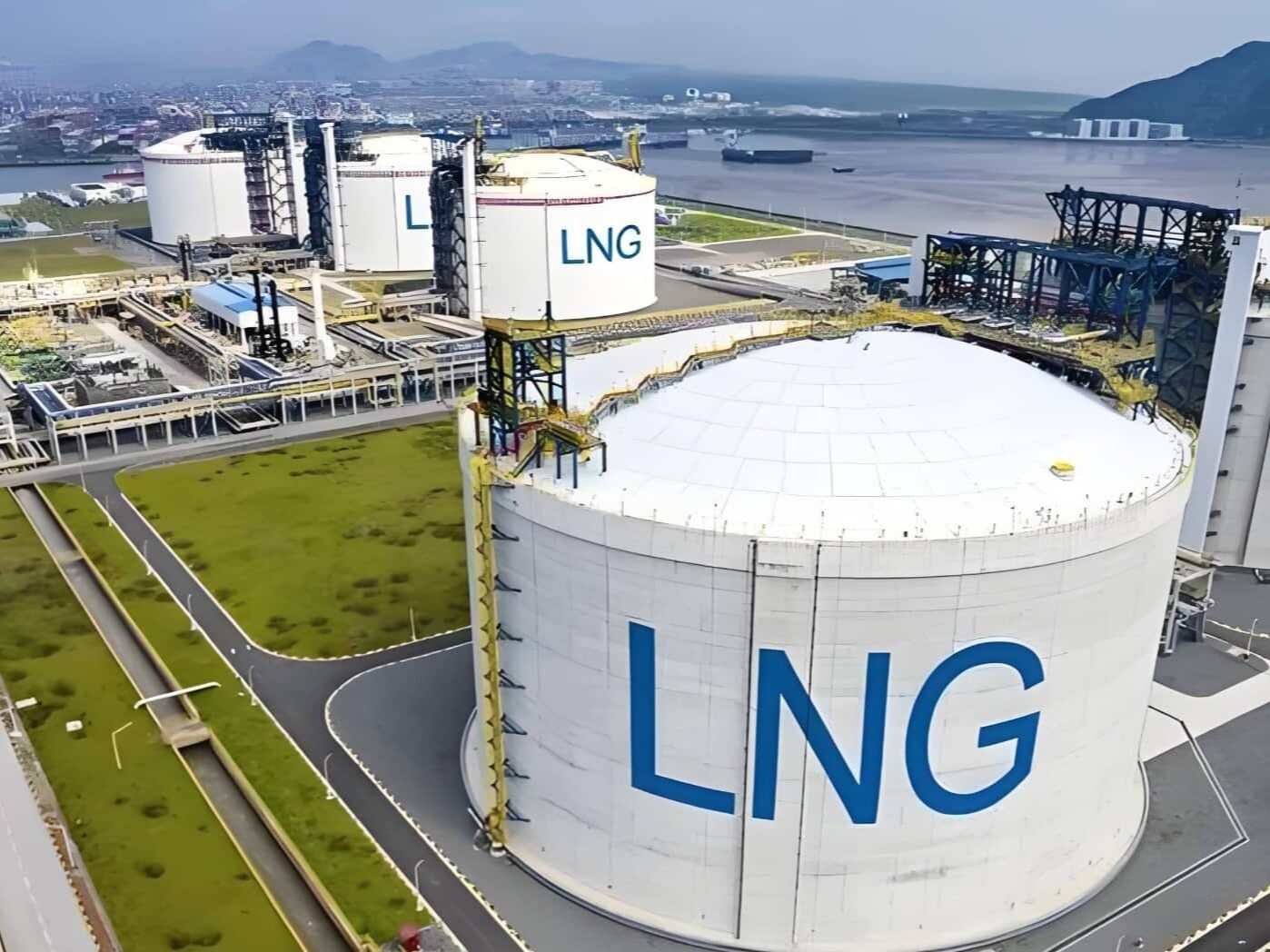
The project is located opposite the Xin'ao Coal Chemical Enterprise Park, with a total investment of 3.78 billion yuan, including 3.213 billion yuan of self owned funds and 567 million yuan of bank loans. The core logic is not complicated: first, capture 1.5 million tons of carbon dioxide annually from the surrounding industrial flue gas and refine it, then couple the green hydrogen produced by electrolysis with the recovered carbon dioxide in proportion, and synthesize crude methanol under low-temperature and low-pressure catalysis. After distillation, high-purity green methanol is obtained, with an annual production capacity of about 1 million tons.
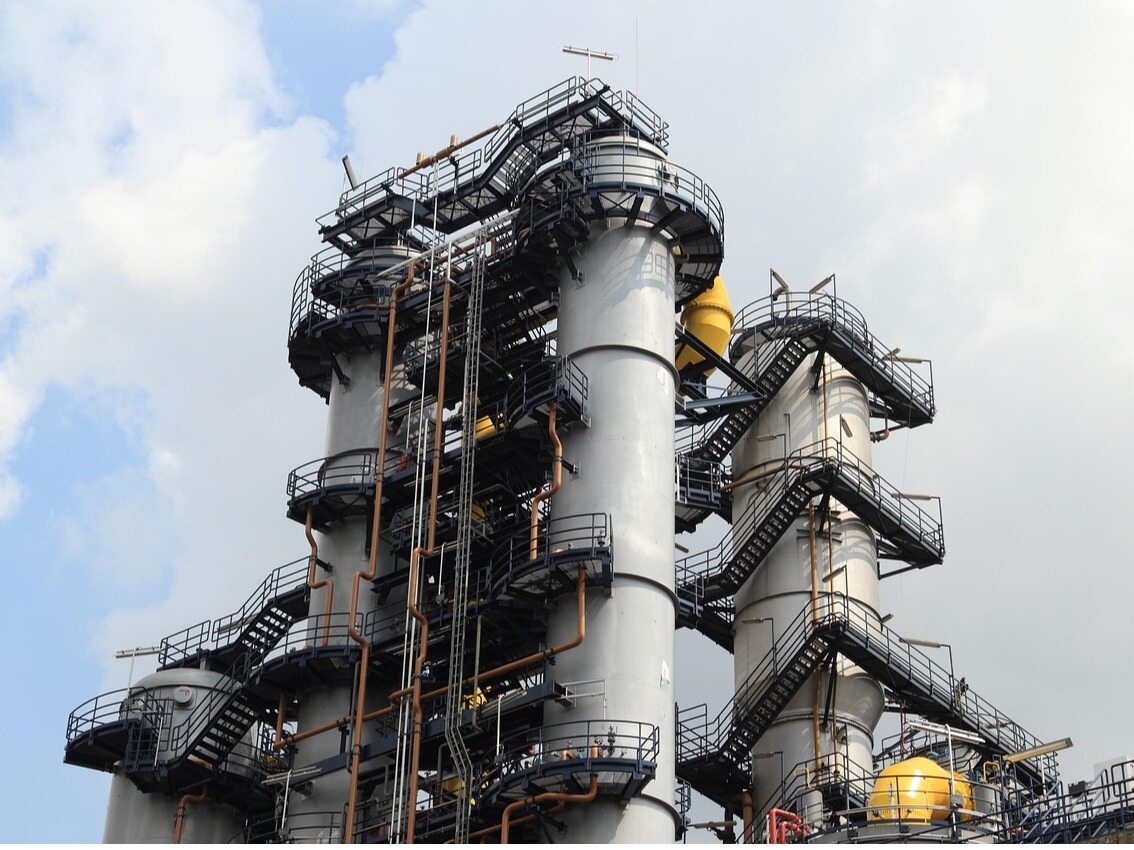
The supporting facilities cover carbon dioxide capture, electrolysis of water for hydrogen production, compression and synthesis gas purification, methanol synthesis, methanol distillation, as well as public engineering, storage and transportation, and environmental protection auxiliary facilities, forming a closed loop from tail gas entering the plant to green alcohol loading.
Green power coal blending base
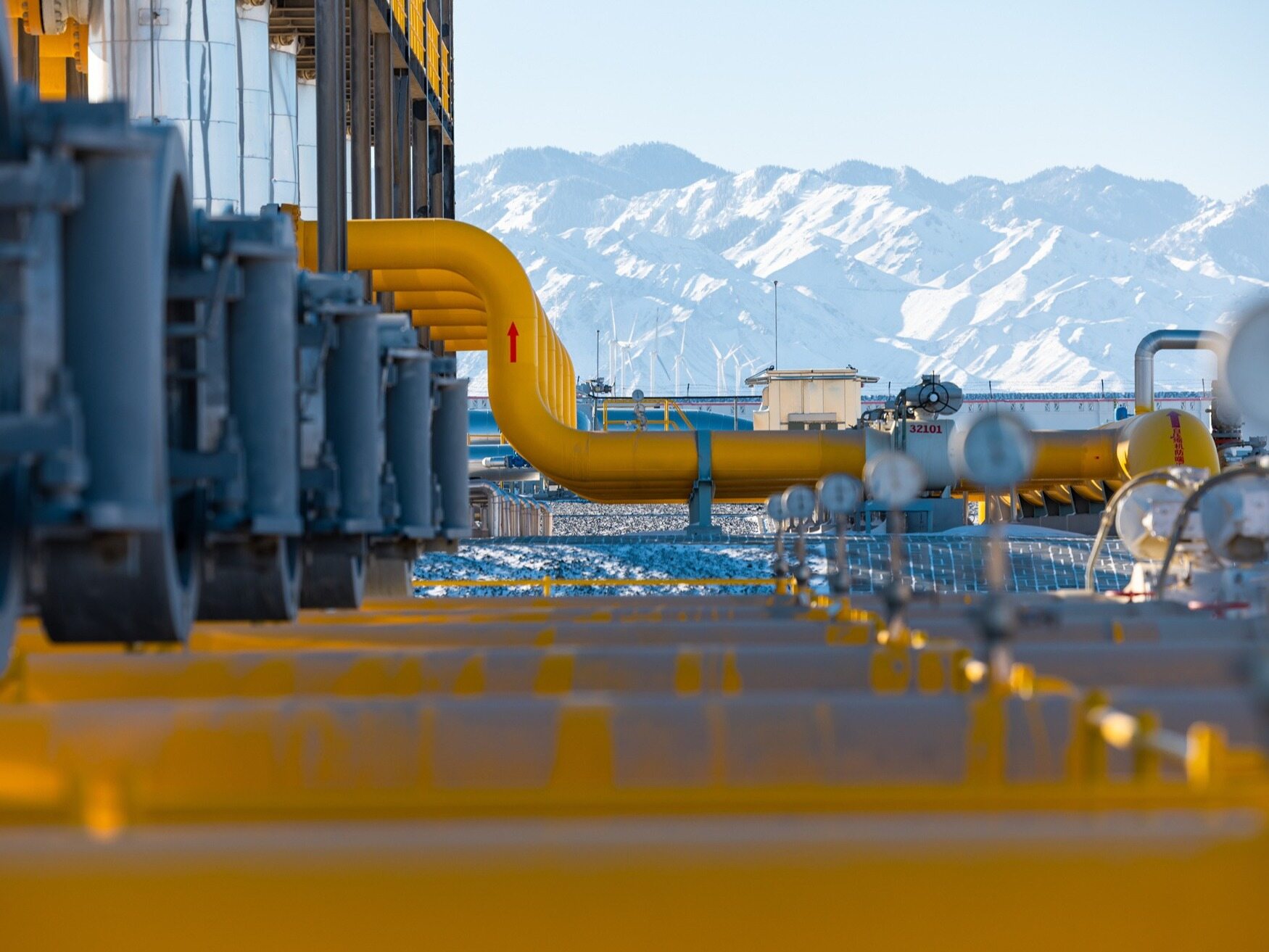
Ordos can catch this project by relying on both the stock of coal chemical industry and the increase in wind and solar energy. There are mature coal chemical plants in the local area that provide stable supply of industrial carbon dioxide, as well as abundant wind and solar resources to reduce the cost of green electricity, making hydrogen production from electrolyzed water no longer unreasonably expensive.
This is stepping on the pace of the industry. More than 70% of China's synthetic ammonia and methanol production capacity is based on coal as raw material, and coal chemical industry is a major emitter of carbon. Against the backdrop of methanol being included in carbon trading countdown, green hydrogen coupled with carbon dioxide for alcohol production has moved from demonstration to scale. Middling coal Ordos 100000 ton liquid sunlight, Rongsheng 160 billion green coal chemical integration and the like regional projects have been launched successively, proving that the green power green hydrogen coal chemical industry chain is replicable in the Northwest Energy Golden Triangle.
Three years to see Zhenzhang
The project is scheduled to commence in March 2027 and be completed in March 2030, with a construction period of three years. The million ton scale means that it is not just a technical validation: according to industry calculations, green methanol is transitioning from chemical raw materials to decarbonized fuels for shipping. The demand for alternative fuels for ocean going ships promoted by the International Maritime Organization is expected to be concentrated after 2028, and domestic production capacity is also gathering in coal and wind and solar energy rich areas such as Inner Mongolia, Shaanxi, and Ningxia.keywords:New energy information network
For Dalate Banner, the project has enabled traditional coal chemical industrial parks to move from a single energy-saving transformation to a carbon capture and green hydrogen collaborative decarbonization stage; For Inner Mongolia, this is another case of large-scale implementation of green hydrogen chemical industry. By the time it is completed in the spring of 2030, millions of tons of carbon dioxide from the annual 1.5 million tons of flue gas will flow back into the market in the form of green methanol.Editor/Yang Meiling
Comment

 Praise
 Collect
 Comment

 Share
Share


Write something~