 Search


- Chinese enterprises undertake transportation hub projects to help alleviate congestion and economic losses in the capital

On July 31, 2026, at the western entrance of Antananarivo, the capital of Madagascar, excavators and construction vehicles were neatly arranged. Transitional President Landrianina and Prime Minister Mamitiana attended the groundbreaking ceremony of the Anushijatu overpass project. The Counsellor of the Chinese Embassy in Madagascar was specially invited by the Presidential Office to attend. This overpass with a total investment of 28 million US dollars and a construction period of 24 months is located at the intersection of National Highway 1 and National Highway 58A, and is an important node in the transportation system of the western part of the capital. The World Bank estimates that the annual economic losses caused by traffic congestion in Antananarivo are about 40 million US dollars. The city's road land only accounts for 5% of its total area, and the average one-way travel time for residents is 46 minutes.
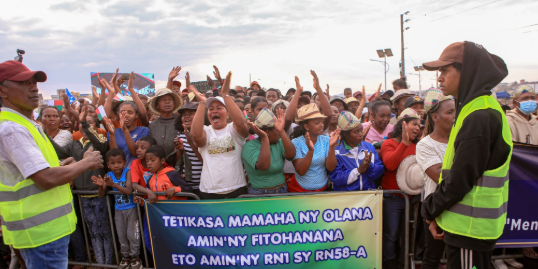
Four year preparation period ends and construction begins
The project loan agreement was signed in May 2022, with 25.2 million US dollars coming from the Arab Bank for Economic Development in Africa, accounting for approximately 90% of the total investment. Land acquisition compensation will be arranged separately by domestic funds from the Malaysian side. The international public bidding in 2025 will adopt an indivisible single contract package, covering the overpass and two national highway projects. After multiple rounds of bidding, the mid month enterprise received the winning bid notification in July 2026. The four-year preparation period indicates that the urban center project needs to simultaneously handle land, environmental permits, resident compensation, transportation organization, and public facility interfaces. By mid July 2026, the first batch of over 200 affected individuals will enter the compensation process, with approximately 80% having submitted their materials. The project also needs to coordinate with the national hydropower company, flood control agencies, and fiber optic operators. The general contractor is responsible for controlling the overall progress, setting up temporary passages and diversion routes during the construction period, and maintaining basic traffic for National Highway 1 and National Highway 58A.
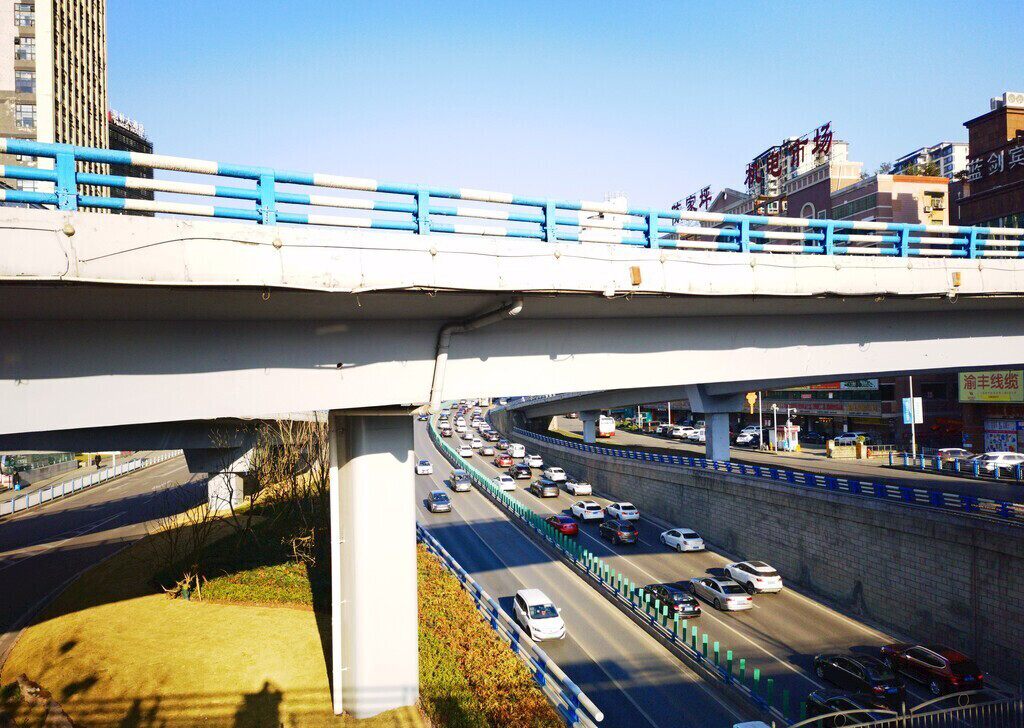
Synchronized promotion of bridges, roads, and municipal administration
The scope of the project includes the construction of two new bridges, demolition of old bridges, construction of four ramps and four connecting branches. The 1.8-kilometer section of National Highway 1 between Anuchijatu and Antanimena Kelly will be expanded into four lanes, and an additional 8.5-kilometer section of National Highway 58A will be repaired. Simultaneous relocation and renovation of drainage, power supply, fiber optics, and other municipal facilities. The construction period is expected to provide up to 500 direct positions. The project is implemented as an indivisible single contract package, and the general contractor is responsible for coordinating the overall progress. Material and equipment companies need to determine the order sequence based on this. Temporary transportation and on-site support are the first to generate demand, followed by the procurement of bridge structures and road materials. Drainage, power supply, and fiber optic relocation run through the middle of the construction phase, and spare parts and maintenance services increase in the later stages of the project. Keywords: the Belt and Road news network, overpass, infrastructure

Four major signals for the release of supporting orders
The main contract has been finalized, and new opportunities mainly come from the procurement of the general contractor, professional subcontracting, and local services. Suppliers need to obtain a technical list and acceptance criteria first, clarify their responsibilities and payment milestones upon arrival at the port, and then submit a quotation. Professional subcontractors need to confirm local licensing, tax, labor, insurance, and environmental requirements. China Energy Conservation Corporation disclosed in July 2026 that the newly signed contract amount is approximately 34.5 million US dollars, including one project for the Anuchijatu overpass. The total investment and sub contracting amount of the project must be managed separately. Based on a 24 month planned construction period, the project is expected to be completed around July 2028. In the next six months, we can focus on observing four activation signals: temporary passages, traffic diversion, pipeline relocation, and the procurement of the first batch of materials and equipment. The order of the four tasks will directly determine the pace of releasing supporting orders.Editor/Gao Xue
Comment


 Praise
 Collect
 Comment

 Share
Share


Write something~