 Search


- European oil companies completely part ways on the road to transformation
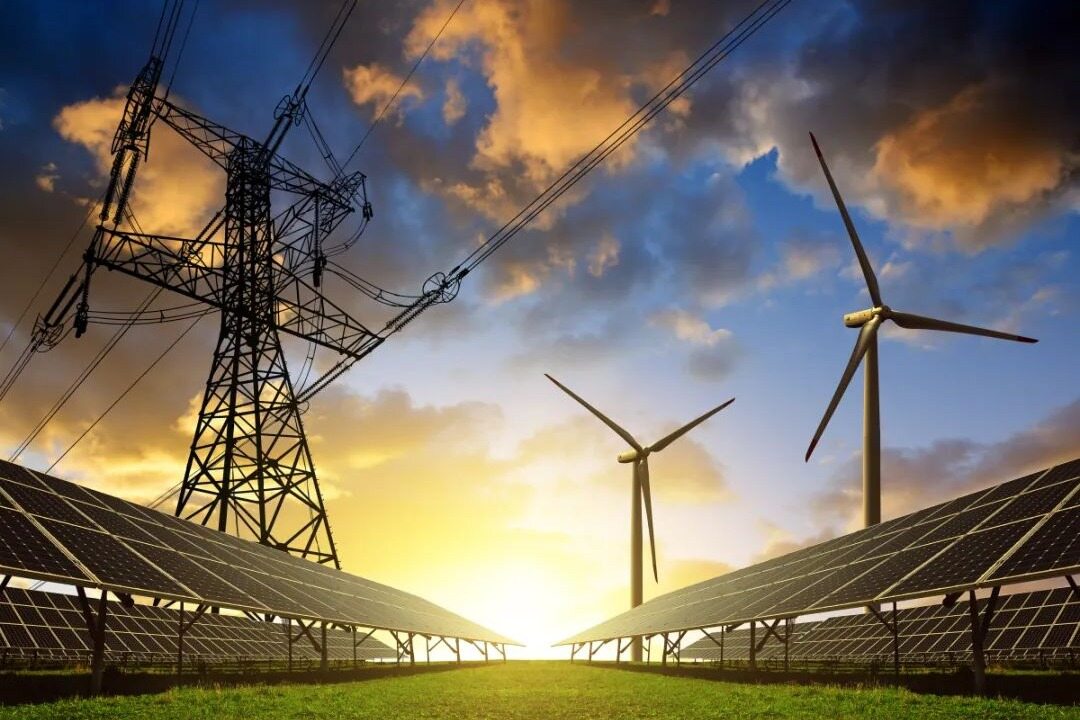
As soon as the Mediterranean wind blew over the wind turbines on the Dutch coast, the books of two European energy giants were flipped to a new page. On August 3, 2026, France's Total Energy and the UK's Shell announced on the same day that Shell had sold all of its onshore renewable energy businesses in Europe to Total, with a total installed capacity of approximately 4 gigawatts; At almost the same time, Total sold half of its equity in another group of European onshore wind and solar assets to American investment firm KKR, with a corporate value of 1.8 billion euros. Between one in and one out, it's not just a simple transaction, but two companies providing completely different answers on how oil and gas giants should transform.
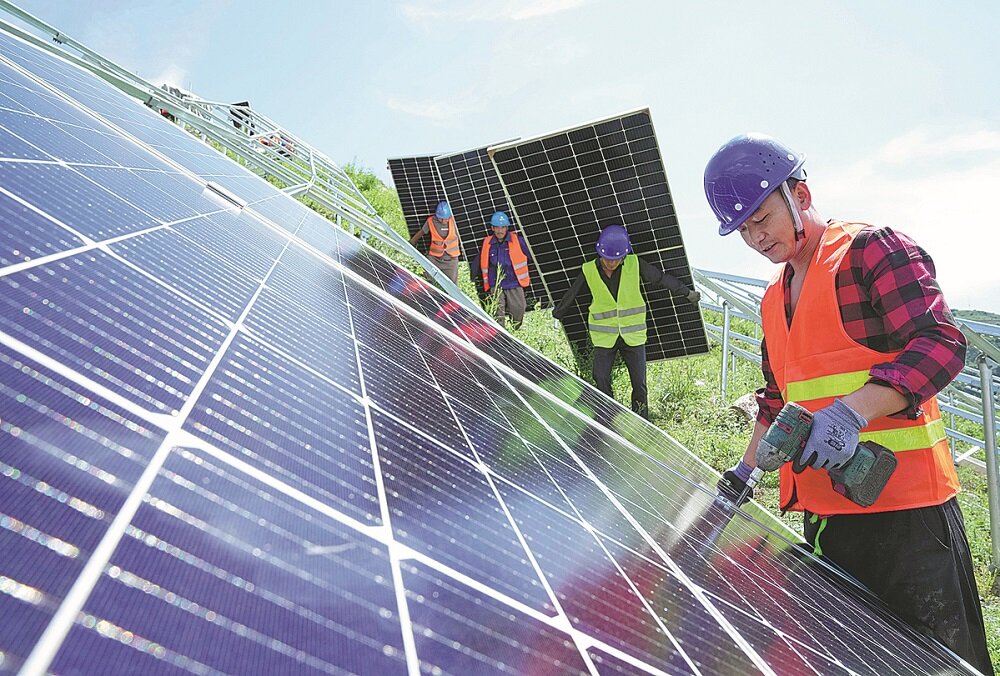
Take 4 gigawatt plates
Total received an asset package from Shell, which was divided into two layers. The bottom layer consists of approximately 500 megawatts of solar and wind power projects that have already been generated or are under construction, located in Italy and the Netherlands; The upper level is a reserve of about 3.5 gigawatts that is still in the early stages of development, covering Italy, the United Kingdom, and Spain. It includes both photovoltaic and onshore wind power, as well as battery energy storage projects. The transaction price has not been disclosed, and it is expected to be officially delivered after regulatory approval by the end of 2026.
For Total, this deal fills the gap in position. After adding up the assets of Shell, its renewable installed capacity in Europe, which has been put into operation or under construction, will be close to 10 gigawatts, and its reserve in the development stage will be increased to 27 gigawatts, with a focus on markets such as Italy, the Netherlands, the United Kingdom, and Spain, which have high levels of electricity marketization, large fluctuations in electricity prices, and many opportunities. Michelle, the President of the company's natural gas, renewable energy, and electricity businesses, stated bluntly that the new assets will be tied to the group's existing gas power generation, electricity trading, and customer power supply, serving the so-called comprehensive power strategy, with the goal of achieving an average capital return rate of 12% for the integrated power sector by 2030.
Transferred 1.8 billion euros in blood
After buying the big ones, Total turned around and started a business selling them. It sold a 50% stake in a group of 1.2 gigawatts of mostly developed onshore wind and solar assets in Europe (distributed in Germany, Spain, France, and Poland) to an insurance account managed by KKR, with a corporate value of 1.8 billion euros. After the transaction is completed, Total will retain the remaining half of the equity and continue to be the operator, while electricity marketing is still in their own hands.
This move is a strategy that Total has been running smoothly in recent years: developing the project themselves, transferring half of the equity to insurance funds or private equity to retrieve cash in the later stage, but not giving up on operations and power sales, which not only reduces leverage but also maintains long-term returns. Just a month ago, it cleared 170 megawatts of distributed rooftop photovoltaics from seven countries, and earlier withdrew some of Germany's sea breeze and energy storage equity - small scattered assets were sold out, and centralized gigawatt level assets were taken in. The money turned around, the scale was not lost, and the cash came back.
Shell shrinks back
On Shell's side, what they are selling is not their peripheral business, but the European onshore new energy stronghold they once held high. Starting from 2024, Shell has successively withdrawn from projects such as South Coast Wind in the United States, MunmuBaram floating wind power in South Korea, and Tablas Strait in the Philippines. In 2025, Shell withdrew from Atlantic Shores offshore wind in the United States and made provisions for impairment. Now, Shell has sold off all onshore wind and solar power in Europe, reducing the proportion of green capital expenditure from 19% to 9%, and redirecting money back to LNG, upstream oil and gas, and asset-backed electricity trading.
Shell's President of Downstream, Renewable Energy and Energy Solutions Business, Dehan, spoke with restraint: This is actively managing the power portfolio, freeing up capital to invest in places that have differentiation capabilities and can create long-term value. The internal rate of return for European onshore scenery generally drops to 5% to 8%, while high-quality oil and gas upstream can still maintain 15% to 25%. Shareholders cannot wait that long.
BP is also doing a similar contraction, cutting 70% of energy transition expenses and setting aside $5 billion in green impairment at the beginning of the year; Although Total is not as aggressive in its retreat, it has also lowered its low-carbon targets, leaving only offshore wind power and large-scale centralized projects with the highest returns. European oil companies are not collectively reversing, but have calculated different formulas for "when to make money and who to make money" under the same direction of carbon neutrality.keywords:New energy information network
Total used 4 gigawatts to fill its onshore territory and another 1.8 billion euros to sell and retain mature assets; Shell has cleared its onshore warehouses, packaged sea breeze for sale, and turned back to focus on LNG and trading business. The same photovoltaic panel is a corner of the comprehensive power puzzle in one table, and a non core heavy asset that needs to be realized in another table. The energy transition in Europe has reached the middle stage, and the giants are no longer shouting slogans, but rather stabilizing their balance sheets first.Editor/Yang Meiling
Comment

 Praise
 Collect
 Comment

 Share
Share


Write something~