 Search


- Arab Satellite Communications Organization Arabsat signs satellite capacity cooperation agreement with Libyan LTT
- We will use high-throughput satellites to provide stable connectivity for 7.5 million people in Libya
- Accelerate the construction of digital economy infrastructure in the country

On the Mediterranean coast of North Africa, Libya is standing at the threshold of a digital revolution. This country with a population of about 7.5 million has been constrained by objective conditions in the development of communication infrastructure for many years, and many remote areas still face the reality of insufficient network coverage and unstable connections. For local residents, the stable Internet is not only a tool for daily communication, but also a basic channel for access to education, medical care and financial services.

It is in this context that a collaborative message has cast a beam of light on Libya's digital future. Last week evening, the Arab Satellite Communications Organization (Arabsat) and the Libyan Telecommunications Technology Company (LTT) jointly announced the signing of a digital communication infrastructure cooperation agreement. This is not a simple commercial contract, but a deep integration of satellite communication capabilities and local landing experience, targeting the underlying support of Libya's digital economy.
High throughput satellites inject new kinetic energy
According to the agreement, Arabsat will provide LTT with the high-throughput satellite (HTS) capacity of the Arabsat-6A satellite located at an orbital position of 30.5 degrees east longitude. This satellite has the technical characteristics of high bandwidth and high throughput, which can effectively support the existing and future connectivity service needs of LTT.
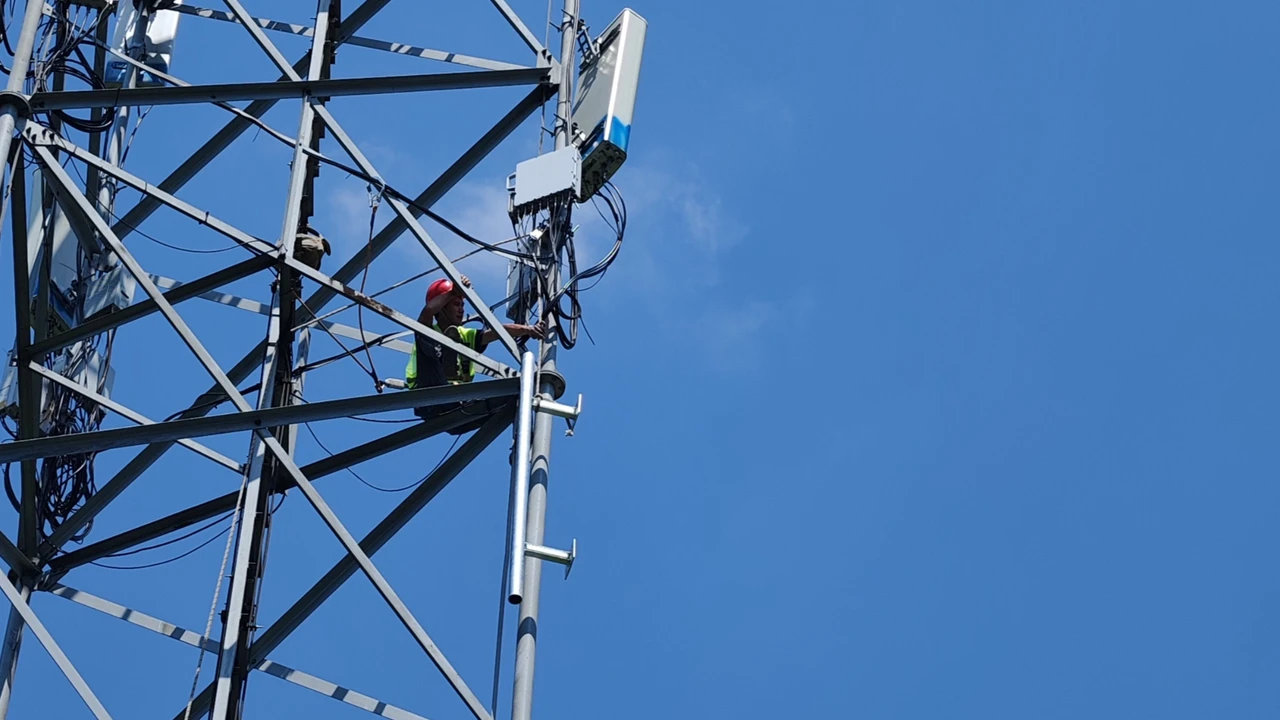
The advantage of high-throughput satellite technology is that it can provide several times the communication capacity of traditional satellites under the same spectrum resources, which means Libyan users will have faster internet speeds and a more stable connection experience. For areas with vast land and sparse population or difficult coverage by ground fiber optics, HTS technology is almost the optimal solution to bridge the digital divide.
Complete the puzzle of local landing capabilities
Arabsat has satellite infrastructure and regional coverage capabilities that cover the Arab region, but in Libya, what is needed to truly deliver signals to end-users is executors who have a deep understanding of the local network environment, regulatory framework, and user needs - which is the core value of LTT.
As a local telecommunications technology company in Libya, LTT has accumulated rich experience in providing satellite communication solutions within the country. From network deployment to operation and maintenance services, from government project coordination to enterprise customer delivery, LTT's local professional capabilities complement Arabsat's space segment resources. After the cooperation between the two parties, the government, enterprises, telecommunications operators, and other key industries will be able to obtain communication services that better meet their actual needs.
Further upgrade of digital economy infrastructure
This cooperation is not only a capacity procurement, but also a platform for both parties to explore more opportunities for collaboration. In the future, Arabsat and LTT can jointly expand their service capabilities and launch innovative solutions to meet the constantly changing connectivity needs of different industries.

From a more macro perspective, this cooperation is highly aligned with the trend of promoting digital transformation throughout the Arab region. In recent years, many countries in the Middle East and North Africa have increased their investment in satellite communication as an important supplement and backup to their ground networks. Libya has improved the quality of daily communication services and provided reliable support for emergency communication and remote services in key industries by introducing HTS satellite capacity.
LTT stated that this agreement is an important milestone in the cooperation between the two parties, which will strengthen communication infrastructure, improve service quality, provide reliable connectivity solutions, and provide support for the future development of Libya's digital economy. For 7.5 million Libyans, this means smoother information channels, broader development possibilities, and an accelerating digital future.Editor/Yang Meiling
Comment






 Praise
 Collect
 Comment

 Share
Share


Write something~