 Search


- Polish Prime Minister Tusk recently announced the large-scale construction of a high-speed railway network
- And synchronously renovate 5600 kilometers of existing railways
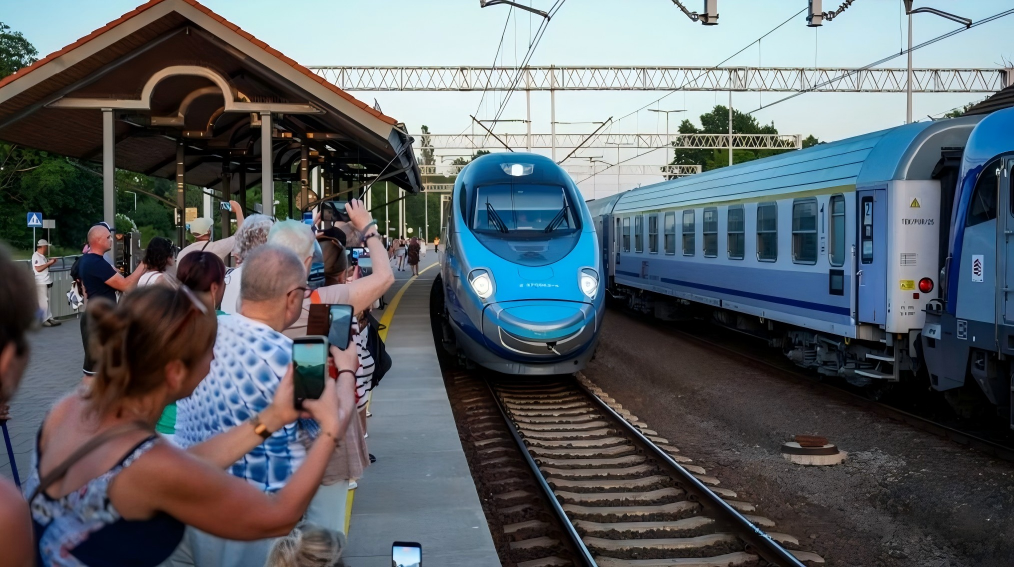
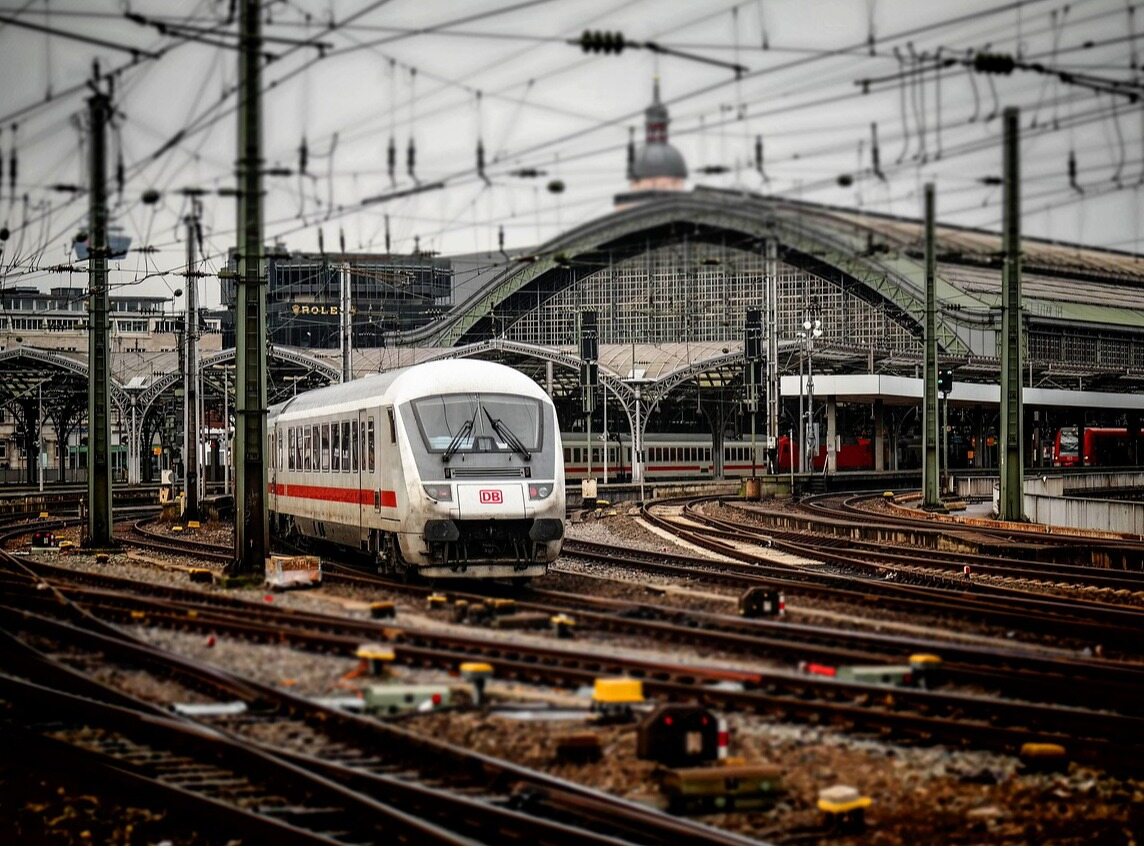
In the early morning of Warsaw, a green and white painted Pendolino train slowly pulled out of the station, filled with young people on a business trip to Krakow. Outside the window, the scenery of the Polish plain rapidly recedes, reaching a top speed of 200 kilometers per hour. For many Poles, this is already the fastest railway speed they can experience. But in the eyes of Prime Minister Donald Tusk, this is far from enough.
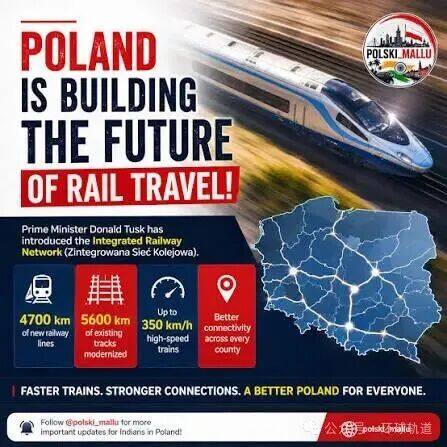
Recently, Tusk stood in front of the map and depicted a completely different future to the people of the country: Poland will have the fastest railway in Europe. He announced that Poland is advancing a large-scale construction plan called the Integrated Railway Network (ZSK), which will build 4700 kilometers of railways in the future, of which about 2700 kilometers will be built according to high-speed railway standards, and the maximum operating speed of trains will reach 350 kilometers per hour. Tusk bluntly stated that Poles should have the right to high-speed travel like Chinese or Japanese people.
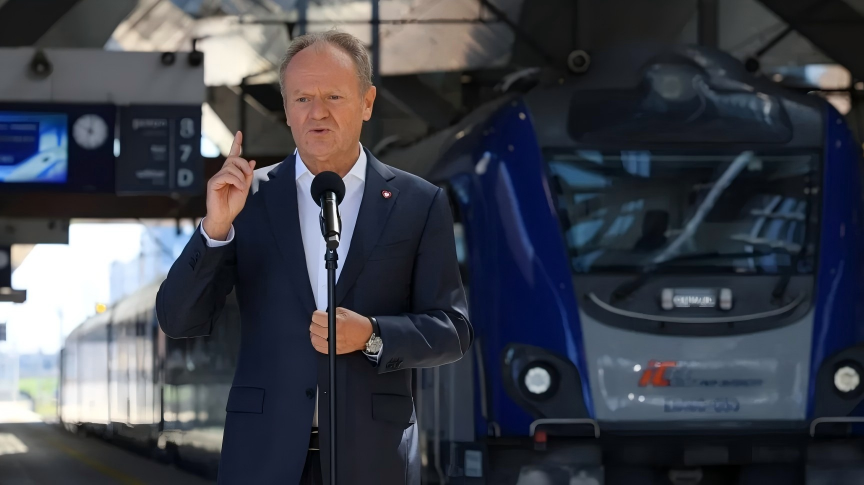
This means that 350 kilometers per hour is no longer just a technical indicator for a single high-speed railway line, but is becoming the core goal of Poland's next phase of high-speed railway network.
Blueprint for the fastest railway in Europe
According to the ZSK plan announced by the Polish government, these 2700 kilometers of newly built high-speed rail will form the backbone of the Polish railway network. The designed speed of the route is 350 kilometers per hour, and after completion, the travel time from Warsaw to major cities such as Łó d ź, Wroc ł aw, and Poznan will be significantly reduced. Taking Warsaw to Krakow as an example, one-way travel is expected to be shortened from the current approximately 2.5 hours to less than 90 minutes in the future.
Behind this blueprint is Poland's repositioning of its railway status. In the past decade, the construction of railways in Poland has lagged behind highways, with a rapid expansion of the highway network and slow growth in railway passenger traffic. Now, the Polish government hopes to use the high-speed railway card to bring people back onto the tracks. The ZSK plan clearly states that the new lines will prioritize connecting densely populated urban clusters and regional centers, allowing more Poles to take high-speed trains at their doorstep.
Synchronized upgrade of existing lines
In addition to new construction, ZSK's plan also includes a major renovation of existing railways. The Polish government plans to modernize and upgrade approximately 5600 kilometers of existing railways, covering multiple aspects such as signal system updates, track replacements, bridge reinforcement, and electrification upgrades.
Although not all of these existing lines will reach the speed standard of 350 kilometers per hour, after renovation, the operating speed of many sections will be increased from the current 120 to 160 kilometers per hour to 200 kilometers per hour or even higher. For some areas in central western and northeastern Poland that currently do not have plans to build new high-speed railways, this round of renovation will directly bring a leap in travel experience.
The Polish railway department predicts that by the mid-2030s, the average railway travel time between major cities across the country will be reduced by over 30%. At that time, a 3-hour railway circle departing from Warsaw will cover two-thirds of Poland's population.
Benchmarking against the acceleration dreams of China and Japan
Poland is not the first country in Europe to propose a speed target of 350 kilometers per hour. France, Germany, and Spain already have mature high-speed rail networks, but Poland's uniqueness lies in its attempt to pull the national railway network to the top tier in Europe with a completely new plan.
Tusk's mention of China and Japan on multiple occasions is not accidental. The operating mileage of China's high-speed rail exceeds 40000 kilometers, and the maximum speed of 350 kilometers per hour has become the norm; Japan's Shinkansen is also known for its punctuality and high speed. Poland hopes to learn from the experience of these countries and use high-speed railways to drive regional balanced development.
However, Poland also faces significant challenges. Funding is the primary challenge - ZSK plans a total investment of tens of billions of euros, and Poland needs to heavily utilize the EU Recovery Fund and its own finances. Secondly, land acquisition and environmental impact assessment approval have sparked controversy in some communities along Poland's railway corridor planning. In addition, Poland's current high-speed rail technology accumulation is limited, and in the future, whether it is using European standard trains or introducing external cooperation, it will take time to adapt.keywords:Engineering infrastructure
But regardless, a clear signal has been released: Poland is making every effort to catch up, with the goal of making Europe's fastest railway appear on the banks of the Vistula River.Editor/Yang Meiling
Comment



 Praise
 Collect
 Comment

 Share
Share


Write something~