 Search


- Deepen Sino-Kazakh research cooperation to build cross-border innovation layout
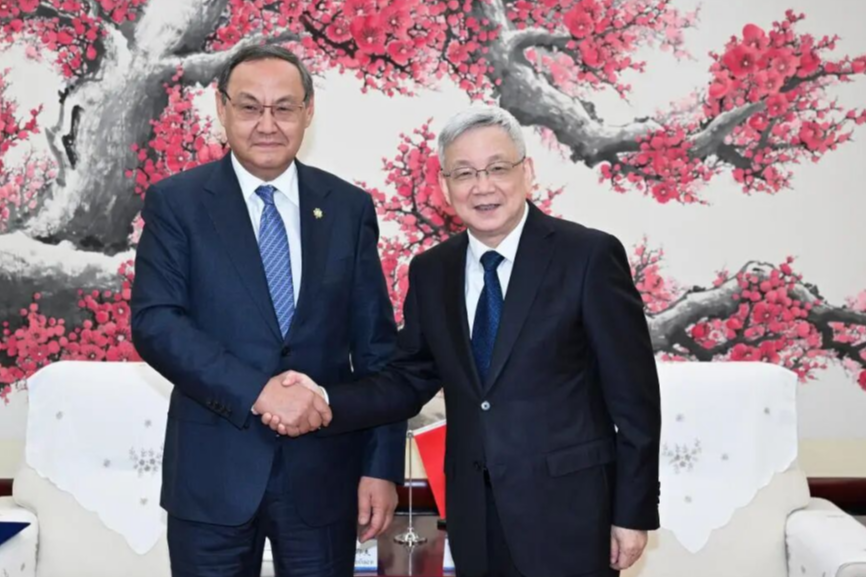
The Asia Europe scientific and technological innovation bond has once again tightened, and cross-border scientific research cooperation has opened a new chapter of implementation. On August 18, 2026, Kurishbayev, President of the National Academy of Sciences of Kazakhstan, and Hou Jianguo, President of the Chinese Academy of Sciences held an important meeting in Beijing. The top scientific research institutions of the two countries broke the framework cooperation model, focused on the implementation of physical projects, finalized a number of core cooperation fields, and built a long-term mechanism for talent cultivation and achievement transformation to promote the in-depth, substantive and industrialized scientific research cooperation between China and Kazakhstan.
Air space networking empowers resource monitoring
Both sides are promoting cooperation in space remote sensing and resource monitoring, planning to build satellite infrastructure, launch five multi type satellites, and conduct all-weather monitoring of vegetation, soil, water resources, and mineral resources. The cooperation covers the entire chain of data acquisition, processing and analysis, and decision support, mainly applied in areas such as glacier water resource monitoring, agricultural land control, drought and flood warning, and land degradation assessment. Harbin and the Chinese Academy of Sciences jointly carry out satellite research and development, operation, and data application work, combining artificial intelligence technology to upgrade resource monitoring to prediction and early warning, and improve the level of regional ecological governance.

Intelligent science and technology innovation deeply cultivates cutting-edge fields
Empowering scientific research with artificial intelligence is the core cooperation direction of this meeting. Both sides are promoting the application of AI in the entire scientific research process, with Harbin relying on its local spatiotemporal artificial intelligence platform to integrate various scientific research data and models. Both parties will adapt to the two core models of the Chinese Academy of Sciences, connect with local platforms, develop exclusive models and intelligent tools that are suitable for the local environment, and apply them to fields such as water resource assessment, agricultural forecasting, and mineral exploration.
The Chinese side proposes the development concept of intelligent geology, using AI technology to improve the accuracy of geological exploration. The two countries will jointly build multilingual scientific corpora and knowledge bases to broaden the application fields of AI science and technology innovation. At the same time, both sides are deeply engaged in cooperation in nuclear physics and nuclear energy technology, tackling core technologies such as small modular reactors, radiation resistant materials, and advanced nuclear fuels, exploring diverse applications of isotope technology, and forming a joint research group to promote scientific research and talent exchange.
Ecological city building activates the driving force of scientific and technological innovation
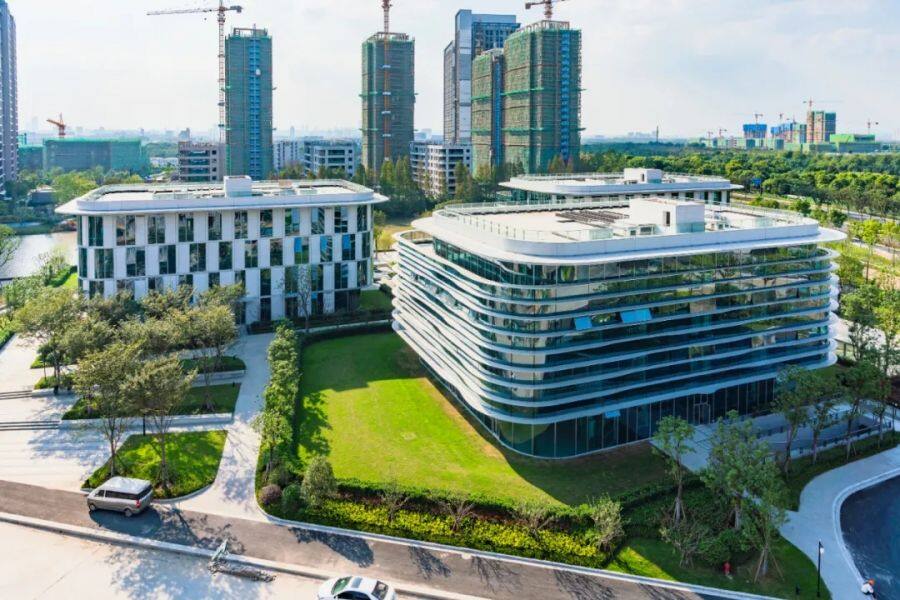
Both parties rely on Alatau City to layout the science and technology innovation ecosystem, draw on the development model of science and technology innovation in Shenzhen, Chinese Academy of Sciences, and create an integrated innovation system of industry, academia, research, and investment. The Chinese side will participate in local science and technology planning, project evaluation, and R&D platform construction. The two sides plan to jointly establish a joint science and technology innovation center, focusing on cutting-edge technologies in multiple fields, and connecting the full transformation chain from scientific research and innovation to commercialization. Keywords: scientific research collaboration, intelligent scientific and technological innovation, scientific and technological innovation landing
This cooperation has improved the talent cultivation system, and the Chinese side has set up special quotas for doctoral and postdoctoral research personnel in Kazakhstan, fully reserving scientific and technological innovation talents. Both parties establish a joint working group to refine the implementation details of projects in various fields, and promote cooperation from framework agreements to physical research and development and achievement implementation. Harbin Institute of Technology also invited representatives from the Chinese Academy of Sciences to attend its 80th anniversary event and continue to deepen bilateral high-level scientific research cooperation.Editor/Huang jiali
Comment




 Praise
 Collect
 Comment

 Share
Share


Write something~