 Search


- The China Mongolia New Railway will promote cross-border trade and deepen the connectivity of the the Belt and Road
On August 27, 2026, the construction of the second cross-border railway between China and Mongolia, the Ganqimaoduga Shusu Haitu Railway, under the construction of China Railway Construction Bridge Bureau, was successfully completed, marking the full completion of the offline main project of the bridge and the official start of the beam erection and upper structure construction of the bridge deck system. At this point, the construction progress of the second cross-border railway between China and Mongolia has exceeded half, laying a solid foundation for the project to be opened on schedule.
The Ganqimaodu Gashusu Haitu Railway is the second cross-border railway built by China and Mongolia after nearly 70 years since the opening of the Erenhot Zamyn Uud Railway in 1956. The project is jointly promoted by the two countries based on the principle of unified design, separate construction, and one-time connectivity, and will officially start construction in May 2025. The project departs from Ganqimaodu Port, passes through the Gashusu Port in Mongolia, and connects to the Gashusu Station in the South Gobi Province of Mongolia. The total length of the line is 9.91 kilometers, including a cross-border bridge section of 6.08 kilometers, with a total of 321 piers and 760 T-beams to be erected.
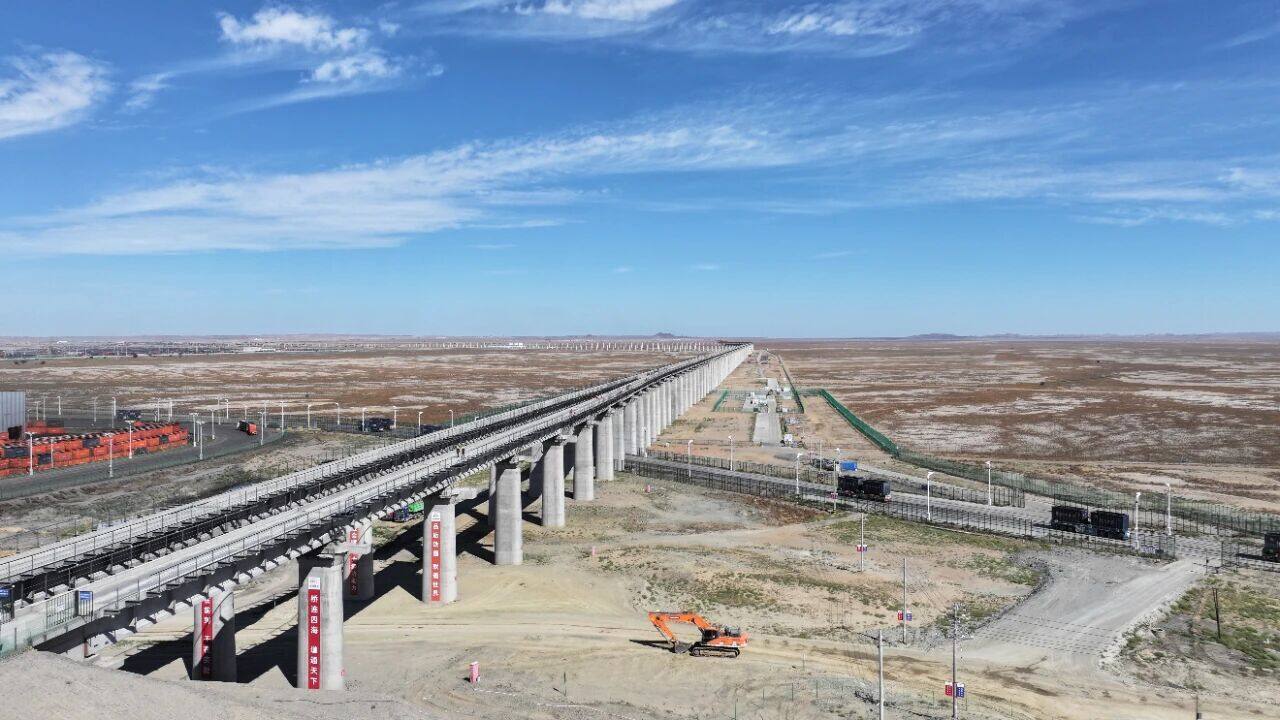
Due to the location of the project in the Gobi Desert region, where strong winds above level 7 and frequent sandstorms occur throughout the year, there is a significant temperature difference between day and night, and a short frost free period. In addition, cross-border construction involves coordination between multiple departments such as customs, border defense, and ports in both countries, resulting in a complex process for material clearance and circulation. The effective construction window period is very limited. According to the project leader, the construction team has set up a comprehensive wind speed monitoring and warning system at the construction site, dynamically adjusting the installation of pier formwork, concrete pouring and other operation times. Priority is given to selecting the windless window period at night to carry out concrete pouring operations and avoid the interference of wind and sand on the quality of component forming. At the same time, in response to the large temperature difference between day and night in the Gobi Desert, the concrete mix ratio is optimized, insulation and steam curing measures are improved, and the process site and three inspection system are strictly implemented to ensure the quality of the project, fully guaranteeing the accurate size and stable structure of each pier body.
As of now, the overall construction of the project has steadily progressed, and all offline main works such as pile foundation, pier cap, and pier body have been completed. 701 T-beams have been prefabricated and 390 have been erected. It is expected that all beam erection tasks will be completed by October 2026.
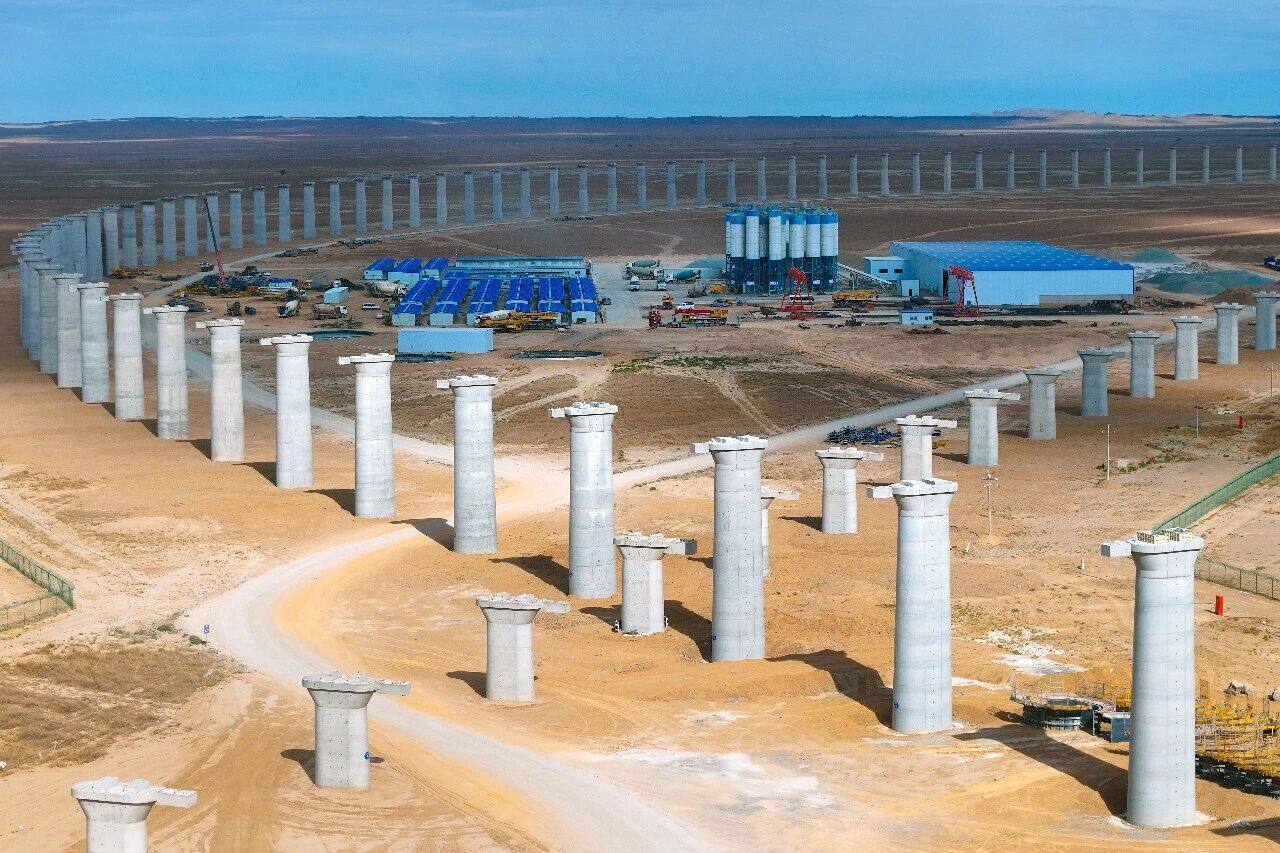
Ganqi Maodu Gashu Suhai Tu cross-border railway is an important milestone in deepening strategic docking and practical cooperation between China and Mongolia, and is another major landmark project in the joint construction of the the Belt and Road. After the completion of the project, it is expected to undertake an annual transportation of 30 million tons of goods, which will realize the connection between Ganquan Railway and Mongolia's southbound railway. This will help further expand the scale of trade in related fields between the two countries, promote infrastructure connectivity and economic and trade exchanges between the two countries along the route.
This article is reprinted from: China Railway Construction Corporation Editor/Gao Xue
Comment




 Praise
 Collect
 Comment

 Share
Share


Write something~