 Search


- Kenya's standard gauge railway is profitable for the first time, with a record high freight volume of 8.2 million tons
- The East African artery has transformed from a financial burden to a hematopoietic asset, injecting confidence into regional connectivity

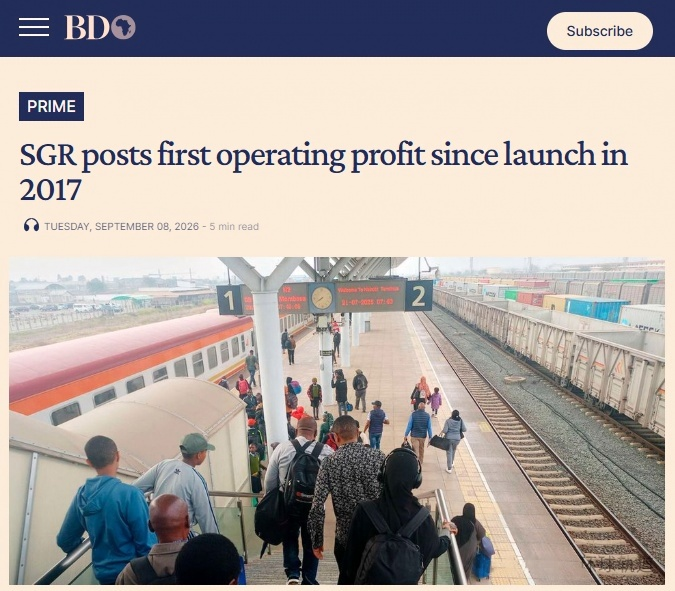
In the early morning at Mombasa Port, gantry cranes steadily dropped rows of containers onto the train platform. Eight hours later, they had appeared in the Nairobi inland yard over 400 kilometers away. When this railway was opened nine years ago, the outside world was more concerned about when it could break free from losses. The accounting books for the fiscal year 2025/26 have finally provided the answer.
First profit in nine years
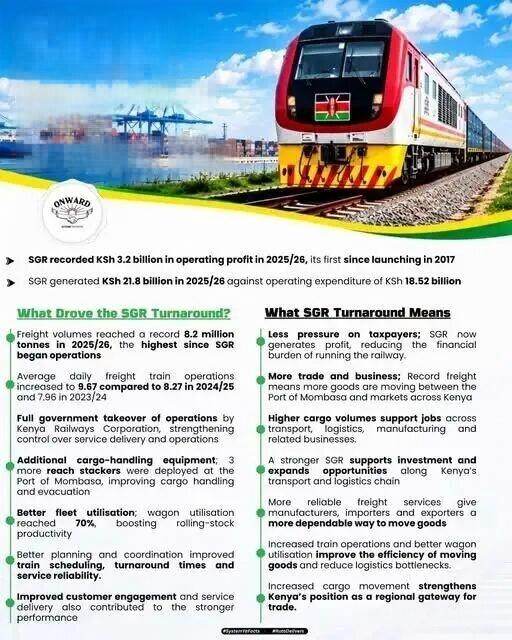
The annual report submitted by Kenya Railways shows that the standard gauge railway achieved an operating profit of 3.2 billion Kenyan shillings, approximately 22 million US dollars, in the fiscal year 2025/26, marking the first time in nine years since its opening in 2017. The freight volume during the same period reached 8.2 million tons, setting a new historical high and higher than the 7.04 million tons in the previous fiscal year. The company attributed the improvement in performance to record breaking freight volume, improved operational efficiency, enhanced capacity for Mombasa port transportation, and increased customer engagement; General Manager Philip Manga emphasized the role of government intervention and capacity improvement, and the daily operation of freight trains has increased to 9.67 pairs. This railway, which previously relied on financial appropriations and railway development taxes for a long time, has now begun to self generate in maintenance, salary, and vehicle updates, significantly reducing the burden on the national finances. Although operating profit is not equivalent to net profit, it is sufficient to prove that it is an asset with high commercial value.
The dredging artery of the port
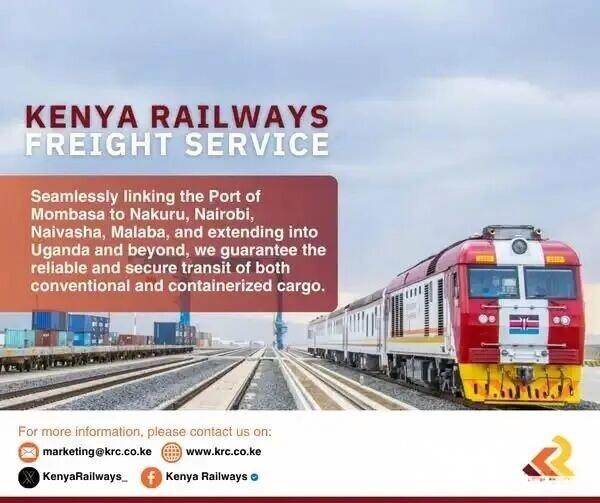
The efficiency of railways and ports is deeply linked. As the largest port in East Africa, Mombasa Port will have a cargo throughput of 45.45 million tons and 2.11 million TEUs of containers by 2025, with a growth of nearly 20% in transit goods; The busier the port, the more critical the rear passage becomes. The standard gauge railway undertakes more than 30% of the cargo distribution at Mombasa Port, compressing the freight time from Mombasa to Nairobi from tens of hours in the past to eight hours. The transportation volume of 8.2 million tons means that the railway has truly played the role of a port diversion artery: container turnover is faster, road pressure is less, cargo damage is lower, and importers and shippers from inland neighboring countries are more willing to choose this northern corridor. Passenger transportation is recovering synchronously, with approximately 2.73 million passengers sent by 2025. The increase in both quantity and price has made the income structure more stable.
Extend the line with more confidence
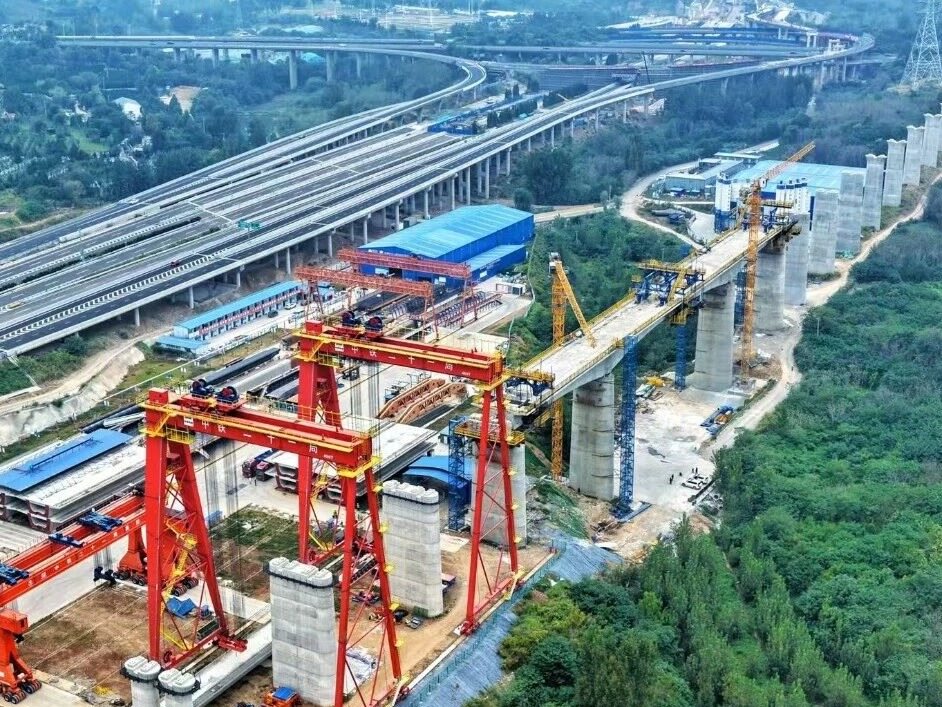
Profit comes at the right time. The standard gauge railway currently ends in Naivasha. The approximately 475 kilometer extension to Kisumu and Malabar was put on hold for a long time due to funding issues, but has now resumed construction with a total investment of about 5.4 billion US dollars. It has turned to a diversified financing method that combines railway development tax fund guarantees, bond financing, and public-private partnerships. The first profit provides the strongest cash flow evidence for the Kenyan government at the financing negotiation table, and also allows landlocked neighboring countries such as Uganda, Rwanda, and the Democratic Republic of Congo to see the actual efficiency of the Northern Corridor. Cross border railway interconnection negotiations are expected to accelerate. Manga also revealed that Kenya Railways has fully taken over the operation of the standard gauge railway from the Chinese operator Africa Star, and the local team has taken over, which is a sign of the maturity of this railway.
From being questioned to making a profit, nine years have confirmed the cultivation period required for a main line; And 8.2 million tons of goods and 3.2 billion shillings in profits are reconnecting the logistics map of East Africa.Editor/Yang Meiling
Comment

 Praise
 Collect
 Comment

 Share
Share


Write something~