 Search


- Top engineering education resources from Central Asia introduced to China
- Cultivate compound information technology talents for the the Belt and Road
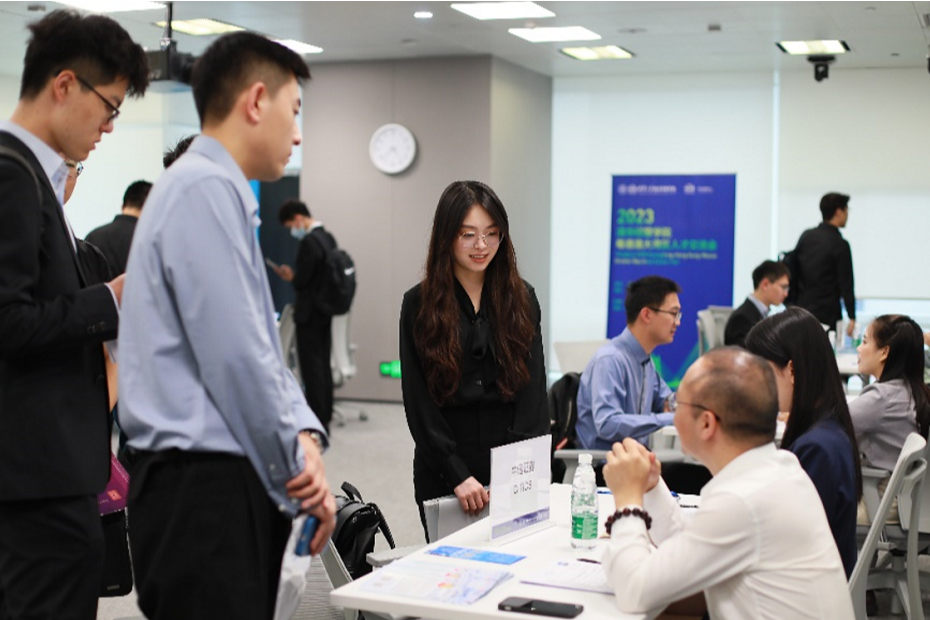
On the morning of September 19, 2026, the red silk on the Laoshan campus was gently peeled off. Li Zisong, a freshman in Class 262 of Computer Science, received two school emblems from the teachers of the two countries. One belonged to Qingdao University of Science and Technology, and the other came from Kazakh National University of Technology, which is thousands of miles away. At the same time as he received the school emblem, there were also the first 186 freshmen of the college. The School of Information Engineering at Qingdao University of Science and Technology has officially opened its doors to welcome students.
The meeting before the unveiling of the plaque
On the afternoon before the unveiling, both China and Kazakhstan sat down at the conference table. The Joint Management Committee meeting was held at the Laoshan campus, announcing the list of members of the management committee, reviewing and approving the organizational structure of the college and the candidates for the dean and vice dean, and agreeing to establish the China Kazakhstan International Joint Laboratory of Information Technology.
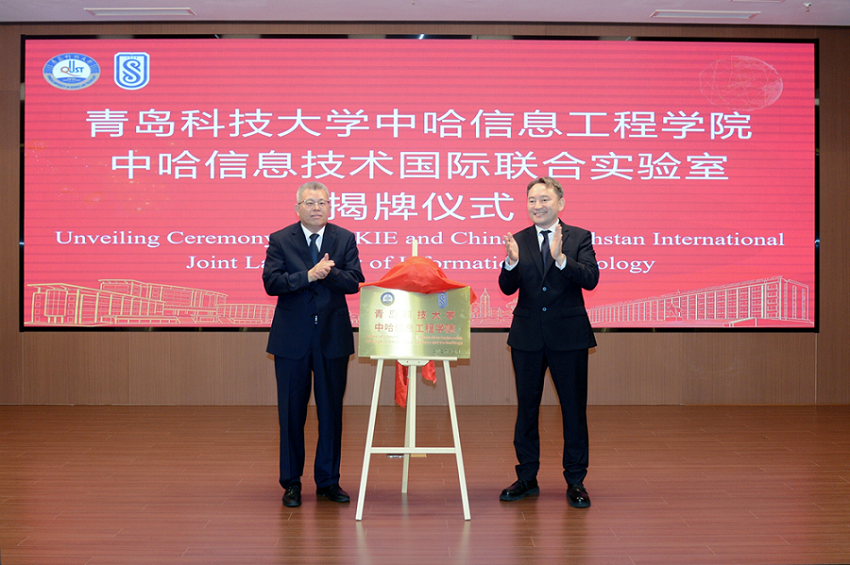
At the unveiling ceremony the next day, Wang Jingjing, member of the Council of Qingdao University of Science and Technology and Dean of the Sino Kazakh Institute of Information Engineering, and Daneko Yevgeniya, Dean of the Institute of Automation and Information Technology at Kazakh National University of Technology, jointly unveiled the plaque for the joint laboratory. The laboratory is jointly built by two universities, relying on the operation of the School of Information Science and Technology and the China Kazakhstan Institute of Information Engineering. It focuses on artificial intelligence, big data, software engineering, communication, network security, smart ocean information technology and other directions, and carries out joint scientific research, academic visits, project tackling and result transformation.
The ceremony read out the Ministry of Education's approval to establish the college. Botagoz Belmuhanbetova, Deputy Director of the National Higher Education Development Center of the Ministry of Higher Education of Kazakhstan, Myram Begentaev, Chairman and President of the Board of Directors of the Kazakh National Technical University, Yang Tianmei, Secretary of the Party Committee of Qingdao University of Science and Technology, and Li Jinhong, Vice President, attended the meeting.
Not going abroad to pursue a dual degree
For the first batch of students, the most intuitive change is in the classroom. The undergraduate program of the college adopts a 4+0 training mode, with students studying at Qingdao University of Science and Technology Laoshan Campus for four years without the need to go abroad. Kazakh teachers teach in English, and students do not need to learn Kazakh language; After completing the required courses and meeting the graduation requirements of both parties, one can simultaneously obtain a bachelor's degree certificate and a bachelor's degree certificate from Qingdao University of Science and Technology, as well as a bachelor's degree certificate from Kazakh National University of Technology. The Master's degree in Software Engineering is a 2+0 program with a duration of two years, and graduates will receive a Master's degree from Harbin.

The academic background of both schools supports this model. The computer science discipline of Qingdao University of Science and Technology has entered the top 1% of global ESI. The four majors of computer science and technology, communication engineering, information engineering, and software engineering have all been selected as national first-class majors and have all passed international engineering education professional certification; Kazakhstan National Technical University, also known as Satbayev University, was founded in Almaty in 1934 and is ranked 331st in the QS World University Rankings. According to the approval of the Ministry of Education, the total scale of the college is 1300 people, with 300 undergraduate students admitted annually and 50 master's students admitted annually. In the first session of 2026, a total of 186 students will be enrolled, covering undergraduate majors in Computer Science and Technology, Communication Engineering, and Information Engineering, with a duration of four years, as well as a Master's degree in Software Engineering, with a duration of two years.
A new window towards Central Asia
China Harbin Institute of Information Engineering is the second non independent legal entity Sino foreign cooperative education institution approved by Qingdao University of Science and Technology after the Sino German Institute of Science and Technology. Previously, the school had formed a pattern of 2 Sino foreign cooperative education institutions and 6 Sino foreign cooperative education projects, covering disciplines such as science, engineering, and arts.
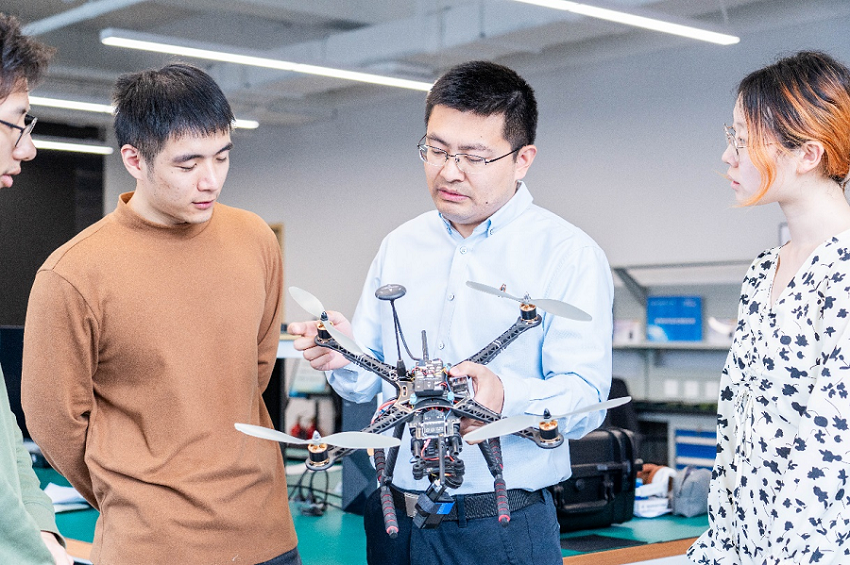
Looking at it from a larger perspective, the education cooperation between China and Kazakhstan is moving from point-to-point docking between universities to a new stage of systematization and institutionalization. This year, 27 universities in Kazakhstan showcased at the China International Education Tour Exhibition in the form of national pavilions, focusing on three major directions: dual degree joint training, co construction of advantageous disciplines, and scientific research and technology transformation; Lanzhou University, Nankai University, Xinjiang Medical University, and other universities have also signed joint training or cooperative education agreements with Harbin universities. The four expectations put forward by Qingdao University of Science and Technology at the ceremony - to create an international talent training highland, build a collaborative innovation community integrating industry and education, expand high-level scientific research and collaborative research, deepen multi-level teacher-student exchanges and mutual learning, and outline the next roadmap of the college.
From the coast of the Yellow Sea to the foot of the Tianshan Mountains, a new Silk Road channel linked by code and algorithms is unfolding. The official inauguration of the college marks that Qingdao University of Science and Technology has reached a new level in its international education, and will also cultivate more outstanding talents for deepening China Kazakhstan educational exchanges and cooperation and serving the the Belt and Road construction.Editor/Yang Meiling
Comment




 Praise
 Collect
 Comment

 Share
Share


Write something~