 Search


- From training to certification, Chinese oil companies keep their technology in Uganda
- Not only does it enable local youth to grasp a livelihood craft, but it also prepares local talents for the commercial production of oil in the country
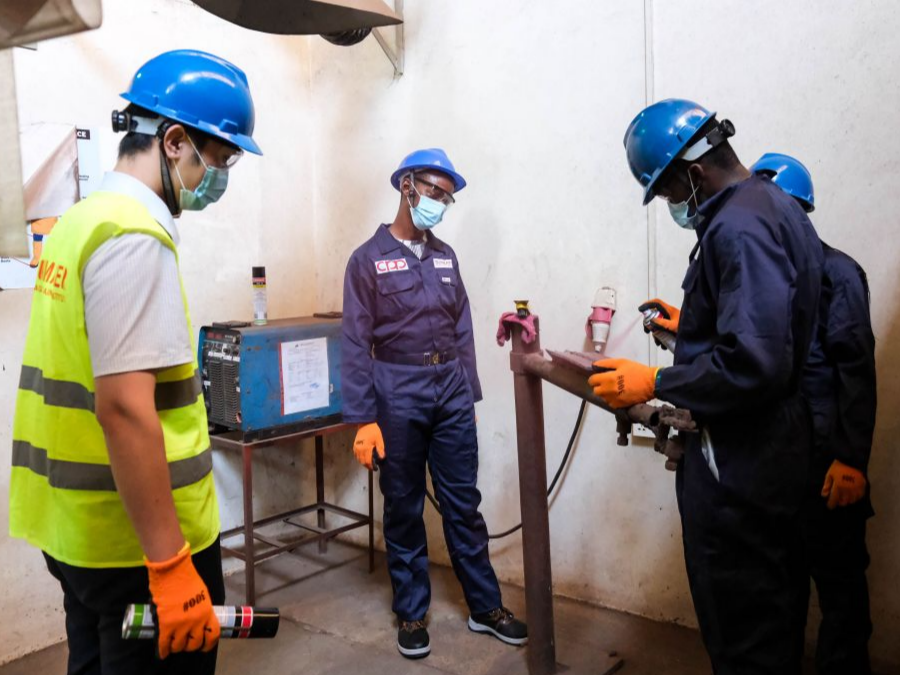
At the construction site of the East African crude oil export pipeline in the early morning, Artujuna Oskar crouched in front of a section of steel pipe, holding a flaw detection device and slowly moving along the weld seam. The jumping waveform on the screen told him whether there were any invisible defects hidden inside the weld. A month ago, he was just a local youth unfamiliar with these instruments; Now, he has completed non-destructive testing training and successfully graduated, becoming a member of the pipeline quality control team.
Knowledge in Welding Seam
The biggest fear of oil pipelines is not visible cracks, but hidden dangers in the pipe walls and welds. The significance of non-destructive testing lies in identifying internal and surface defects of pipeline welds and walls without damaging the pipe material. The one month E-Light Casting Talent · Africa Youth Petroleum Skills Competition East African Crude Oil Pipeline Project Sub competition will end on October 10, 2026 in the Ugandan capital Kampala. The event is hosted by China Petroleum Africa Company and organized by China Petroleum Pipeline Engineering Co., Ltd. It is divided into two special projects: non-destructive testing and occupational health and safety management. 20 local young employees will participate in the competition after systematic training. They are just a small part of it - since participating in the construction of the Uganda East Africa crude oil export pipeline project in 2023, the local technical talents trained by China Petroleum Pipeline Bureau have gathered into a continuously growing team. Oscar said that the skills learned from the training are very helpful for pipeline construction and maintenance.
An international certificate
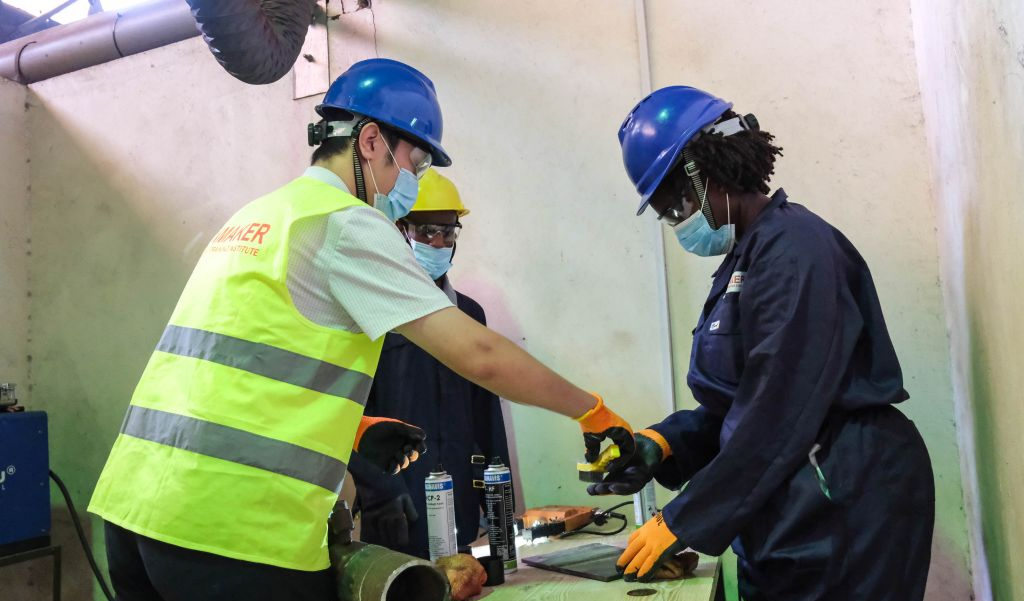
Skills need to be recognized by the market, and a pass is also required. Sareen Nansuka, a skills development officer at the Uganda Petroleum Authority, stated that as Uganda's oil development shifts from large-scale construction to commercial production, the market will increasingly require professionally trained and certified technical personnel. This is precisely the purpose of the training organized by Tian Kun, the project manager of the East African crude oil export pipeline, and his colleagues: to strengthen the capacity building of local employees, so that Ugandan youth can not only excel in engineering, but also obtain internationally recognized qualification certificates, and embark on a longer-term career path. Currently, 220 local employees have obtained internationally certified certificates such as welders and electricians. For a young Ugandan, this means that his skills are no longer limited to a single construction site, but can be tested and priced in a broader energy market.
Leave the technology behind
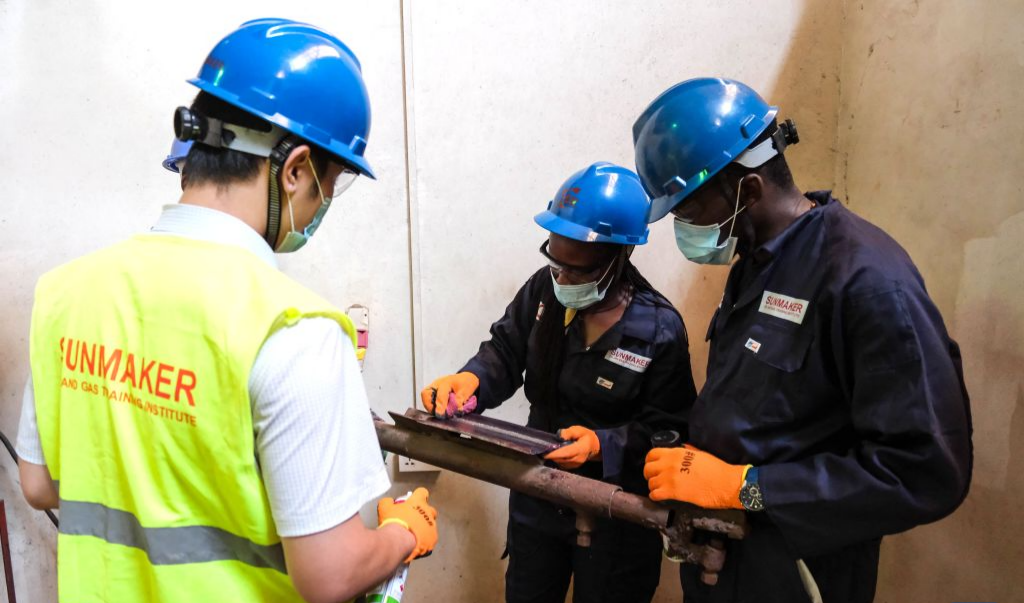
This path of talent cultivation is paved along a longer pipeline. The Ugandan government plans to achieve crude oil exports for the first time through the 1539 kilometer East African crude oil export pipeline that connects the country's western oil fields with Tanzania's Tanga Port. In the western oilfield block, energy companies such as Total Energy and CNOOC have participated in upstream development, bringing the oil dream of this inland country closer to reality step by step. As the EPC general contractor of the project, China Petroleum Pipeline Bureau adheres to the mainline of localized operation, integrating labor, procurement, and talent training throughout the entire process of engineering construction. During the peak construction period, it has provided more than 10000 job opportunities for Uganda and Tanzania.
From giving a job, to teaching a skill, to giving a certificate, what Chinese oil companies have left behind in East Africa is not only steel pipes and stations, but also a technical team that cannot be taken away, and the confidence that a country needs most when moving towards commercial production.Editor/Yang Meiling
Comment

 Praise
 Collect
 Comment

 Share
Share


Write something~