 Search


- The world's first coal based epoxy resin full industry chain project has entered the main construction phase
- Push coal from fuel to high-end materials such as photovoltaics and wind power, adding another independent path for domestic substitution of new materials

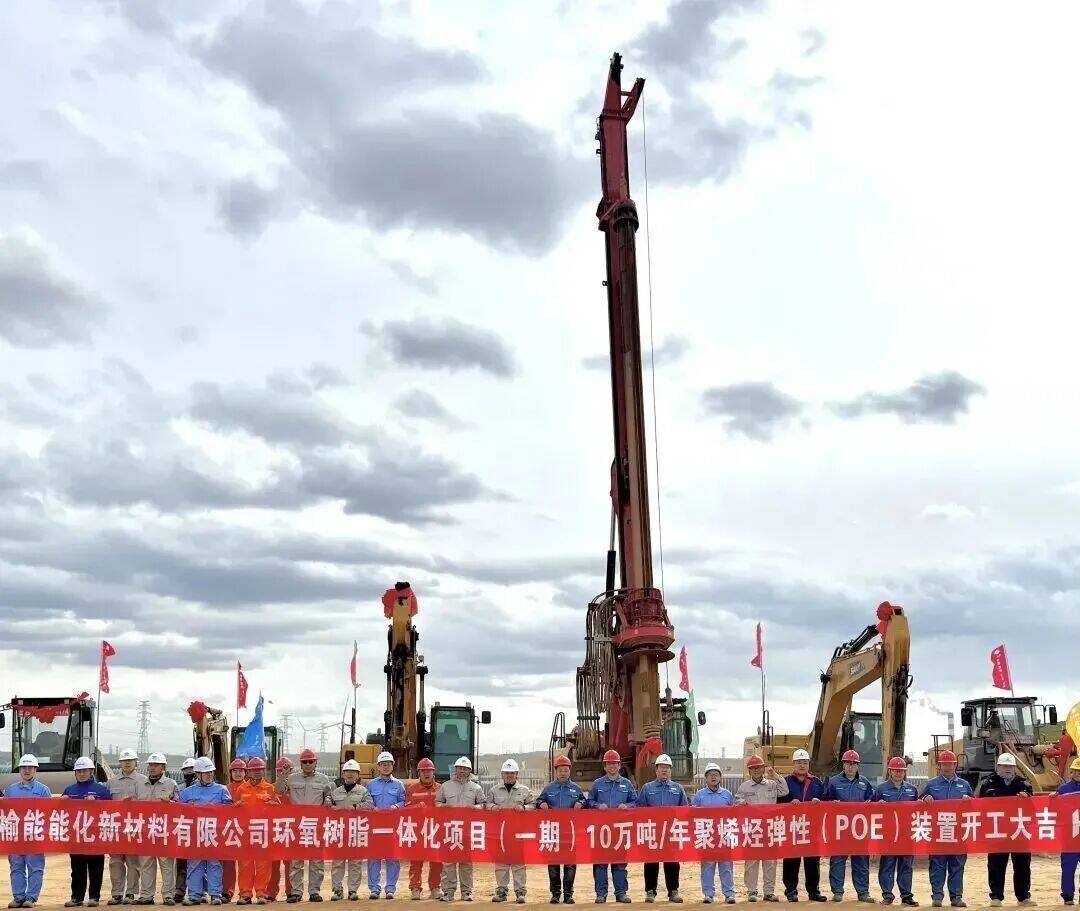
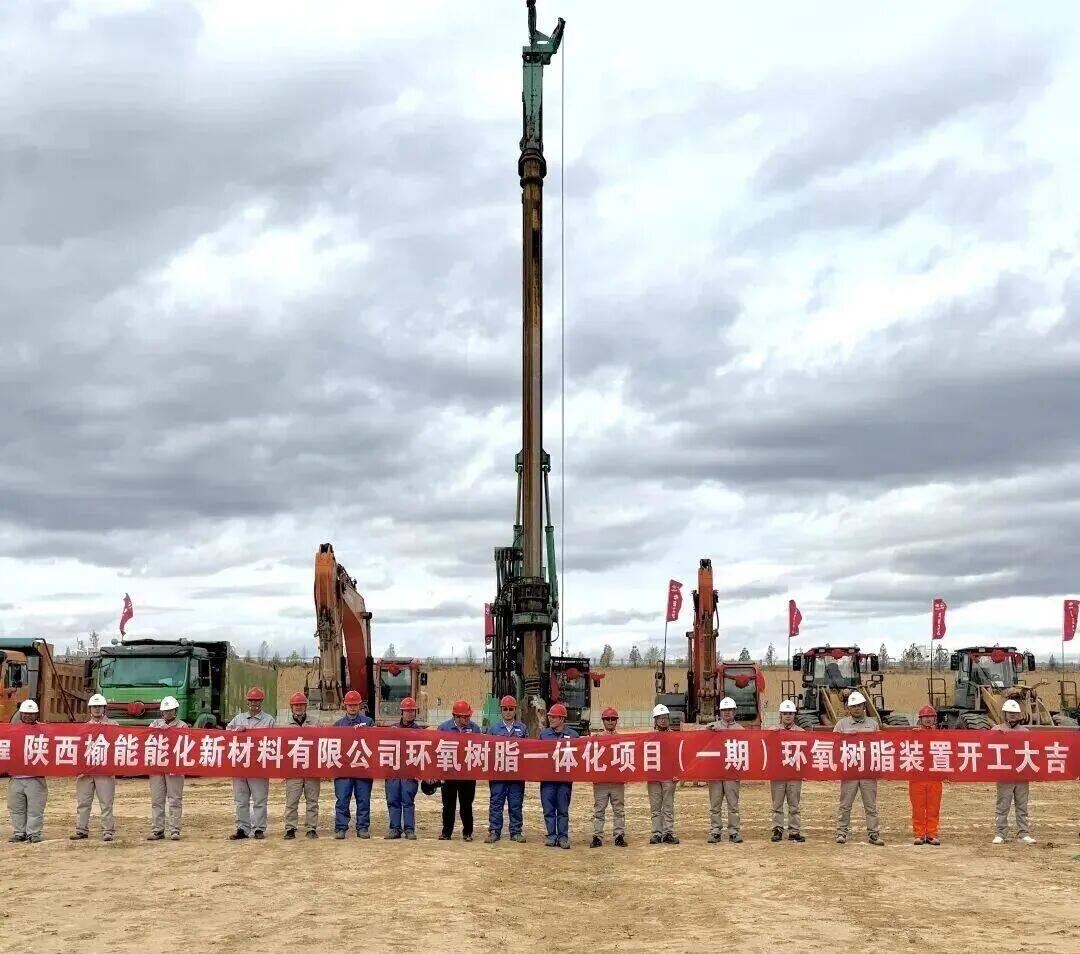
Coal is buried underground in northern Shaanxi, while photovoltaic power plants and wind farms thousands of miles away require adhesive film and resin. In the past, it was difficult to associate these two things with coal. On October 20, 2026, the two core units of the epoxy resin integration project (Phase I) of Shaanxi Yuneng Nenghua New Materials Co., Ltd. started construction on the same day, completely opening up a coal deformation path: a 100000 ton/year polyolefin elastomer (POE) unit and a 250000 ton/year epoxy resin unit were simultaneously launched for construction. The project shifted from site leveling and pile foundation stage to substantive construction of the main unit. Prior to this, the 800000 ton/year methanol to propylene (DMTP) combined unit had started construction in July.
POE no longer relies solely on buying
POE is the core raw material for photovoltaic encapsulation film, and is also used as a lightweight modified material for automobiles and as an elastic material for wires and cables. Its technical threshold is concentrated in the catalytic system and polymerization process control of high carbon alpha olefin copolymerization, which has long been controlled by a few foreign enterprises. By 2025, China's dependence on POE imports will still be around 76%. Although the Dushanzi Petrochemical gas-phase process unit has achieved a large-scale supply of nearly 60000 tons, the gap is still significant. The Yuneng unit is constructed by a consortium of Shanghai Hetu Engineering and Liuhua Construction, starting from coal based methanol and extending downstream to high-end polyolefins. After completion, it is expected to open up an industrialization channel for POE on the coal based route.
Epoxy resin roots downwards
The 250000 tons/year epoxy resin plant is jointly constructed by Shanghai Huayi Engineering, Zhejiang Tianzheng Design, and Liuhua Construction. It is the core project of the project, with products targeting wind turbine blades, photovoltaic frames, electronic packaging, and high-end coatings. The difficulty of epoxy resin lies not in a single process, but in whether the raw material can be stably self-sufficient. The domestic production capacity of epoxy resin has exceeded 3.8 million tons, but the operating rate is only around 54%, with both low-end surplus and high-end dependence on imports coexisting. For this project, upstream facilities such as 240000 tons/year bisphenol A, 150000 tons/year epichlorohydrin, and 350000 tons/year phenol acetone have been installed, forming a complete chain from methanol to epoxy resin. This is currently the first set in the domestic coal chemical industry.
The foundation of the first set of craftsmanship
The project is located in Shenmu High tech Industrial Development Zone, Shaanxi Province, covering an area of approximately 1324 acres with a total investment of approximately 13.2 billion yuan. The main facilities include 800000 tons/year methanol to propylene, 125000 tons/year chloropropene, 150000 tons/year epichlorohydrin, 200000 tons/year hydrogen peroxide, 300000 tons/year isopropylbenzene, 350000 tons/year phenol acetone, 240000 tons/year bisphenol A, 250000 tons/year epoxy resin, 100000 tons/year POE, and 30000 tons/year ethylene propylene rubber. Both DMTP and POE processes adopt the world's first technology. DMTP was developed by Dalian Institute of Chemical Physics, Chinese Academy of Sciences, using fluidized bed technology and proprietary catalysts, with a unit consumption of approximately 2.65 tons of methanol per ton of olefin; The epoxy chloropropane process adopts the technology of directly oxidizing chloropropene with hydrogen peroxide, which is also the first industrial application. According to the construction party's disclosure, the cost is reduced by about 20% compared to traditional routes, and the comprehensive energy consumption per unit product of POE devices is only about 50% of the industry average level.keywords:New energy information network
Yuneng New Materials is the main body established by Yulin Energy Group to undertake the chemical new materials sector. The project is positioned as coal based, coal head to tail, relying on the existing methanol and chlor alkali industries in the park as raw materials for mutual supply, rather than building an isolated chemical consortium from scratch. This high degree of coupling determines its investment intensity and construction pace, and also means that the key nodes in the future are long-term equipment ordering, as well as whether upstream bisphenol A and epichlorohydrin units can be built earlier or synchronously with downstream ones. After the completion of the project, it is expected that the annual operating revenue will reach 10 billion yuan, with an annual profit and tax of 3.1 billion yuan.Editor/Yang Meiling
Comment

 Praise
 Collect
 Comment

 Share


Write something~