 Search


- $1.2 billion syndicated financing leverages cross-border logistics in East Africa
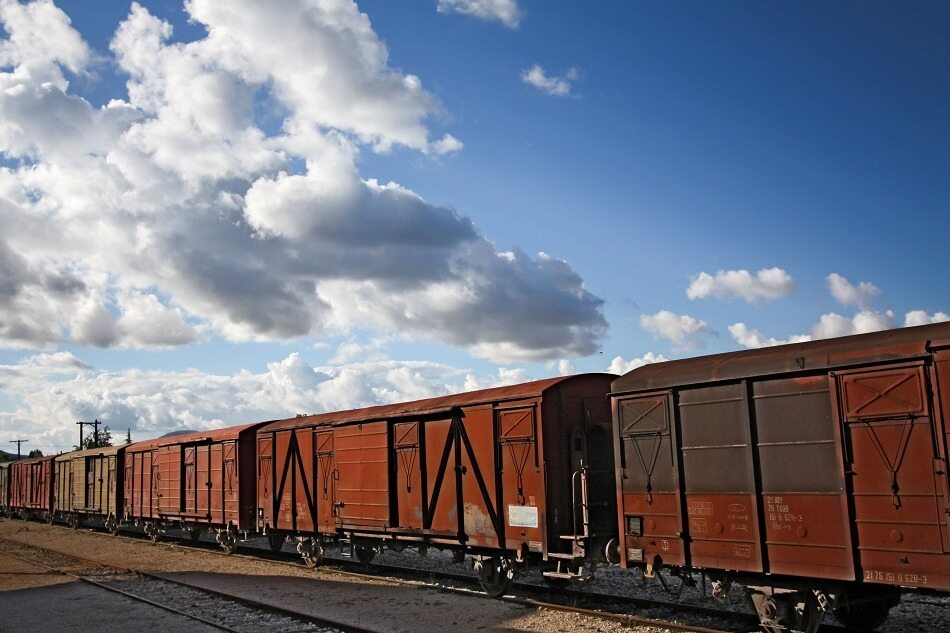
In November at Dar es Salaam Port, containers were piled up high, and the railway line to the west extended inland. More than a thousand kilometers away, the construction site from Tabora to Kigoma is waiting for this money. On November 4, 2026, the African Development Bank received news that $1.2 billion in commercial financing had been signed.
Where did 1.2 billion come from
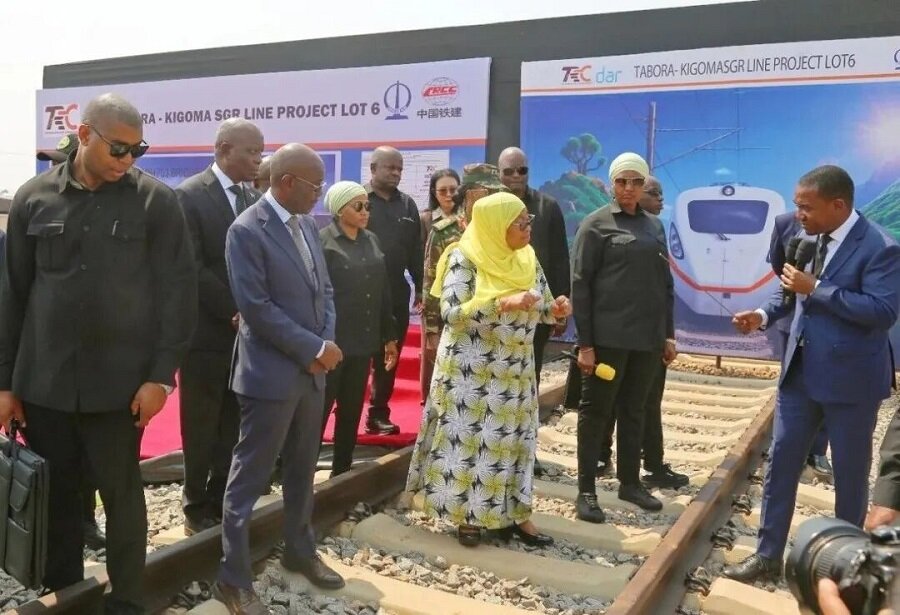
The Tanzanian government has signed a commercial financing agreement totaling 1.2 billion US dollars to advance the construction of the sixth section of the Central Standard Gauge Railway from Tabora to Kigoma. The bank serves as the initial authorized lead arranger, responsible for financing structure design and fund organization, and provides up to $800 million in partial credit guarantees, which is its largest partial credit guarantee project to date. The funds are provided by a consortium of nine banks, led by Deutsche Bank and Societe Generale, with participation from HSBC, Deutsche Bank, South Africa's Naide Bank, Tanzania Standard Bank, Abu Dhabi First Bank, UK First Bank, and UK Africa Bank. Among them, $720 million is secured loans, and $480 million is unsecured loans based on Tanzania's sovereign credit. Keywords: Tanzania Standard Gauge Railway, African Development Bank
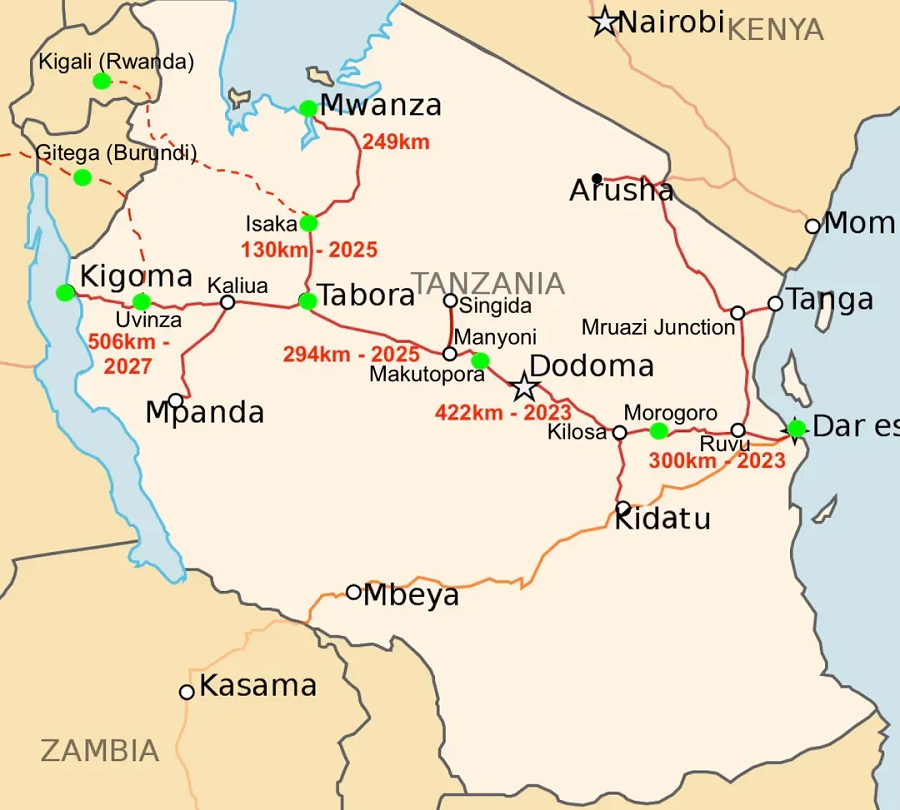
Steel rails are laid towards the west bank of the lake
This $1.2 billion is only a part of the overall $2.3 billion financing plan, and the rest will be raised through financing from export credit agencies and cooperation with other guarantee agencies. Previously, Tanzania commissioned the African Development Bank to design a regional development plan financing plan, aiming to mobilize up to 3.2 billion US dollars. This financing is mainly used for the construction of the Tabora Kigoma railway, with a total length of 450 kilometers, including 375 kilometers of main line and 75 kilometers of siding, under the general contracting of a consortium composed of CRCC and CCECC. After the completion of the route, the transportation conditions in the western region have significantly improved, providing high-capacity and long-distance services for agriculture, mineral development, and personnel travel. Logistics costs have also decreased, and employment along the route has been driven. This line is connected to the existing and planned railway network, connects the international trade channel through Dar es Salaam Port, and then relies on Kigoma Port and Congo Kalemie Port on the other side of Lake Tanganyika to bring up cross-border trade, which will also radiate to Burundi and eastern Congo in the future.Editor/Min Jing
Comment


 Praise
 Collect
 Comment

 Share


Write something~