 Search


- On May 10, 2026, the China Mongolia Cross border Railway Project successfully completed the installation of its first T-beam
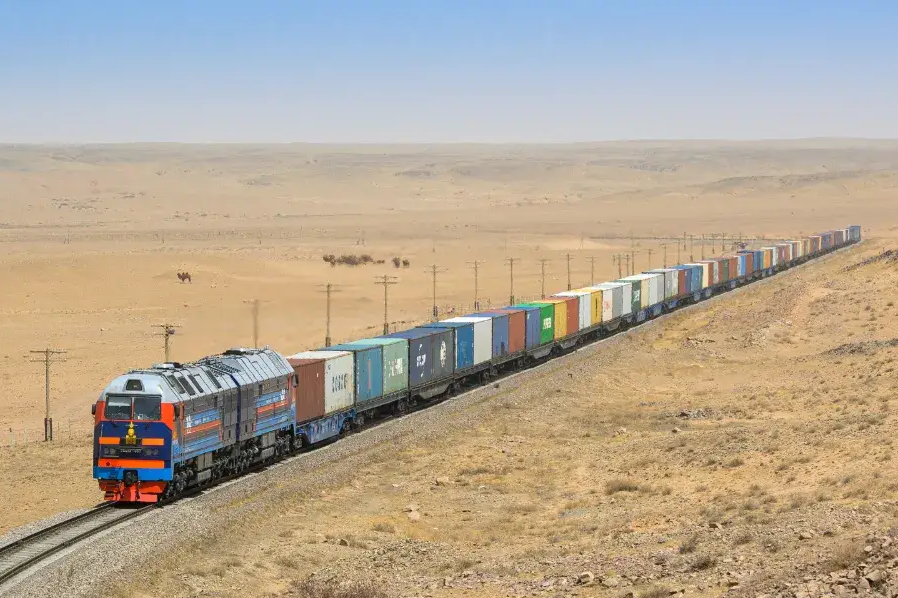
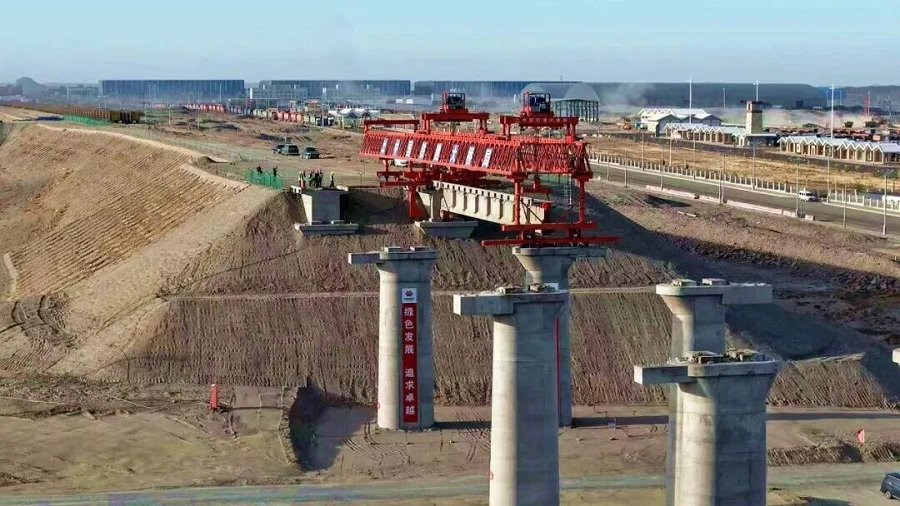
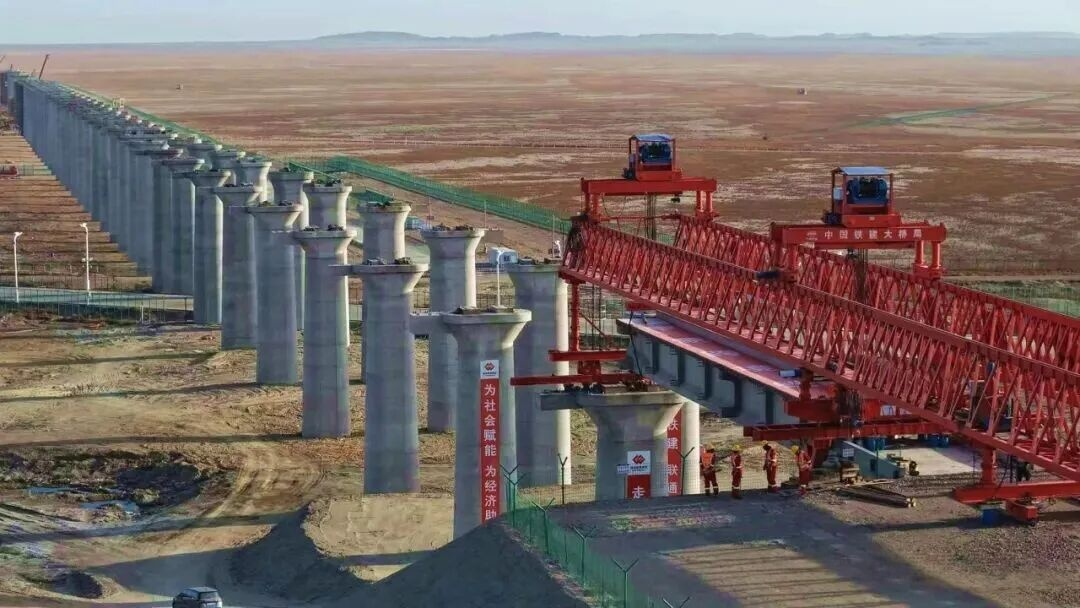
In May, the Gobi Desert is still cold with sandstorms. At the construction site of the China Mongolia Cross border Railway Project of China Railway Construction Bridge Bureau, a huge bridge erecting machine slowly moved and placed a 32.6-meter-long and 134 ton prefabricated T-beam steadily on the bridge pier. At this moment, it marks the second cross-border railway between China and Mongolia in nearly 70 years - the Ganqimaodu to Gashusuhai Railway, officially entering a critical stage of beam erection construction.
Building a new passage in the past 70 years
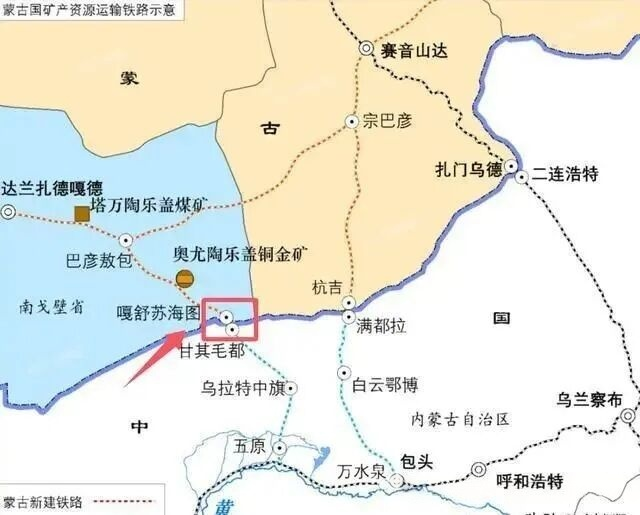
The Ganqimaodu Gashusu Haitu Railway is the second cross-border railway jointly built by China and Mongolia after nearly 70 years since the opening of the Erenhot Zamyn Uud Railway in 1956. The total length of the line is 9.91 kilometers, of which the cross-border bridge section is 6.08 kilometers long and requires the installation of 760 T-beams. After the completion of the project, it is expected to undertake the transportation of 30 million tons of goods annually, realizing the connection between Ganquan Railway and Mongolia's southbound railway, further expanding the scale of trade between the two countries, promoting infrastructure connectivity and economic and trade cooperation.
Construction challenges in sandstorms and Gobi desert
The construction route is located in the Gobi desert area, with frequent strong winds and sandstorms throughout the year. Extreme strong winds pose a severe challenge to the stability and safety of high-altitude lifting operations. To address the challenges, the project team innovatively applied hydraulic side formwork and mobile pedestal combination technology in T-beam prefabrication, and developed steel mesh positioning fixtures to improve concrete pouring efficiency. At the same time, by simulating and deducing key processes such as lifting, transporting, and erecting beams, real-time monitoring of lifting angles and equipment trajectories has effectively overcome unfavorable factors such as long transportation distances, long wind periods, and high instantaneous wind speeds.keywords:Engineering Information
The steady progress of joint construction between the two countries
The project is jointly promoted by China and Mongolia based on the principles of unified design, individual construction, and one-time connectivity. The domestic section in China is invested and constructed by the National Energy Group, and is planned to be completed and opened to traffic by 2027; The Mongolian section is invested and constructed by the Taben Tolgoi Railway Company. Since the start of construction in May 2025, the project has progressed smoothly. Currently, about 26% of offline projects such as pile foundations and pier shafts have been completed, and 268 prefabricated T-beams are expected to be erected. It is expected that all beam erection tasks will be completed by October this year, laying the foundation for the full line connection.Editor/Yang Meiling
Comment



 Praise
 Collect
 Comment

 Share
Share


Write something~