 Search


- Overseas AI practitioners write a long article after their trip to China: the original framework is not enough

The phrase 'I just came back from China' is forming a unique style in the American AI community. They came to Beijing, Shanghai, and Hangzhou with their industry knowledge formed over the years. After returning, they wrote long articles, recorded their research observations, reviewed the real operating status, and then admitted that the original analytical framework was not enough. It's not that the technical parameters are insufficient, it's that the logic itself needs to be rewritten.
Reverse growth path
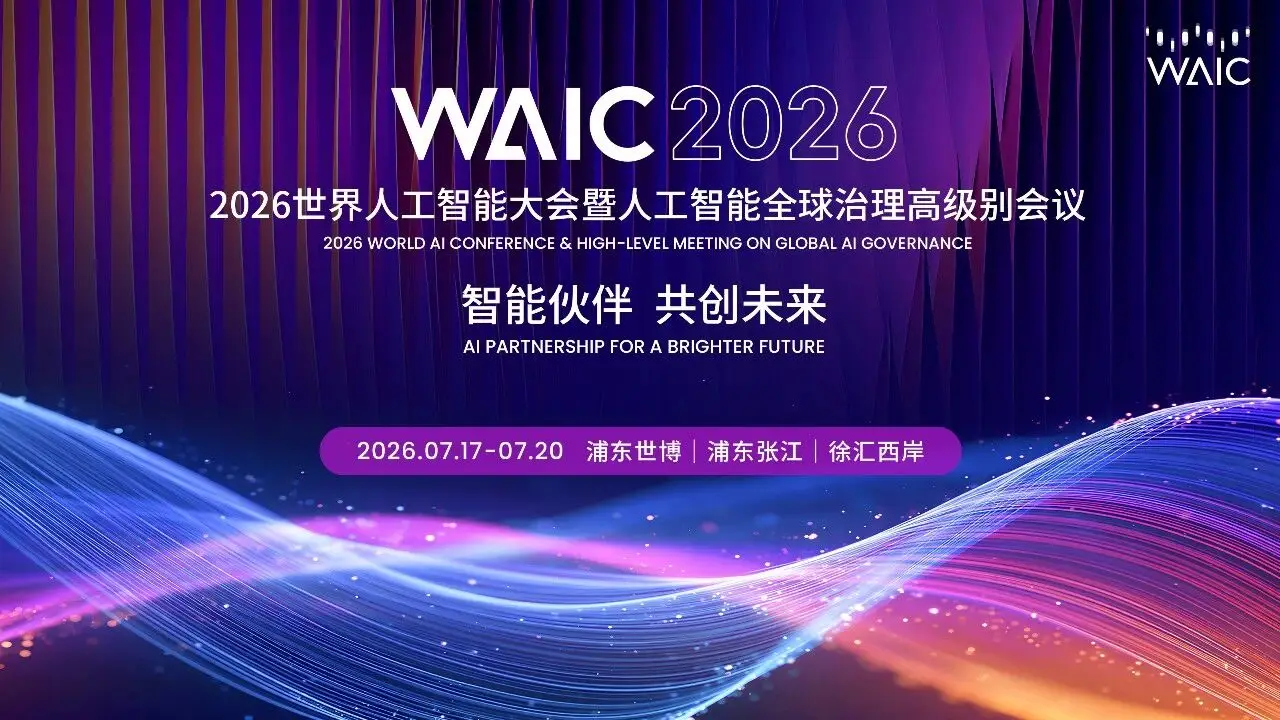
The 2026 World Artificial Intelligence Conference opened in Shanghai, marking WAIC's eighth consecutive year. The exhibition area exceeded 100000 square meters for the first time, with more than 1100 companies participating and over 300 products making their global debut. Just one day before the opening, the dark side of the moon released Kimi K3, with a parameter scale of 2.8 trillion yuan, the world's largest open source model in terms of parameters, native support for visual understanding, a million token contextual window, and Claude Fable 5 on the programming chart.
But what is truly worth seeing is not the parameters. The first thing the Chinese AI team does when they receive a model is not to publish a paper, but to ask: Can it be integrated with the internal workflow of the enterprise? Can business knowledge be accumulated? Can expert experience be turned into a transferable knowledge base? From application to model, this is the growth path of AI in China. Consumer goods companies, operators, and logistics companies are all investing in source modeling. A technology retail company released a trillion parameter model in June 2026, which was trained and inferred on a 50000 card domestic computing power cluster.
Output capability rather than output product
The cases of WAIC in 2024 are mostly the output of single models and single technologies; Starting from 2025, the case will become a complete solution covering scenario adaptation, toolchain, and iterative capabilities; By this year, the output is the ability itself. The domestically produced large model has spawned over 170000 derivative models, and the Uganda team chose it as the base when developing the large model covering 31 languages.

This logic does not pursue technological superiority, but rather seeks maximum coverage and fastest iteration. Using the model as a base, so help others build a base; To build an ecosystem, provide a full chain, low threshold capability package. This is not about sharing everything - technology has boundaries, data has rules, and openness is only discussed above the security bottom line.
At WAIC's booth, the Ascend 950 super node real machine, the world's first 3D near memory computing chip, and multiple humanoid robots were showcased simultaneously. What Chinese AI needs to prove is another thing: technology does not necessarily have to generate value through monopoly, amplifying value through openness may be the longer path.Editor/Cheng Liting
Comment






 Praise
 Collect
 Comment

 Share
Share


Write something~