 Search


- Green power and policies help Brazil develop Latin America’s computing hub for global investors

Global capital continues to increase its investment in computing infrastructure, with 205 data centers under construction or operation in Brazil, and 38GW of grid connected applications corresponding to over 206.7 billion yuan in investment. With abundant renewable energy and tax support policies, multinational enterprises are competing to implement projects, and Brazil is gradually growing into a global hotspot for green computing investment.
Overseas capital continues to be optimistic about the Brazilian computing market. Enterprises such as ByteDance and Ascency have finalized plans for large-scale data centers. Projects are concentrated in the northeastern coastal and southeastern inland regions. The combination of multiple resource advantages and policy dividends is driving Brazil to accelerate the construction of a computing hub for the American market.

Giant clustering layout
The Brazilian power system operator has received a data center grid connection application with a scale of 38GW, which is close to the total installed capacity of three Baihetan hydropower stations. The large-scale demand for electricity drives the construction of wind, solar, and photovoltaic energy storage and transmission and transformation facilities. There are two super large computing projects in Sierra Leone. The total investment of the data center jointly developed by ByteDance is more than 260 billion yuan. The long-term planning capacity can reach 1.5 gigawatts, and wind power is used throughout the process. Another large-scale project in the local area has an investment of about 455 billion yuan, which will create a large number of job opportunities after completion. Operator Ascency has chosen to expand four data centers in Campinas to avoid land and power bottlenecks in S ã o Paulo.
Confidence in the development of computing power
The computing power industry is highly dependent on electricity costs, with over 90% of Brazil's electricity coming from renewable energy sources. The long-term purchase agreement price of local green power is significantly lower than that of North America, Europe, and the Asia Pacific region, and new wind and solar power can also enjoy discounts on transmission and distribution costs. Many investors choose to acquire new energy power plants to hedge against fluctuations in electricity prices. At the same time, the Redata tax policy reduces multiple taxes and fees for compliance projects, but companies need to meet mandatory conditions such as full green electricity usage, localized procurement, and continuous research and development investment. Overseas hardware manufacturers can obtain PPB certification through local assembly to meet policy requirements.
Market opportunities and paths
Brazil has a population of 210 million, and the continuous demand for computing power is driven by digital finance, social media, and the intelligence of traditional industries. The ports in the northeast are connected to multiple international submarine cables, which can cover various parts of the Americas with low latency. For Chinese industrial chain enterprises with overseas layout, the simple hardware export model is difficult to adapt to local rules. Building a collaborative overseas ecosystem of cloud service providers, equipment manufacturers, and power companies is more advantageous. Enterprises also need to pay attention to environmental approval and labor regulations, and establish local compliance teams to ensure the smooth implementation of projects. Keywords: Brazilian computing power market, green data center
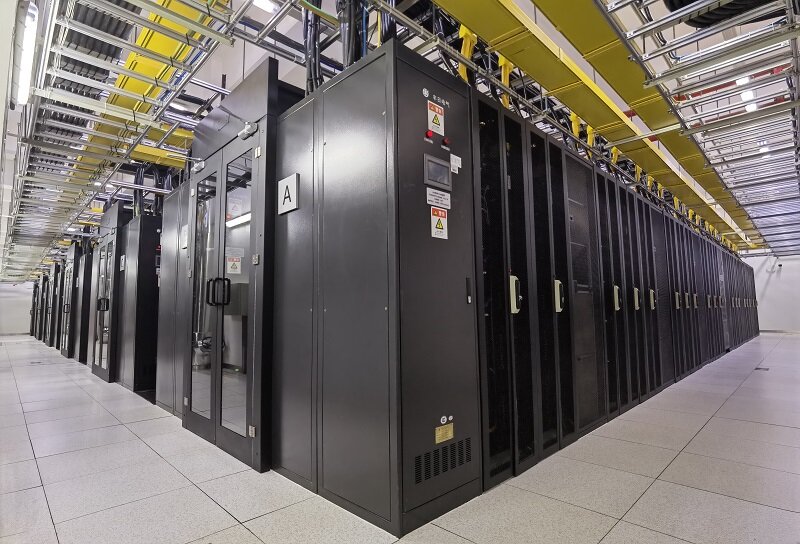
The abundant green power resources, preferential tax policies, and huge local demand have formed a synergy to promote the rapid expansion of Brazil's computing industry. Participants who seize the window period to complete localization layout and build industrial ecology are expected to seize the opportunity in the competition of Latin American computing power market.Editor/Min Jing
Comment




 Praise
 Collect
 Comment

 Share
Share


Write something~