 Search


- The progress of the entire line exceeds 95%, and the commuting revolution on the east and west coasts is approaching
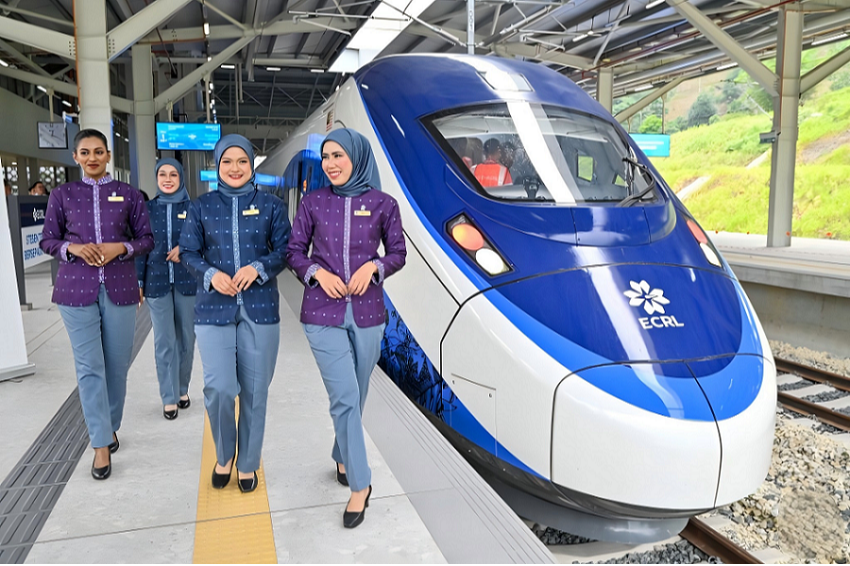
At the early morning Goose Mark Comprehensive Transportation Terminal, the sunlight shines on the platforms that have not yet been loaded with passengers. A comprehensive inspection vehicle slowly drove out, and the sensors on the roof began to record the smoothness of the track, contact network tension, and signal response - at this moment, the Kota Bharu to Gombak section of the Malaysia East Coast Railway (MCA) officially pressed the last throttle before opening: dynamic detection and fault free operation.
Since the construction of this railway in 2017, it has been affecting the nerves on both sides of the Malay Peninsula. It has a total length of 665 kilometers, starting from Gotabalu, Kelantan Prefecture in the north, passing through Tengjialou and Pahang, and arriving at Selangor Omar and planning to connect to Port Klang. It is the flagship project of China Malaysia joint construction of the the Belt and Road. In the past, it used to take seven or eight hours to drive from Kota Bharu to Kuala Lumpur, but in the future, taking the Malaysia East Rail will be compressed to less than four hours; The travel time from Kuantan to Kuala Lumpur has also been reduced from 3 hours by road to about 1.5 hours.
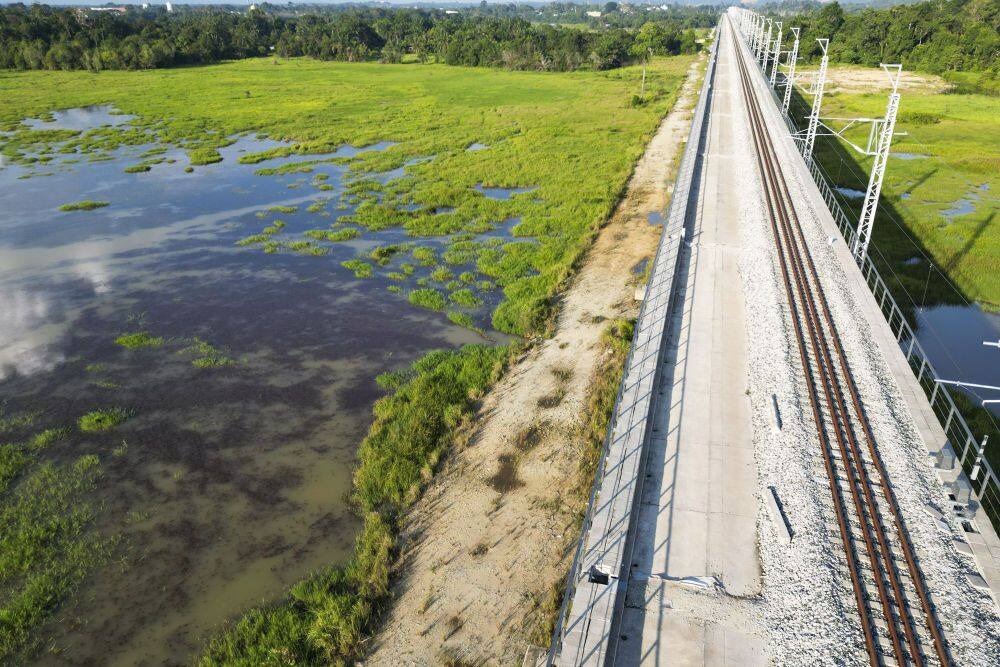
Test the entire journey
The test drive that started on August 14th was not a regular one. During the approximately two month window period, the project team conducted comprehensive testing on systems such as track, communication, signal, traction power supply, and vehicles. The total mileage of fault free operation verification reached 8000 kilometers, which is equivalent to repeatedly polishing the first section of the line dozens of times. At the ceremony, Malaysian Transport Minister Luk Siu Fook gave key figures: as of July 2026, the overall construction progress of the Malaysia East Rail has exceeded 95%. Ma Fangzheng is studying the simplification of some testing procedures, striving to complete the Kota Bharu Goose Mark section ahead of schedule by December 2026 and put it into passenger transport in January 2027. The second phase of Goose Mark Klang Port is expected to operate in January 2028.
Rooted in the standard
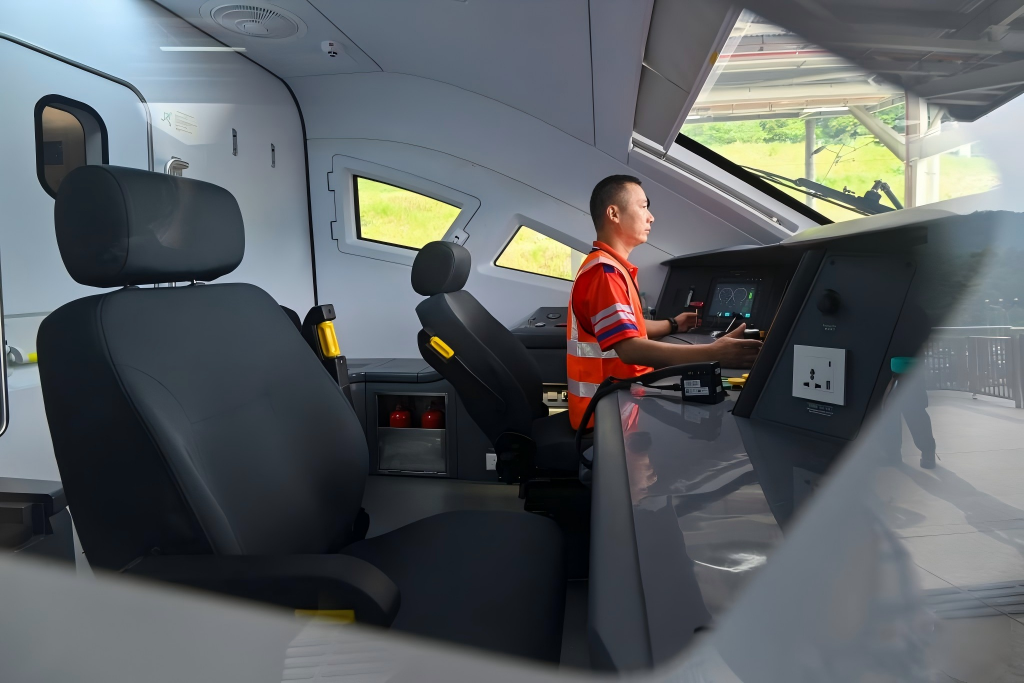
Zhang Bingnan, General Manager of China Communications Construction Corporation, said on site that during the construction process, both China and Malaysia promoted the deep integration of Chinese technology, Chinese standards, Chinese construction, and Malaysia's actual needs. This fusion is not limited to steel rails. Liuzhou Railway Vocational and Technical College, together with China Communications Construction and Pahang University, has jointly established the China Malaysia Railway Modern Craftsmanship College, launching an order class of 2-year Malay study+1-year Liuzhou further education+3-month on-site internship; The first batch of 66 students with academic qualifications have completed their pre job training in July 2026, covering positions such as locomotive maintenance, signal detection, and assistant station staff, and will immediately enter the dynamic detection support work. From the co driver Patiban completing the departure according to Chinese operating standards, to more than 270 local skilled talents leaving the training room, the Chinese vocational education standards have been translated into vocational passes for Malaysian youth.
Something is flattened
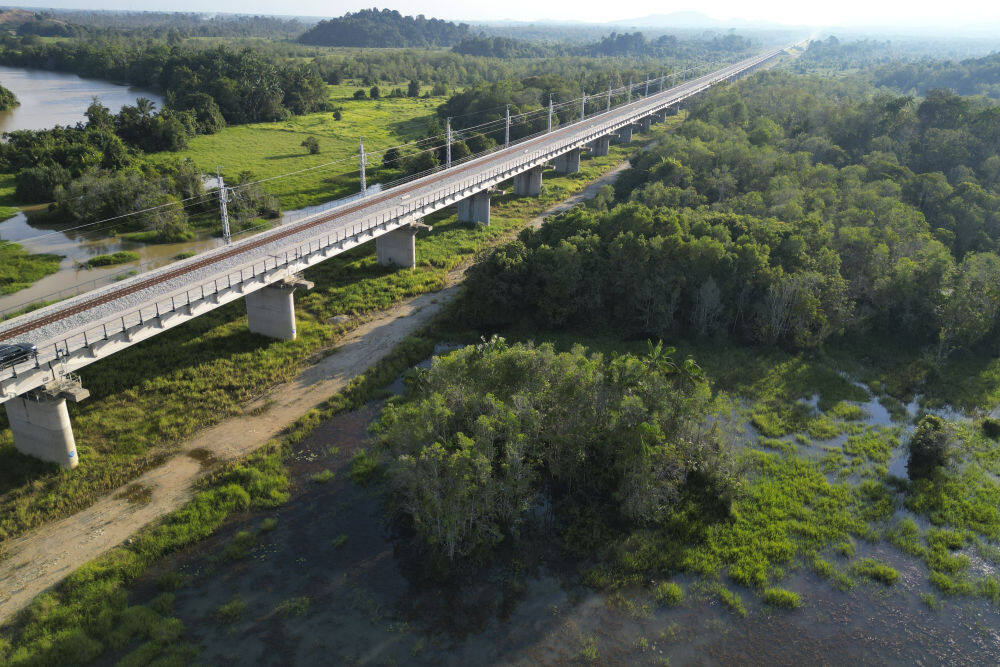
What railways truly change is the economic landscape. The Malaysia East Rail connects underdeveloped states on the east coast such as Kelantan, Terengganu, and Pahang with the Klang Port and Kuala Lumpur West Coast Economic Circle: the land transportation time for industrial goods from Pahang Kuantan to Klang Port has been reduced from 3 to 5 days by sea to less than 1 day, allowing low-cost entry and exit of durian, minerals, and lumber from the east coast; Hamiz, the owner of a rural grocery store in Selangor, has found that the influx of people during the construction period has already improved business, and it will be even better after the opening of the road. The Industrial Finance Authority of Malaysia estimates that from project initiation to completion, East Rail will drive a cumulative economic growth of approximately 2.7% in Malaysia. In the long run, the Malaysian side has taken the initiative to extend the East Rail northward to Thailand and integrate it into the Pan Asian Railway network. A land bridge is replacing the development gap between the east and west coasts.keywords:Engineering infrastructure
When the lights of the inspection car scanned the tile joints of the Goose Mark platform, it did not see a trial run of a car, but a 665 kilometer timetable: progress of 95%, inspection of 8000 kilometers, training of hundreds of local railway personnel, half reduction of commuting time, and recalculation of East Coast GDP. The Ma Dong Railway, constructed by Chinese enterprises, is changing the standard on the drawings to the time when Malaysians commute home after work.Editor/Yang Meiling
Comment


 Praise
 Collect
 Comment

 Share
Share


Write something~