 Search


- Ukraine jumps to fourth largest energy storage market in Europe with nearly 5-fold growth rate
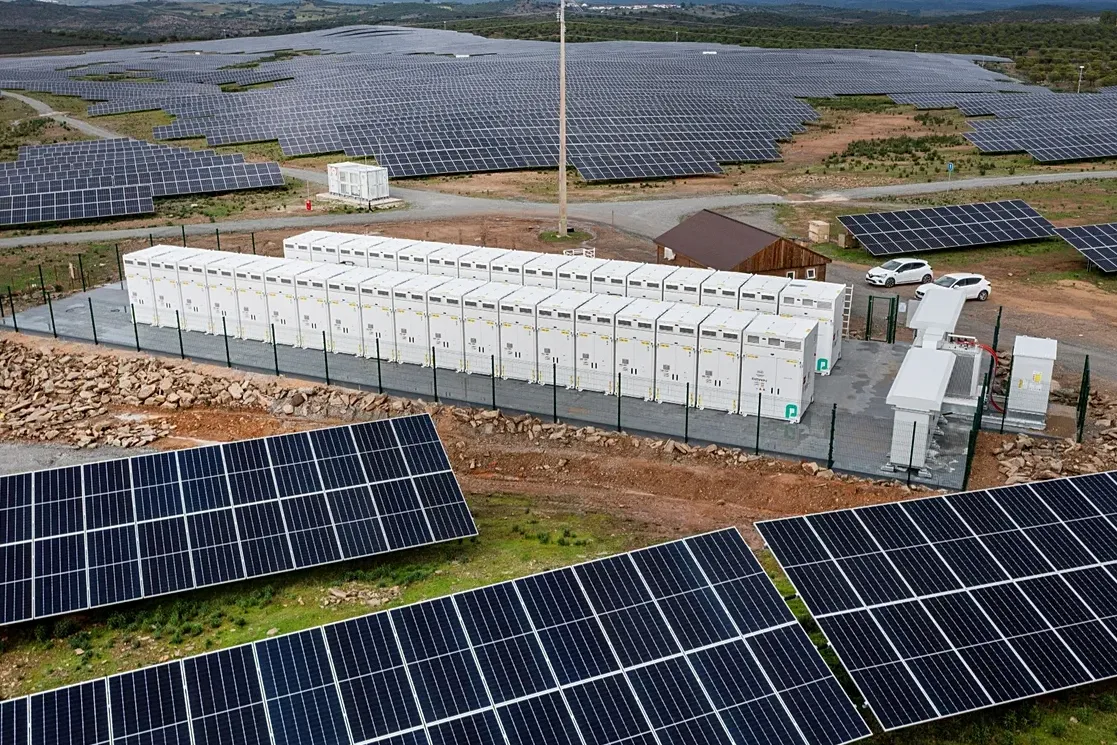
On the annual ranking list of the European energy storage market in 2025, Ukraine has directly risen to fourth place in Europe with a newly installed capacity of 2.9 GWh, achieving nearly fivefold growth year-on-year. The outbreak of this special market completely breaks away from the conventional growth logic of the energy storage industry in Western Europe, as the total grid connected scale has exceeded 100 GWh for the first time in the entire year with an increase of 36 GWh.
The concentration of the European energy storage market is rapidly declining
According to the "European Battery Market Outlook 2026-2030" released by SolarPower Europe, the total installed capacity of energy storage in Europe will increase by 36GWh in 2025, a year-on-year growth of 48%, and the total scale of regional grid connected battery energy storage will exceed 100GWh for the first time.
Germany, the UK, and Italy still rank among the top three in terms of newly installed capacity, recording 6.6 GWh, 5.2 GWh, and 5.0 GWh respectively for the whole year. Ukraine surpassed Bulgaria to fourth place with 2.9 GWh, and Bulgaria ranked fifth with 2.7 GWh.
The proportion of newly installed capacity in the top five countries in Europe has dropped from nearly 80% in 2024 to 62% in 2025, indicating a significant narrowing of regional market concentration. The European energy storage industry has officially expanded from core markets to a diversified stage of synchronous growth in multiple regions. According to the neutral scenario forecast in the report, the annual increase in energy storage capacity in Europe by 2030 can reach 138GWh, and the cumulative grid connected scale will reach 582GWh.
Unlike the Western European market, which focuses on electricity arbitrage and photovoltaic self use as its core demands, the underlying growth logic of energy storage in Ukraine is completely anchored in energy security and power supply resilience. Over 60% of the newly installed capacity is distributed energy storage, which is deployed extensively in key infrastructure such as residential homes, industrial and commercial plants, hospitals, and water plants. Its core is used to cope with power outages and ensure basic power supply. Large scale energy storage on the public utility side accounts for about one-third, mainly participating in the domestic auxiliary service market such as power grid frequency regulation and system balancing.
The policy dividend and the risk of going abroad are mutually overlapping
The Ukrainian policy continues to open up market access, exempting operating licenses for energy storage power plants below 5MWh and simplifying construction approval and land selection requirements. The import tariffs and value-added tax reduction policies for photovoltaic and energy storage equipment will continue until 2028. After the completion of equipment acceptance, the government will directly refund 30% of the loan principal for household photovoltaic and energy storage supporting special loans. The new energy auction rules have been revised, and the integration of photovoltaics and energy storage has been listed as an independent auction category with a minimum quota, further driving the demand for energy storage supporting facilities.
The local electricity marketization reform continues to advance, with plans to switch the electricity trading window to the European standard of 15 minutes, and domestic automatic frequency regulation auxiliary services to daily auctions. At the same time, regulatory adaptation is being promoted, and the goal is to connect to the European PICASSO cross-border frequency regulation trading platform in the future, opening up potential revenue channels for cross-border auxiliary services for energy storage.
There are still clear practical barriers at the level of going global, with local implementation of UATR mandatory certification and lack of recognition of EU CE certification. Project construction requires additional consideration of the cost of facility air defense and protection. At the commercial level, there are issues such as foreign exchange settlement pressure, lack of war insurance, and tight grid connection resources in some regions. Keywords: New energy news, energy storage power station
From the outbreak of distributed energy storage driven by the urgent need for energy security to the continuous implementation of large-scale storage projects, the Ukrainian energy storage market is embarking on a unique development path that is completely different from Western Europe, and has also opened up a differentiated new track for Chinese energy storage companies going global.Editor/Cheng Liting
Comment



 Praise
 Collect
 Comment

 Share
Share


Write something~