 Search


- The national comprehensive monitoring system for computing power across the entire network has been officially released
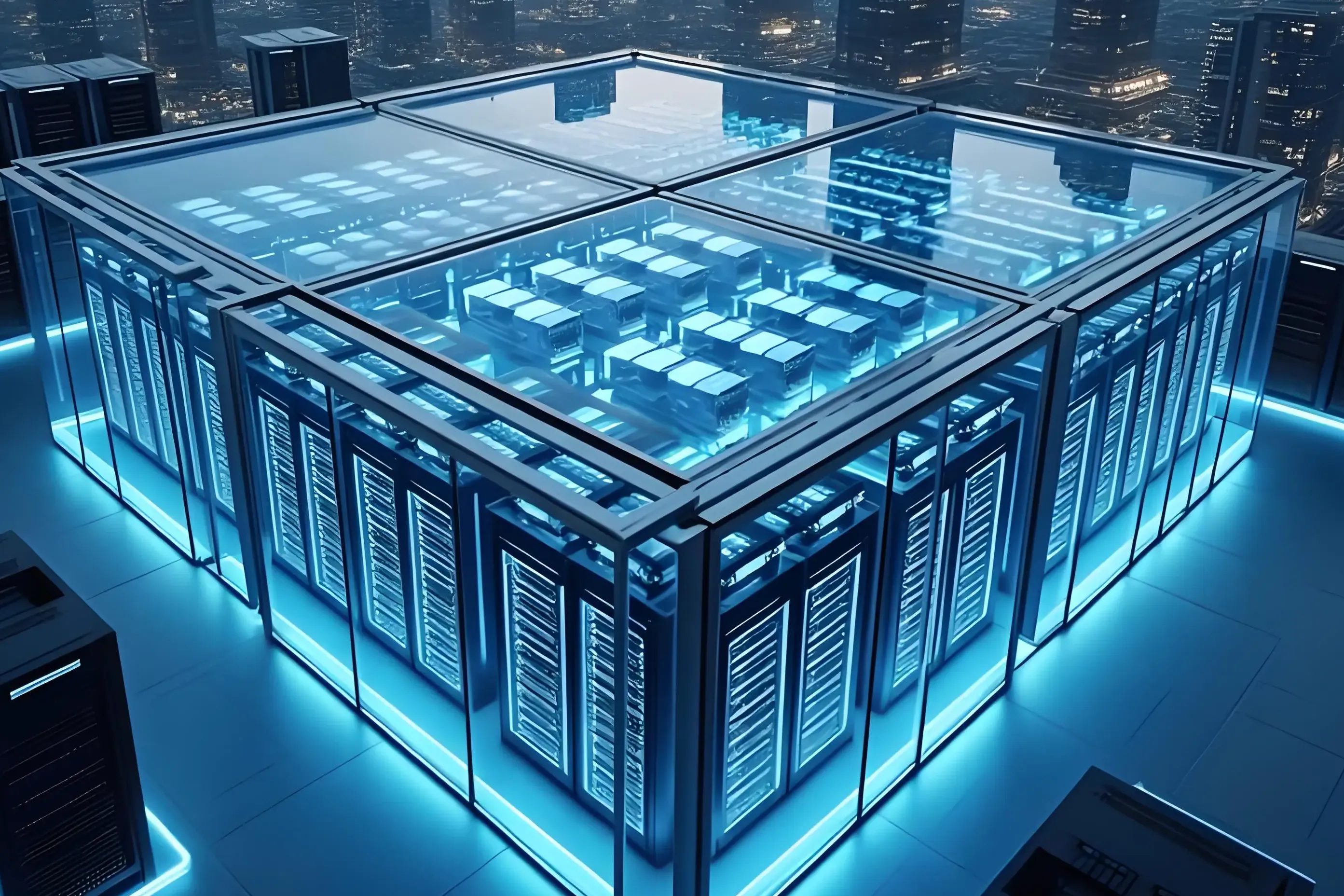
At the Langfang venue in September, on the large screen of China's computing power platform, computing power nodes from 31 provinces, autonomous regions, and municipalities across the country were simultaneously lit up. With the official release of the national integrated computing power monitoring system, the development pattern of China's computing power, which is one network, one game, and integrated, has finally transformed from a planning blueprint to a dispatchable and monitored physical network.
Achieving leapfrog growth in core scale
As of June 2026, the scale of China's intelligent computing power has reached 2185EFLOPS, a significant increase of 177% year-on-year. More than 70 computing power transmission channels have been built to connect national computing power hubs with key regions, and 17 national computing power interconnection regional nodes have been approved. The total number of standard racks in use nationwide has exceeded 15.56 million, and the overall deployment rate of computing power facilities has remained stable at 71.4%.
Among them, Hebei Province has a scale of 556.1EFLOPS in intelligent computing, ranking first in the country. The proportion of intelligent computing scale in the eastern, central, western, and northeastern regions is 55.9%, 10.6%, 32.6%, and 0.9% respectively, and the hierarchical computing power layout has basically taken shape. At present, the platform has gathered over 10000 registered enterprise users, joined over 200 computing service providers, launched more than 2000 computing products, connected over 300 various large models, and accumulated billions of computing power monitoring data.
The path of high-quality development is gradually becoming clear
The next step for the computing power industry will be to promote upgrading around four major directions. Continuously optimizing the multi-level computing power architecture of "hub region edge", coordinating industrial development and energy supply, and deepening collaborative innovation in computing and electronics; Accelerate the issuance of guidelines for the construction of computing power standard system, establish core standards such as computing power service capability evaluation and market-oriented pricing, and carry out research and development on new transmission protocols and inter card interconnection technologies; Promote the special action of millisecond computing in urban areas, create efficient and smooth transmission channels for computing power, and enhance the interactive experience of computing power applications; Implement a special action to empower small and medium-sized enterprises with inclusive computing power, lower the threshold for computing usage, and refine high-value intelligent scenarios for industries such as finance, electricity, and manufacturing. Keywords: computing power platform, AI computing power
From dispersed individual data centers to a nationally unified computing power network, computing power is no longer a single server cluster, but a core new infrastructure supporting the upgrading of thousands of industries in the era of digital intelligence, injecting a continuous stream of new momentum into the development of the digital economy.Editor/Cheng Liting
Comment




 Praise
 Collect
 Comment

 Share
Share


Write something~