 Search


- Middle East and North Africa become core incremental markets, EPC general contracting drives the entire industry chain to go global
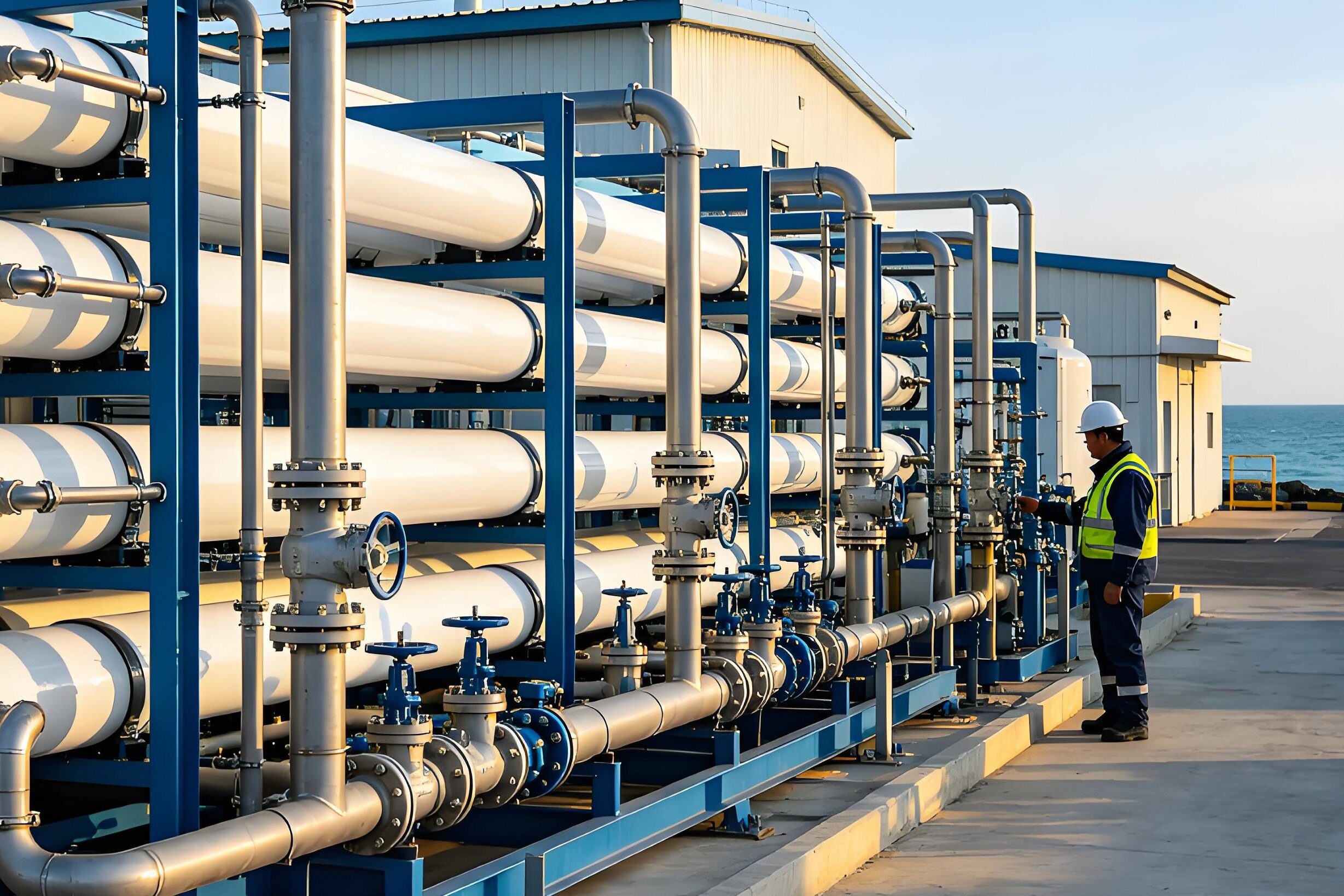
In the first half of 2026, China's seawater desalination industry is undergoing a structural transformation from domestic demand driven to export driven. According to industry research firm GEP Research, the global trade volume of seawater desalination equipment will reach 8.9 billion US dollars in 2025, and China's equipment export growth rate will exceed 15% for three consecutive years, reaching 890 million US dollars in 2025. In the first half of 2026, this growth momentum will continue, and the Middle East and North Africa, as the region with the most concentrated global demand for seawater desalination, are becoming the core incremental source of China's equipment exports. From Basra in Iraq to Rabigh in Saudi Arabia, from Hassyan in the United Arab Emirates to Matru in Egypt, China's seawater desalination equipment is accelerating its integration into the global supply chain along the footsteps of general contractors.
The demand in the Middle East and North Africa continues to expand
The regional concentration of the seawater desalination equipment market is extremely high. According to a GEP Research report, the Middle East and North Africa region will account for over 45% of the global equipment inventory by 2025. Countries such as Saudi Arabia, the United Arab Emirates, and Kuwait will continue to expand large-scale seawater desalination plants, with individual projects generally exceeding 200000 cubic meters per day. The global market size of seawater desalination equipment has exceeded 21 billion US dollars by 2025 and is expected to reach 22.7 billion US dollars by 2026, with a total installed capacity exceeding 170 million cubic meters per day. According to World Bank data, the Middle East and North Africa region will contribute 63% of the world's newly contracted production capacity between 2026 and 2030, with an estimated annual increase in online production capacity of 1.5 million to 3.5 million cubic meters. In the subdivision track of photovoltaic and seawater desalination, the expansion of solar desalination projects in the Middle East and North Africa is accelerating, and industry reports expect to maintain high growth from 2026 to 2035.

Leading the EPC general contracting matrix
The series of mega projects implemented by Chinese EPC general contractors in Central and Northeast Africa is the core engine driving the export of domestic seawater desalination equipment. The Basra seawater desalination project in Iraq is a mega order signed by China Electric Power Construction in January 2026, with a contract amount of approximately 17.193 billion yuan. The work includes designing and constructing a seawater desalination plant with a daily output of 1 million cubic meters, a 240 kilometer water pipeline, a main pump station, nine receiving pump stations, and a 300 MW supporting self owned power station. In Saudi Arabia, the Rabigh Phase IV seawater desalination EPC project is constructed by China Electric Power Construction Shandong Electric Power Construction Third Company, with a designed daily output of 600000 cubic meters of fresh water. It officially received the owner's handover certificate in May 2026, and the measured electricity consumption per ton of water is as low as 2.712 kilowatt hours per cubic meter, breaking the record for the lowest electricity consumption in the global seawater desalination industry. In the United Arab Emirates, the Hassyan seawater desalination EPC project officially produced qualified water in January 2026, with a daily output of 818000 cubic meters of fresh water and 100% electricity coming from photovoltaic energy. In North Africa, the 300000 ton daily seawater desalination project in Oran, Algeria, undertaken by Hangzhou Water Treatment Technology Research and Development Center, has been successfully put into operation, adding over 100 million cubic meters of fresh water to the local area every year. Keywords: International News Network, seawater desalination, equipment for going abroad

Membrane module consumables with high viscosity are shipped overseas
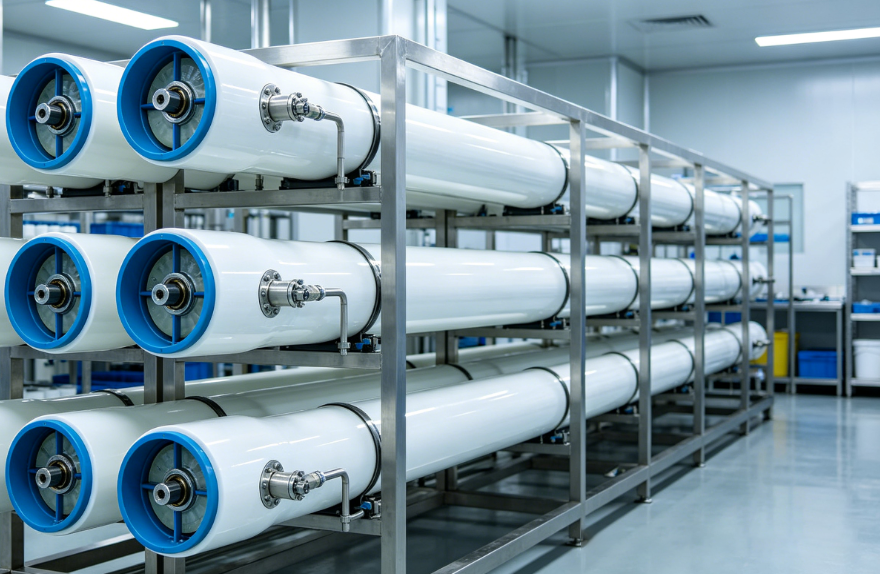
In addition to equipment EPC, membrane components, as the core consumables for seawater desalination, are becoming a high viscosity category for Chinese companies going global. According to the public disclosure of Wharton Technology, in 2025, the company will export more than 30000 pieces of seawater desalination membranes to the Belt and Road countries, and the corresponding daily desalination water production scale will exceed 300000 tons. Walton's membrane products are applied to 65000 tons per day of seawater desalination plants in Matru, Egypt, with a capacity of 130000 tons per day. From industry data, China's membrane separation product exports are in a period of rapid growth. According to industry trade reports, the total export value of China's membrane separation products will reach 8.64 billion US dollars in 2025, and the export contribution of Chinese manufacturers will climb from 18.7% in 2021 to 29.3% in 2025. The business model value of membrane components lies in their consumable properties, with a replacement cycle of 3 to 5 years. Enterprises that master core materials are shifting from selling engineering to selling consumables, and from one-time income to sustained cash flow.Editor/Gao Xue
Comment



 Praise
 Collect
 Comment

 Share
Share


Write something~