 Search


- The dual barriers of logistics and grid connection behind the completion of Saudi photovoltaic projects
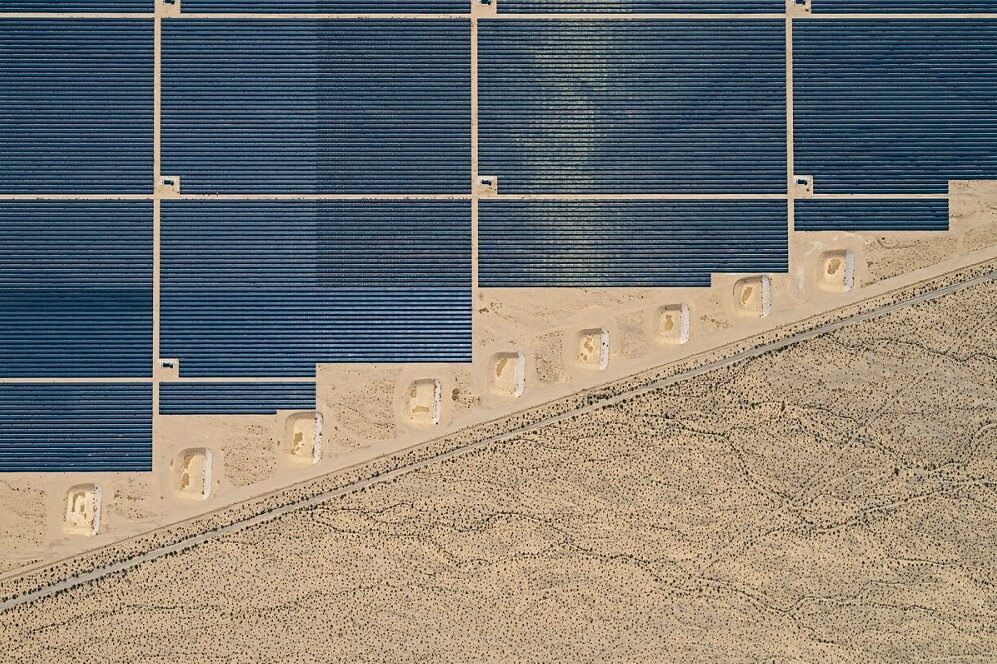
The photovoltaic modules that arrived on the coast of the Red Sea have just landed, but Saudi Arabia's power grid has revealed another test question. POWERCHINA Guizhou Engineering Company has won the mechanical completion milestone of the Saudi Arabia R5 photovoltaic project. With joy, the two major obstacles ahead are the winding of large equipment and the 60 Hz grid connection. A mid-term exam that is crucial to the success or failure of the contract is slowly unfolding.
Logistics breakthrough
There is an easily overlooked statement in the official press release that due to various force majeure factors, the transportation of key equipment has been forced to adjust routes multiple times, the transportation cycle has been extended, and the fulfillment of obligations is facing unprecedented challenges. This is not a regular fluctuation. The Red Sea crisis has blocked the traditional route through the Suez Canal, and large equipment such as transformers and substations can only bypass the Cape of Good Hope or find another port. The transportation cycle has been extended from weeks to months. POWERCHINA Guizhou Engineering Company uses grid management to assign construction areas, responsibilities, and progress to individuals. For small and medium-sized enterprises engaged in special logistics, this case serves as a clear warning that the logistics buffer period for Middle East photovoltaic projects can no longer be set according to peacetime shipping schedules. Service providers that can flexibly schedule in the Red Sea and provide transit warehousing at Middle East hub ports are becoming essential for general contractors.
Technical adaptation
Mechanical completion means that hardware such as components, booster stations, and inverters have been installed, but this does not mean that power can be generated. The next step of system integration and grid connection testing is the tough battle. The nominal frequency of Saudi Arabia's power grid is 60 Hz, which is consistent with that of the United States and not the 50 Hz of China and Europe. All grid connected equipment must undergo parameter adaptation and logic verification for this environment. The normal operating range of the power grid is 59.9 to 60.1 Hz, and the continuous operating range is 59.5 to 60.5 Hz. Inverters, SVGs, etc. need to be matched with the grid boundary and undergo a complete set of tests for low voltage ride through, high voltage ride through, and frequency ride through. Photovoltaic products entering Saudi Arabia also need to pass SASO certification and meet the IEC62109 series standards. Any parameter deviation may lead to equipment replacement or software upgrade. Only enterprises that have completed certification and adaptation in advance are eligible to participate in subsequent projects. Keywords: Saudi photovoltaics, 60Hz grid connection, large-scale logistics
Opportunities for Going Global
The Red Sea crisis is not a short-term disturbance, and the resilience of large logistics routes has become a core variable for EPC performance. Service providers that can provide in transit monitoring and alternative port unloading will receive a premium. The Saudi Arabia 60 Hz power grid and SASO system have blocked a large number of suppliers who have not completed local adaptation, and certification and ride through capability verification have been completed during the bidding stage, which can better determine whether they can be shortlisted than price concessions. Localized production capacity is shifting from a cost option to a delivery guarantee. With the completion of the second phase of the Zhongxin Bo Jida factory, local photovoltaic brackets have an annual delivery capacity of 15 gigawatts, which can alleviate the impact of logistics disruptions in the Red Sea. The production capacity closer to the site is the most direct delivery moat. From sailing around the Red Sea to connecting to the 60Hz grid, transporting equipment to the site is only the first half, and ensuring stable operation of the equipment on the Saudi power grid is the second half. Logistics resilience and localization certification are replacing price advantages and becoming new barriers to entry into Saudi Arabia's long-term photovoltaic supply chain.Editor/Min Jing
Comment





 Praise
 Collect
 Comment

 Share


Write something~